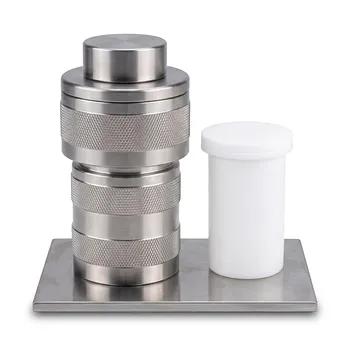
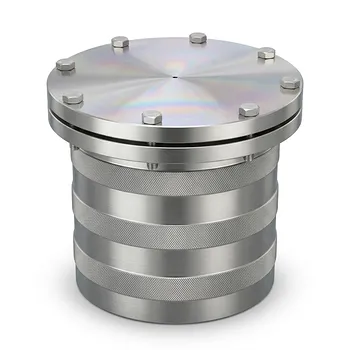
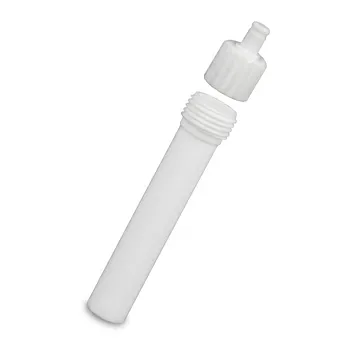
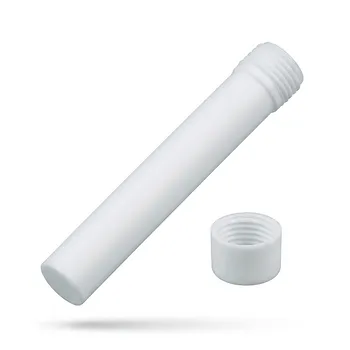
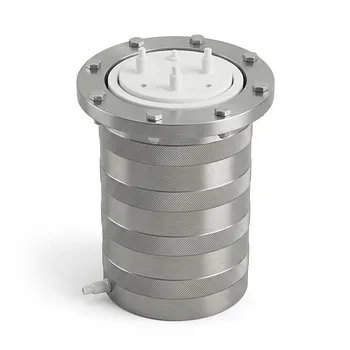
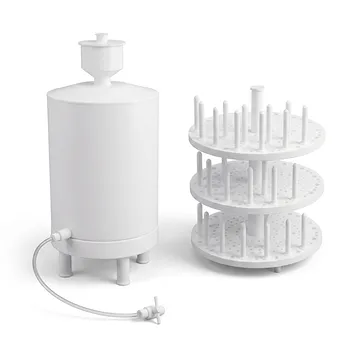
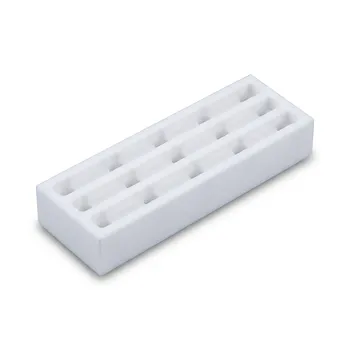
A PTFE-lined autoclave facilitates the solvothermal synthesis of hollow polymer nanospheres (HPS) by providing a sealed, chemically inert environment capable of sustaining high temperatures and pressures. Specifically, it allows polymerization to occur at temperatures such as 160°C—often exceeding the boiling point of the solvents used—while protecting the reaction from metallic contamination and ensuring the structural integrity of the resulting nanospheres.
The PTFE-lined autoclave serves as a critical pressure vessel that isolates corrosive precursors from the structural steel shell. This combination of chemical resistance and high-pressure containment is essential for maintaining the solvent in a liquid state, which drives the polycondensation and morphological growth of the polymer.
Facilitating High-Pressure Solvothermal Conditions
Sustaining Temperatures Above Boiling Points
In the synthesis of HPS, reactants must often reach temperatures that would normally cause solvents to evaporate. The sealed autoclave environment creates autogenous pressure, which keeps these solvents in a liquid state well above their atmospheric boiling points.
Enabling Efficient Polymerization
High-temperature environments, such as 160°C, provide the thermal energy required for the polycondensation of monomers. This controlled energy input is vital for the growth of the polymer backbone and the formation of stable, hollow architectures.
Providing a Constant Reaction Environment
The autoclave design ensures that the reaction proceeds under isothermal conditions. This stability is necessary for uniform particle growth, ensuring that the hollow nanospheres achieve a consistent size and wall thickness.
Ensuring Chemical Purity and Protection
Preventing Metallic Contamination
Standard stainless steel autoclaves can leach metal ions into the reaction mixture when exposed to polar solvents or acidic precursors. The PTFE liner acts as a barrier, ensuring that no iron or chromium impurities interfere with the purity of the polymer nanospheres.
Resistance to Chemical Erosion
Solvothermal reactions often involve aggressive chemicals that would corrode the structural integrity of a metal vessel. PTFE’s exceptional chemical inertness allows it to withstand these precursors without degrading or reacting with the polymer products.
Non-Stick Properties for Product Recovery
The low surface energy of PTFE prevents intermediate products and final HPS from adhering to the vessel walls. This non-stick characteristic ensures maximum product recovery and prevents "ghosting," where residues from a previous experiment contaminate a new batch.
Understanding the Trade-offs
Temperature Limitations
While PTFE is highly effective, it has a physical limit, typically around 220°C to 250°C. Exceeding these temperatures can cause the liner to soften or undergo "creep," leading to deformation and potential seal failure.
Thermal Insulation Effects
PTFE is an insulator rather than a conductor, meaning it takes longer for the internal reaction mixture to reach the target temperature set on the external oven. This thermal lag must be accounted for during the heating phase to ensure the reaction time is calculated accurately.
Pressure Limitations and Safety
Because the pressure is generated internally by the heating of solvents, there is a risk of over-pressurization if the vessel is overfilled. Standard safety protocols generally recommend filling the liner to no more than 70–80% of its total volume to allow for expansion.
Implementing PTFE Autoclaves in Your Synthesis
How to Apply This to Your Project
- If your primary focus is Maximum Purity: Always use a fresh or thoroughly acid-washed PTFE liner to prevent the introduction of trace metal ions from the autoclave's steel body.
- If your primary focus is Structural Uniformity: Ensure the autoclave is heated in a forced-air oven to maintain a constant temperature gradient, which promotes even polymerization throughout the vessel.
- If your primary focus is High-Temperature Synthesis (>220°C): Consider upgrading from a PTFE liner to a PPL (Para-polyphenylene) liner, which offers higher thermal stability while maintaining chemical resistance.
The PTFE-lined autoclave remains the industry standard for HPS synthesis because it perfectly balances chemical isolation with the mechanical strength required for high-pressure chemistry.
Summary Table:
| Feature | Benefit for HPS Synthesis | Operational Consideration |
|---|---|---|
| Pressure Containment | Maintains solvents in liquid state above boiling points | Fill liner to 70-80% to allow for expansion |
| Chemical Inertness | Prevents metallic contamination from the steel shell | Temperature limit usually 220°C - 250°C |
| Thermal Stability | Provides isothermal environment for uniform growth | PTFE insulation causes slight thermal lag |
| Non-stick Surface | Ensures maximum recovery of polymer nanospheres | Use acid-washing for high-purity applications |
Elevate Your Synthesis with KINTEK’s High-Performance Fluoropolymers
Precision in hollow polymer nanosphere (HPS) synthesis demands the highest standards of chemical purity and thermal reliability. KINTEK specializes in manufacturing an exhaustive range of laboratory supplies crafted exclusively from PTFE and PFA.
Whether you require:
- Basic Labware: Beakers, crucibles, reagent bottles, and centrifuge tubes.
- Fluid Handling: High-purity tubing, fittings, valves, and filtration tools.
- Advanced Apparatus: Custom PTFE-lined autoclaves, hydrothermal synthesis liners, and microwave digestion vessels.
- Custom Engineering: End-to-end CNC fabrication for bespoke laboratory setups and complex non-standard parts.
From high-volume consumables like stirring bars and gaskets to advanced electrochemical cells, KINTEK provides the absolute focus on fluoropolymer materials your research requires. Contact us today to discuss your custom project or high-volume order and ensure your lab is equipped for success.
References
- B.X. Wang, Yanwei Lum. Nanocurvature-induced field effects enable control over the activity of single-atom electrocatalysts. DOI: 10.1038/s41467-024-46175-1
This article is also based on technical information from Kintek Knowledge Base .
Related Products
- PTFE Lined High Pressure Digestion Vessel 50ml High Temperature Hydrothermal Synthesis Tank
- Custom TFM Reaction Vessel with Stainless Steel Jacket and PTFE Inner Cup for High Corrosion Resistance
- High Purity PTFE Microwave Digestion Vessel Replacement Liner for Acid Sample Preparation and Trace Analysis
- High Purity TFM Microwave Digestion Vessels PTFE Acid Evaporation Liners Domestic GT-400 Equivalent Laboratory Reaction Containers
- High Pressure Custom TFM Reactor Stainless Steel Outer Vessel PTFE Inner Cup for Corrosive Synthesis
People Also Ask
- What are the benefits of using a PTFE-lined vessel for carbon-sulfur cathode treatment? Maximize Purity & Performance
- Why are PTFE-lined pressure digestion vessels required for the preparation of Ag/CeO2 catalysts? Purity & Performance
- What is the function of high-pressure PTFE digestion vessels in mineral analysis? Optimize Sample Mineralization
- What safety features are typically incorporated into high-pressure PTFE digestion vessel designs? Ensure Lab Safety
- What is the function of PTFE lined high-pressure vessels in g-C3N4 synthesis? Achieve High-Purity Material Growth