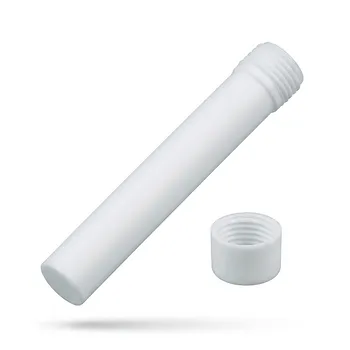
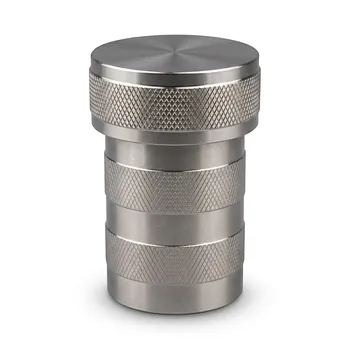
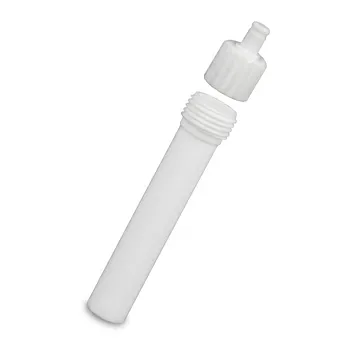
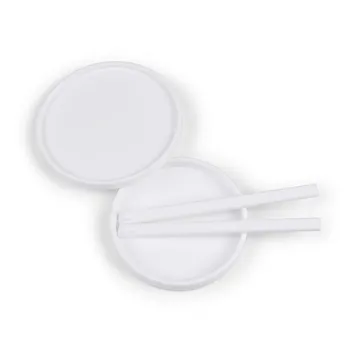
A Polytetrafluoroethylene (PTFE) liner acts as the chemically inert core vessel that isolates the hydrothermal reaction from the external metallic environment. In the synthesis of Manganese-doped Zinc Oxide (Mn-doped ZnO), it ensures that manganese ions are purely and precisely incorporated into the ZnO crystal lattice by preventing side reactions with the reactor walls. This isolation is critical for maintaining the high-purity environment required for functional nanomaterials.
The PTFE liner is the indispensable "inner skin" of a hydrothermal reactor, ensuring the purity and precise stoichiometry of Mn-doped ZnO by providing a corrosion-resistant barrier against harsh alkaline mineralizers and high-temperature conditions.
The Role of Chemical Inertness in Doping Precision
Preventing Metallic Contamination
Hydrothermal synthesis often occurs within stainless steel autoclaves which can leach metal ions into the solution. The PTFE liner provides a total barrier, preventing these external ions from interfering with the specific chemistry of the zinc and manganese precursors.
Facilitating Pure Manganese Integration
For effective doping, manganese ions must replace zinc atoms within the crystal lattice without competition from impurities. By maintaining a chemically neutral space, the liner ensures that the resulting Mn-doped ZnO maintains its intended electronic and photocatalytic properties.
Maintaining Precise Stoichiometry
Precise control over the ratio of manganese to zinc is required to achieve specific material characteristics. The chemical inertness of PTFE prevents the absorption or reaction of precursor salts with the vessel, ensuring that the final product matches the calculated chemical formula.
Thermal and Chemical Resilience in Alkaline Environments
Withstanding Strong Mineralizers
The synthesis of ZnO typically requires strong alkaline mineralizers like Sodium Hydroxide (NaOH) or Potassium Hydroxide (KOH). PTFE is uniquely resistant to these corrosive bases, which would otherwise damage the structural integrity of the external metal reactor.
Stability Under High Temperatures
Hydrothermal processes for Mn-doped ZnO generally operate at temperatures around 180°C to 200°C. High-quality PTFE liners maintain their structural and chemical stability at these levels, providing a reliable environment for crystal growth.
Integrity Under High Pressure
As the temperature rises within the sealed autoclave, internal pressure increases significantly. The PTFE liner, supported by the external stainless steel shell, maintains a sealed environment that facilitates the hydrothermal crystallization process.
Operational Advantages for Material Synthesis
Maximizing Sample Recovery
PTFE is known for its non-stick properties, which prevent the synthesized Mn-doped ZnO powder from adhering to the walls. This allows for the nearly complete recovery of the synthesized product and simplifies the subsequent cleaning process.
Microwave Transparency
In microwave-assisted hydrothermal synthesis, PTFE is chosen for its microwave transparency. This allows energy to pass directly through the liner to heat the reaction fluid volumetrically, leading to faster and more uniform crystal formation.
Reusability and Cleaning
The resilience of PTFE to strong acids and bases allows for rigorous cleaning protocols between experiments. This ensures that no residual manganese or zinc from previous batches contaminates future synthesis runs.
Understanding the Trade-offs and Limitations
Thermal Boundaries
While PTFE is stable at common hydrothermal temperatures, it begins to soften and deform if temperatures exceed 220°C to 250°C. Exceeding these limits can lead to a loss of the hermetic seal, potentially damaging the external autoclave.
Potential for Deformation
Under repeated high-pressure cycles, PTFE liners can experience "cold flow" or permanent deformation. It is essential to inspect liners for thinning or warping to prevent catastrophic failure or leakage of corrosive fluids into the metal vessel.
Material Porosity
Over many uses, PTFE can become slightly porous, potentially trapping trace amounts of precursors. For ultra-high-purity applications, liners must be dedicated to specific materials or replaced frequently to avoid cross-contamination.
How to Apply This to Your Project
When utilizing a PTFE liner for the synthesis of Mn-doped ZnO, your operational choices should reflect your specific performance requirements.
- If your primary focus is Maximum Purity: Dedicate a brand-new PTFE liner specifically to Mn-doped ZnO synthesis to ensure no trace elements from previous experiments interfere with the doping process.
- If your primary focus is High-Yield Recovery: Utilize the non-stick nature of the PTFE by employing ultrasonic cleaning in a mild acidic bath to harvest crystals that may have settled at the bottom.
- If your primary focus is Safety and Longevity: Regularly monitor the liner for signs of "flaring" at the rim or discoloration, and never exceed a sustained temperature of 220°C to maintain the integrity of the seal.
By understanding the protective and facilitative role of the PTFE liner, researchers can ensure the successful and repeatable synthesis of high-performance doped nanomaterials.
Summary Table:
| Feature | Benefit in Mn-ZnO Synthesis |
|---|---|
| Chemical Inertness | Prevents metallic leaching and ensures precise manganese doping |
| Corrosion Resistance | Withstands strong alkaline mineralizers like NaOH and KOH |
| Non-stick Surface | Maximizes sample recovery and simplifies the cleaning process |
| Thermal Stability | Maintains integrity up to 220°C for stable crystal growth |
| Microwave Transparency | Enables rapid, uniform heating in microwave-assisted setups |
Optimize Your Synthesis with KINTEK High-Performance Fluoropolymers
Precision in nanomaterial synthesis demands the highest purity environments. KINTEK specializes in manufacturing virtually all imaginable laboratory supplies crafted from high-performance PTFE and PFA.
Whether you require standard hydrothermal synthesis liners, microwave digestion vessels, or complex custom CNC-machined parts, our end-to-end fabrication ensures your equipment meets the most rigorous standards. From everyday basic labware like beakers, centrifuge tubes, and filtration tools to advanced reaction apparatus such as electrochemical cells and bespoke laboratory setups, KINTEK is your partner in high-purity trace analysis and fluid transfer.
Ready to enhance your lab's efficiency and purity? Contact us today to discuss your custom project or high-volume orders!
References
- Huiqin Li, Shumei Dou. Preparation of mn-doped zno by hydrothermal method. DOI: 10.1088/1742-6596/3060/1/012028
This article is also based on technical information from Kintek Knowledge Base .
Related Products
- PTFE Lined High Pressure Digestion Vessel 50ml High Temperature Hydrothermal Synthesis Tank
- High Purity TFM Microwave Digestion Vessels PTFE Acid Evaporation Liners Domestic GT-400 Equivalent Laboratory Reaction Containers
- High Temperature Corrosion Resistant Hydrothermal Synthesis Reactor with TFM Inner Liner and Straight Cylinder Design
- Custom TFM Reaction Vessel with Stainless Steel Jacket and PTFE Inner Cup for High Corrosion Resistance
- High Purity PTFE Microwave Digestion Vessel Replacement Liner for Acid Sample Preparation and Trace Analysis
People Also Ask
- What are the benefits of using a PTFE-lined vessel for carbon-sulfur cathode treatment? Maximize Purity & Performance
- Why are PTFE-lined pressure digestion vessels required for the preparation of Ag/CeO2 catalysts? Purity & Performance
- What safety features are typically incorporated into high-pressure PTFE digestion vessel designs? Ensure Lab Safety
- What is the function of PTFE lined high-pressure vessels in g-C3N4 synthesis? Achieve High-Purity Material Growth
- Role of High-Pressure Digestion Tanks in Perovskite Synthesis: Achieve Superior Stability and Latent Heat