The primary function of a high-purity PTFE liner in the hydrothermal synthesis of $Bi_2O_3/Bi_2WO_6$ heterojunctions is to provide a chemically inert environment that prevents autoclave corrosion and sample contamination. This liner acts as a critical barrier, protecting the stainless steel vessel from aggressive reagents like acetic acid or urea while ensuring that no metal ions leach into the reaction, which would otherwise degrade the photocatalytic performance of the composite.
Core Takeaway: A high-purity PTFE liner is essential for maintaining the chemical purity and structural integrity of $Bi_2O_3/Bi_2WO_6$ composites by isolating the reaction from the metal autoclave and facilitating a clean, non-stick environment for crystal growth.
Prevention of Chemical Corrosion and Vessel Damage
Protecting the Stainless Steel Shell
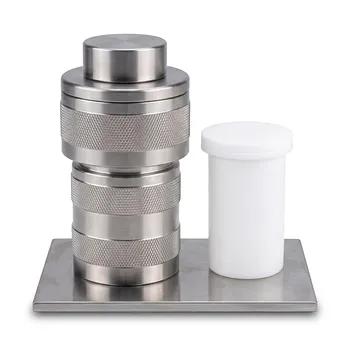
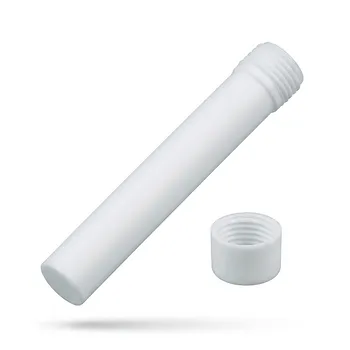
Hydrothermal synthesis of $Bi_2O_3/Bi_2WO_6$ often requires aggressive acidic or alkaline media, such as acetic acid or urea. The PTFE liner is exceptionally resistant to these corrosive agents, preventing them from attacking the internal walls of the stainless steel autoclave.
Extending Equipment Longevity
By serving as the primary containment vessel, the liner prevents the pitting and structural weakening of the outer metal shell. This protection is vital for the safe operation of high-pressure reactors over multiple synthesis cycles.
Isolation from High-Pressure Stress
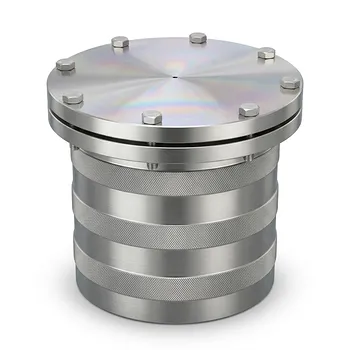
While the steel shell provides the mechanical strength to withstand high pressures, the PTFE liner ensures that the pressure-bearing components are never in direct contact with the reaction precursors. This division of labor allows the system to operate safely under extreme hydrothermal conditions.
Maintenance of High Purity and Catalytic Integrity
Eliminating Metal Ion Contamination
In the synthesis of $Bi_2O_3/Bi_2WO_6$ heterojunctions, even trace amounts of iron, nickel, or chromium from the autoclave walls can act as recombination centers. The PTFE liner ensures a high-purity environment, preventing these metal impurities from entering the crystal growth system.
Preserving Optical and Photo-Electrochemical Properties
The photocatalytic efficiency of the $Bi_2O_3/Bi_2WO_6$ heterojunction depends on its specific bandgap and charge-carrier mobility. By maintaining a clean reaction environment, the PTFE liner preserves the intrinsic optical properties and catalytic performance of the synthesized material.
Promoting Uniform Morphology
The stable, inert environment provided by the liner allows for the controlled growth of nanomaterials with uniform morphology. This consistency is necessary for creating the high-surface-area interfaces required for effective heterojunction performance.
Enhancing Product Recovery and Yield
Utilizing Non-Stick Properties
The non-stick surface of high-purity PTFE prevents the synthesized micro- and nano-powders from adhering to the vessel walls. This characteristic significantly simplifies the cleaning process and ensures a higher recovery rate of the final product.
Ensuring Efficient Sample Retrieval
Because the $Bi_2O_3/Bi_2WO_6$ particles do not bond to the PTFE surface, researchers can easily collect the entire yield after the reaction is complete. This facilitates accurate mass balance and consistency across different experimental batches.
Improving Crystalline Consistency
The smooth internal surface and chemical neutrality of the liner contribute to the consistency of the material’s crystalline form. This ensures that the phase ratio between $Bi_2O_3$ and $Bi_2WO_6$ remains predictable and reproducible.
Understanding the Trade-offs
Temperature Limitations
While PTFE is highly stable, it has a distinct thermal limit, typically around 250°C. Exceeding this temperature can lead to liner deformation or the release of toxic vapors, which limits the thermal range of the hydrothermal process.
Pressure Sensitivity and Deformation
Under extreme pressures, PTFE liners can undergo "cold flow" or permanent deformation if not properly fitted within the stainless steel shell. This requires precise engineering to ensure the liner maintains its sealing integrity throughout the heating and cooling cycles.
Trace Leaching Risks
Although PTFE has extremely low leaching rates, lower-quality liners may still introduce minor impurities. Using high-purity, laboratory-grade PTFE is mandatory to meet the rigorous standards required for functional semiconductor synthesis.
Making the Right Choice for Your Goal
When selecting or using a PTFE liner for the synthesis of $Bi_2O_3/Bi_2WO_6$ heterojunctions, consider the specific requirements of your experimental design:
- If your primary focus is maximum photocatalytic activity: Always use a new or meticulously decontaminated high-purity liner to eliminate any possibility of cross-contamination from previous experiments.
- If your primary focus is high-yield production: Ensure the liner has a polished, non-stick internal surface to facilitate the complete recovery of the synthesized nano-powders.
- If your primary focus is reactor safety: Closely monitor the synthesis temperature to ensure it remains well below the PTFE softening point to prevent liner failure and autoclave damage.
By prioritizing the chemical and thermal stability of the PTFE liner, you ensure the successful synthesis of high-performance photocatalytic materials.
Summary Table:
| Function | Key Benefit | Technical Feature |
|---|---|---|
| Corrosion Shield | Prevents acid/alkali damage to stainless steel | High chemical resistance to acetic acid/urea |
| Purity Control | Eliminates metal ion (Fe/Ni/Cr) leaching | Inert high-purity PTFE material |
| Product Yield | Facilitates easy recovery of nanopowders | Non-stick surface properties |
| Morphology Control | Promotes uniform crystal growth | Stable, clean reaction environment |
| Thermal Safety | Protects pressure-bearing vessel | Recommended limit up to 250°C |
Maximize Your Synthesis Precision with KINTEK
Don't let metal contamination or vessel corrosion compromise your research results. KINTEK specializes in high-performance fluoropolymer solutions tailored for advanced material science. Whether you are synthesizing $Bi_2O_3/Bi_2WO_6$ heterojunctions or complex semiconductor composites, we provide the purity your lab demands.
From high-purity hydrothermal synthesis liners and microwave digestion vessels to custom CNC-machined PTFE/PFA components, our products ensure an inert environment for even the most aggressive reactions. Our expertise spans everyday labware—like beakers, crucibles, and filtration tools—to advanced reaction apparatus, including electrochemical cells and battery testing fixtures.
Why choose KINTEK?
- End-to-End Customization: Bespoke laboratory setups and complex non-standard machined parts.
- Absolute Purity: Exclusive focus on high-performance PTFE and PFA materials.
- Scalability: Reliable delivery for both specialized research and high-volume industrial orders.
Contact KINTEK today to discuss your custom fluoropolymer needs!
References
- Mostafa A. Sayed, Alaa Mohsen. Hydrothermal synthesis and structural optimization of Bi2O3/Bi2WO6 nanocomposites for synergistic photodegradation of Indigo Carmine dye. DOI: 10.1038/s41598-025-01925-z
This article is also based on technical information from Kintek Knowledge Base .
Related Products
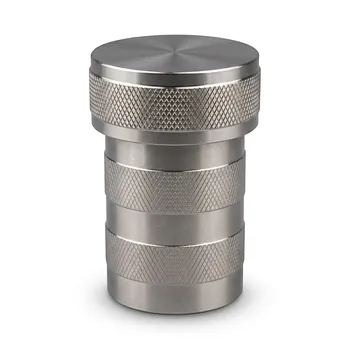
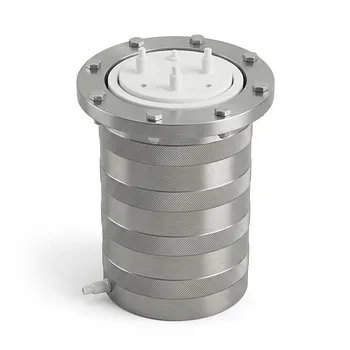
- PTFE Lined High Pressure Digestion Vessel 50ml High Temperature Hydrothermal Synthesis Tank
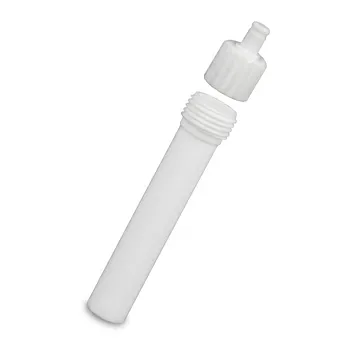
- High Purity TFM Microwave Digestion Vessels PTFE Acid Evaporation Liners Domestic GT-400 Equivalent Laboratory Reaction Containers
- High Purity PTFE Microwave Digestion Vessel for Soil and Food Analysis Acid Resistant Fluoropolymer Sample Preparation Liners
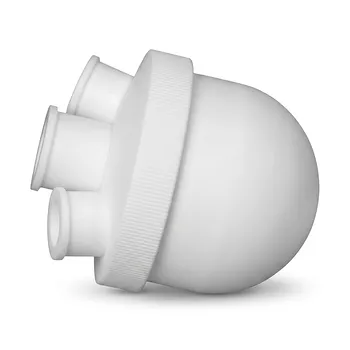
- Custom Multi Neck PTFE Flask 18L Laboratory Chemical Reactor Vessel for High Purity Synthesis and Stirring Applications
- Custom Multi Neck PTFE Round Bottom Flask for Chemical Synthesis and High Purity Laboratory Research
People Also Ask
- What are the benefits of using a PTFE-lined vessel for carbon-sulfur cathode treatment? Maximize Purity & Performance
- Why are PTFE-lined pressure digestion vessels required for the preparation of Ag/CeO2 catalysts? Purity & Performance
- What is the function of high-pressure PTFE digestion vessels in mineral analysis? Optimize Sample Mineralization
- What safety features are typically incorporated into high-pressure PTFE digestion vessel designs? Ensure Lab Safety
- What is the function of PTFE lined high-pressure vessels in g-C3N4 synthesis? Achieve High-Purity Material Growth