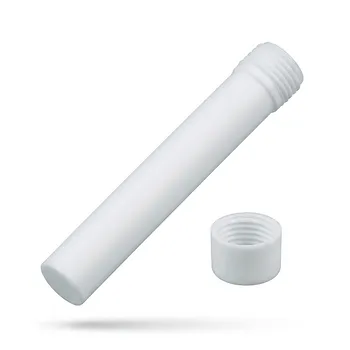
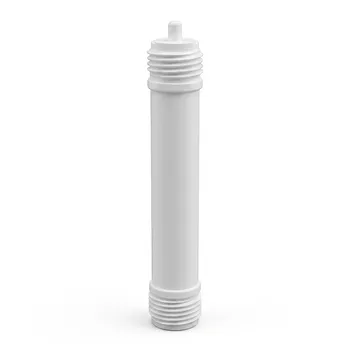
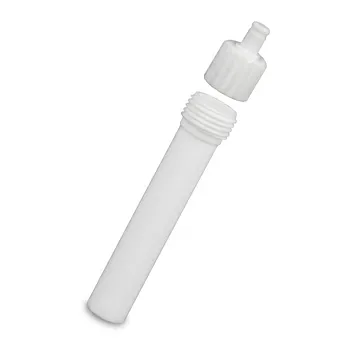
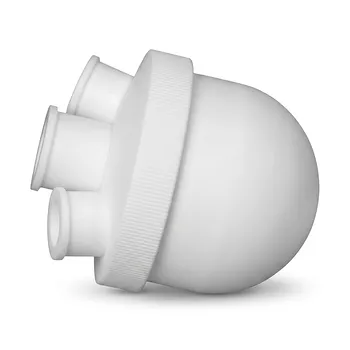
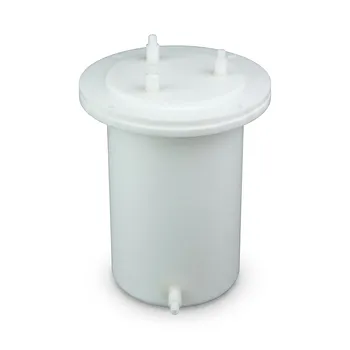
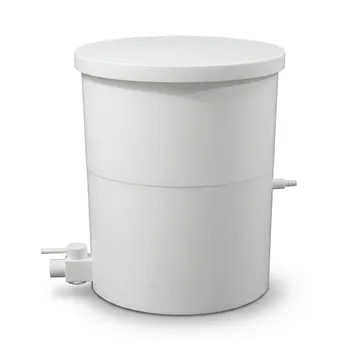
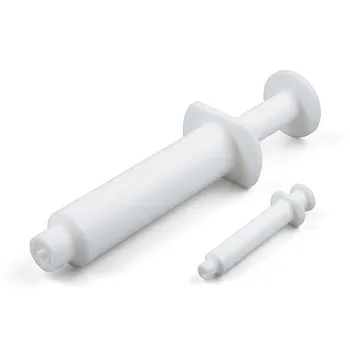
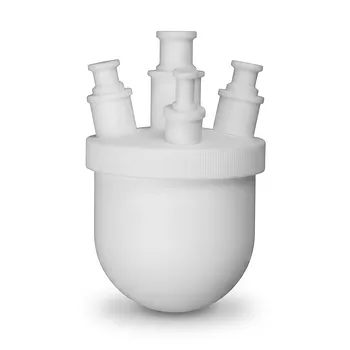
The primary function of a high-purity PTFE liner is to provide a chemically inert environment that resists corrosion from methanesulfonic acid while preventing metal ions from the autoclave body from contaminating the synthesis. At temperatures up to 220°C, this liner acts as a critical barrier that ensures the high purity and structural integrity of the resulting sodium methanesulfonate mixed anion crystals.
The PTFE liner serves as the "inner sanctum" of the hydrothermal process, isolating aggressive chemical reactions from the structural metal of the autoclave. By combining extreme chemical resistance with thermal stability, it allows for the precise control of crystal growth without interference from external contaminants or vessel erosion.
Protecting the Purity of the Reaction System
Resistance to Acidic Reagents
Hydrothermal synthesis of sodium methanesulfonate involves methanesulfonic acid, a strong organic acid that can be highly corrosive under pressure. Polytetrafluoroethylene (PTFE) is chosen because its carbon-fluorine bonds are among the strongest in organic chemistry, making the liner virtually immune to acid attack.
Prevention of Metal Leaching
Standard stainless steel autoclaves can release iron, nickel, or chromium ions when exposed to acidic environments at high temperatures. The PTFE liner prevents these metal ions from leaching into the solution, where they could otherwise incorporate into the crystal lattice and alter the material's properties.
Maintaining a Clean Growth Environment
Because high-purity PTFE has extremely low leaching rates, it ensures that the synthesized crystals maintain their intended stoichiometry. This is vital for functional materials where even trace impurities can negatively affect optoelectronic properties or the uniformity of the morphology.
Engineering Stability Under Extreme Conditions
Thermal and Pressure Management
Hydrothermal synthesis requires both high heat (up to 220°C) and the resulting autogenous pressure. High-performance PTFE liners are designed to remain structurally sound under these conditions, providing a stable vessel that does not deform or degrade during the long dwell times required for crystal growth.
Surface Tension and Product Recovery
PTFE is famously non-stick, which serves a dual purpose in the lab. It prevents the synthesized micro- and nano-powders from adhering to the walls, which facilitates efficient recovery of the product and makes the liner significantly easier to clean for subsequent experiments.
Isolation of the Pressure Vessel
The liner acts as a physical shield for the stainless steel outer shell, extending the service life of the expensive autoclave hardware. By containing the corrosive media entirely within the PTFE volume, the structural integrity of the metal pressure vessel is preserved.
Understanding the Trade-offs
Temperature Limitations
While PTFE is robust, it has a definitive thermal ceiling, typically around 250°C to 260°C. Exceeding these temperatures can lead to mechanical softening or the release of toxic fluorinated vapors, meaning it is unsuitable for supercritical water synthesis or ultra-high temperature reactions.
Thermal Expansion Mismatch
PTFE has a different coefficient of thermal expansion than the steel autoclave surrounding it. If the liner is not properly sized or if the cooling process is too rapid, the liner can deform or "collapse," potentially compromising the seal and the safety of the experiment.
Porosity and Permeability
At a microscopic level, PTFE is slightly porous to certain small molecules and gases at high pressures. Over many cycles, this can lead to cross-contamination if the liner is not meticulously cleaned or replaced, particularly when switching between different chemical systems.
How to Apply This to Your Project
Making the Right Choice for Your Goal
- If your primary focus is Maximum Crystal Purity: Prioritize high-purity, "virgin" PTFE liners to minimize trace element leaching and ensure the integrity of the mixed anion structure.
- If your primary focus is High-Yield Recovery: Utilize the non-stick properties of the liner by ensuring the interior surface is polished and free of scratches where micro-crystals could lodge.
- If your primary focus is Hardware Longevity: Inspect the liner for signs of "cold flow" or deformation after every run at 220°C to ensure it continues to protect the stainless steel autoclave from acid exposure.
By understanding the role of the PTFE liner as both a chemical shield and a purity guarantor, researchers can more effectively control the delicate hydrothermal environment required for advanced material synthesis.
Summary Table:
| Key Function | Benefit for Synthesis | Technical Advantage |
|---|---|---|
| Chemical Inertness | Resists methanesulfonic acid attack | Strong Carbon-Fluorine bonds |
| Contamination Barrier | Prevents metal ion leaching (Fe, Ni, Cr) | High-purity virgin PTFE material |
| Non-Stick Surface | Enhances micro-crystal recovery | Low surface energy |
| Vessel Protection | Shields autoclave from corrosive media | Extended pressure vessel lifespan |
| Thermal Stability | Maintains integrity up to 220°C | Stable under autogenous pressure |
Elevate Your Research Precision with KINTEK Fluoropolymer Solutions
At KINTEK, we specialize in the absolute focus of high-performance fluoropolymers to empower your most demanding laboratory applications. Whether you are performing complex hydrothermal synthesis or sensitive trace analysis, our comprehensive range of PTFE and PFA labware ensures unparalleled chemical resistance and purity.
Our product ecosystem includes:
- Everyday Essentials: Beakers, measuring cylinders, crucibles, reagent/wash bottles, and centrifuge tubes.
- Sample Prep & Fluid Transfer: Tubing, fittings, valves, separatory funnels, filters, and high-purity pipettes.
- Advanced Reaction Apparatus: Custom hydrothermal synthesis liners, microwave digestion vessels, electrochemical cells, and microchannel reactors.
- Custom Engineering: End-to-end custom CNC fabrication for non-standard machined parts and bespoke laboratory setups tailored to your specific stoichiometry requirements.
From high-volume orders of general consumables to complex, one-off specialized components, KINTEK delivers the durability and purity your science demands.
Ready to optimize your lab’s performance? Contact our expert team today to discuss your custom requirements!
References
- Eric A. Gabilondo, P. Shiv Halasyamani. Synthesis and large crystal growth of a family of mixed-anionic methanesulfonate salts by anionic site-substitution: Na<sub>5</sub>(SO<sub>3</sub>CH<sub>3</sub>)<sub>4</sub>(X) (X = BF<sub>4</sub><sup>−</sup>, ClO<sub>4</sub><sup>−</sup>, PF<sub>6</sub><sup>−</sup>, I<sup>−</sup>). DOI: 10.1039/d5dt00223k
This article is also based on technical information from Kintek Knowledge Base .
Related Products
- PTFE Lined High Pressure Digestion Vessel 50ml High Temperature Hydrothermal Synthesis Tank
- High Purity TFM Microwave Digestion Vessels PTFE Acid Evaporation Liners Domestic GT-400 Equivalent Laboratory Reaction Containers
- High Purity PTFE Microwave Digestion Vessel for Soil and Food Analysis Acid Resistant Fluoropolymer Sample Preparation Liners
- High Purity PTFE Microwave Digestion Vessel Replacement Liner for Acid Sample Preparation and Trace Analysis
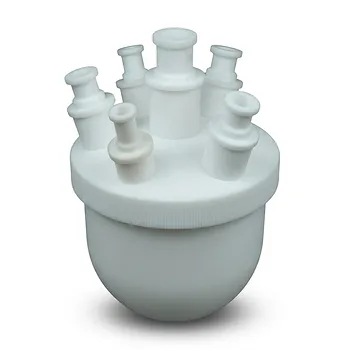
- Custom Multi Neck PTFE Flask 18L Laboratory Chemical Reactor Vessel for High Purity Synthesis and Stirring Applications
People Also Ask
- What are the benefits of using a PTFE-lined vessel for carbon-sulfur cathode treatment? Maximize Purity & Performance
- Why are PTFE-lined pressure digestion vessels required for the preparation of Ag/CeO2 catalysts? Purity & Performance
- What safety features are typically incorporated into high-pressure PTFE digestion vessel designs? Ensure Lab Safety
- What is the function of high-pressure PTFE digestion vessels in mineral analysis? Optimize Sample Mineralization
- What is the function of PTFE lined high-pressure vessels in g-C3N4 synthesis? Achieve High-Purity Material Growth