High-purity platinum wire functions as the counter electrode (CE) to complete the electrochemical circuit, providing a path for current to flow without influencing the reaction. Because of its exceptional chemical inertness and high electrical conductivity, it ensures that the measured current and voltage response originate strictly from the active material on the working electrode rather than the testing apparatus itself.
The platinum counter electrode acts as a stable, non-reactive "sink" or "source" for electrons, ensuring that all data—such as specific capacity and charge transfer resistance—accurately reflects the performance of the supercapacitor material being evaluated.
Completing the Electrochemical Loop
Facilitating Seamless Current Flow
In a three-electrode system, the working electrode (WE) is where the material of interest is studied, but it cannot function in isolation. The platinum wire serves as the second half of the power circuit, allowing the electrochemical workstation to pass current through the electrolyte.
Preventing Kinetic Bottlenecks
Platinum possesses a high catalytic activity, which allows it to support the necessary balancing reactions (like gas evolution) with minimal resistance. This ensures that the overall reaction rate is limited only by the active material on the working electrode, not by the kinetics of the counter electrode.
Ensuring Chemical and Signal Purity
Stability in Aggressive Electrolytes
Supercapacitor testing often involves strong alkaline environments, such as 3 M KOH. Platinum’s high chemical stability prevents it from dissolving or corroding, even under high potential or in highly caustic conditions.
Eliminating Parasitic Redox Peaks
Because platinum is chemically inert, it does not undergo its own redox reactions within the typical potential window of supercapacitor testing. This prevents the appearance of "ghost peaks" or parasitic signals that would otherwise artificially inflate the specific capacity or energy density calculations.
Preventing Metal Ion Contamination
By resisting dissolution, the platinum wire ensures that no foreign metal ions are released into the electrolyte. This maintains a pure testing environment, preventing impurities from adsorbing onto the working electrode and altering its electrochemical signature.
Precision in Analytical Measurements
Enhancing Data Reliability in CV and EIS
For techniques like Cyclic Voltammetry (CV) and Electrochemical Impedance Spectroscopy (EIS), the stability of the counter electrode is paramount. Platinum ensures a stable current loop, allowing for the accurate measurement of charge transfer resistance (Rct) and ion diffusion characteristics.
Maintaining Potential Control
By providing a large reaction interface and low resistance, the platinum electrode allows the potentiostat to maintain precise control over the working electrode potential. This objectivity is critical for calculating the true performance metrics of materials like cobalt sulfide or nickel selenide composites.
Understanding the Trade-offs
Surface Area Requirements
While platinum wire is highly effective, its surface area must be significantly larger than that of the working electrode. If the wire is too small, the current density at the counter electrode can become a limiting factor, leading to distorted data.
Cost and Alternatives
Platinum is a precious metal, making these electrodes significantly more expensive than carbon-based or stainless steel alternatives. While carbon rods are cheaper, they lack the same level of catalytic activity and can sometimes introduce carbon dust or impurities into the system.
How to Apply This to Your Project
Making the Right Choice for Your Goal
- If your primary focus is maximum data accuracy: Use high-purity platinum wire or foil to ensure no parasitic reactions interfere with your specific capacity calculations.
- If your primary focus is testing in strong alkaline (KOH) media: Platinum is the gold standard due to its ability to resist corrosion and prevent metal ion leaching.
- If your primary focus is high-current pulse testing: Ensure your platinum counter electrode has a significantly larger surface area (such as a mesh or plate) than your working electrode to prevent current-limiting effects.
Using a high-purity platinum counter electrode is the most reliable way to isolate the electrochemical behavior of your active material from the variables of the testing environment.
Summary Table:
| Key Function | Benefit for Testing | Impact on Research |
|---|---|---|
| Circuit Completion | Facilitates seamless current flow | Enables stable potentiostat control |
| Chemical Inertness | Resists aggressive alkaline (KOH) | Prevents contamination & ghost peaks |
| Catalytic Activity | Lowers kinetic bottlenecks | Ensures data reflects active material only |
| Signal Purity | No internal redox reactions | Accurate specific capacity & EIS results |
Elevate Your Electrochemical Research with KINTEK
Precision in supercapacitor testing starts with high-performance materials. At KINTEK, we specialize in the absolute focus on high-performance fluoropolymers and precious metal accessories. Whether you need high-purity platinum electrodes, electrode accessories, or custom-machined electrochemical cells, our end-to-end CNC fabrication ensures your testing environment is free from contamination.
Our extensive range includes:
- Specialized Labware: PTFE and PFA beakers, crucibles, and high-purity trace analysis tools.
- Reaction Apparatus: Standard and custom electrochemical cells, hydrothermal synthesis liners, and battery testing fixtures.
- Fluid & Sample Prep: Tubing, fittings, filters, and high-volume fluoropolymer consumables.
Don't let subpar equipment compromise your data. Contact KINTEK today to discuss your custom laboratory needs!
References
- Zahra Shoghi Doroudkhani, M. Mahinzad Ghaziani. Optical and electrochemical performance of electrospun NiO–Mn3O4 nanocomposites for energy storage applications. DOI: 10.1038/s41598-025-96008-4
This article is also based on technical information from Kintek Knowledge Base .
Related Products
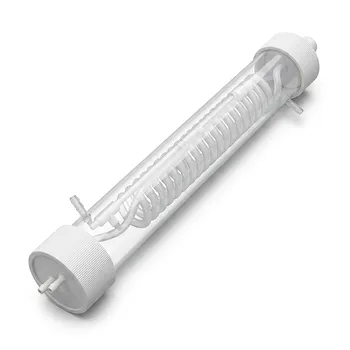
- High Purity PFA Condenser Serpentine Straight HF Resistant Reaction Apparatus Custom Circulation Column
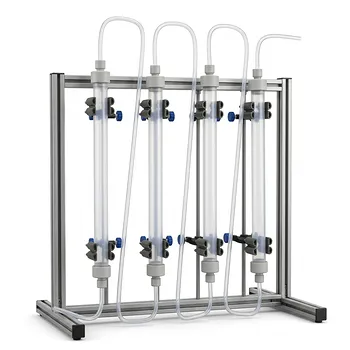
- High Purity PFA Chromatography Columns Series Filtration Resin Ion Exchange System with Sieve Plate Rack Customizable Corrosion Resistant Laboratory Fluid Handling
- High Purity PFA Chromatography Column with Collection Bottle Corrosion Resistant Fluoropolymer Filtration System for Trace Analysis
- High Purity PFA Coiled Tubing Custom PTFE Machining PFA Welding and Precision Bending Solutions
- High Purity PFA Syringe 10ml Corrosion Resistant Translucent Fluoropolymer Sampling Unit for Trace Analysis
People Also Ask
- Why is high-purity PFA laboratory equipment required for the trace analysis and species identification of polyoxometalates?
- Why is the chemical stability of polymer endgroups critical when selecting melt-processible fluoropolymers like PFA for high-purity laboratory apparatus? Choose Stable Endgroups for Reliable Performance
- Why is PFA often selected over traditional PTFE for manufacturing complex fluoropolymer fluid components, custom fittings, and sealed laboratory digestion vessels? Discover the key advantages for your lab.
- What are the characteristics of PFA material? A Guide to Its High-Performance Balance
- What are the key properties of PFA (PerFluoroAlkoxy)? A Guide to Extreme Chemical and Thermal Resistance