The high-pressure PTFE-lined stainless steel autoclave functions as a specialized chemical reactor that facilitates the crystallization of metal-organic frameworks (MOFs) under autogenous pressure. In the steam-assisted dry gel synthesis of ZIF-8 and ZIF-67, the device provides the necessary hydrothermal environment to convert solid precursors into crystalline structures using steam rather than bulk liquid solvents. This setup ensures that high-pressure steam effectively drives the coordination of metal ions with 2-methylimidazole ligands while protecting the equipment from corrosive chemical erosion.
The autoclave acts as a pressurized "steam chamber" that enables a green, solvent-free synthesis route. By combining the mechanical strength of stainless steel with the chemical inertness of PTFE, it creates a stable environment where steam pressure catalyzes the transformation of dry gel into highly crystalline ZIF frameworks.
Creating the Hydrothermal Environment
Facilitating Steam-Assisted Transformation
In the dry gel method, the precursors are not dissolved in a solvent but are instead exposed to vapor. The autoclave maintains the autogenous pressure required for steam to permeate the gel precursors.
This pressurized steam environment is the primary driver for the coordination self-assembly of cobalt or zinc ions with organic ligands. Without this contained pressure, the transformation into ZIF-8 or ZIF-67 would be incomplete or result in poor crystallinity.
Enabling Green Synthesis Pathways
The use of a high-pressure autoclave allows for DMF-free (N,N-dimethylformamide) synthesis, which is a significant environmental advantage. By utilizing steam as the transport medium, the process avoids the toxic and expensive organic solvents typically required in MOF production.
This "green" approach relies entirely on the autoclave's ability to maintain a sealed, high-temperature environment where small amounts of water or ethanol can generate sufficient vapor pressure to facilitate the reaction.
Material Functions: Steel vs. PTFE
The Mechanical Integrity of Stainless Steel
The stainless steel outer shell provides the mechanical strength required to withstand the high internal pressures generated at temperatures such as 120°C or 150°C. It serves as a safety vessel that prevents the reactor from failing under the force of the expanding vapor.
This structural support is critical during the crystallization phase, where consistent pressure must be maintained to reduce structural defects in the ZIF-8 or ZIF-67 frameworks.
The Protective Role of the PTFE Lining
The Polytetrafluoroethylene (PTFE) liner is essential for its chemical inertness and corrosion resistance. It protects the stainless steel walls from being eroded by aggressive metal precursors or acidic/alkaline ligand solutions.
Furthermore, the PTFE lining prevents metallic impurities from the steel shell from leaching into the reaction mixture. This ensures the synthesis of high-purity ZIFs with precise stoichiometric ratios and regular dodecahedral morphologies.
Facilitating Product Recovery
The extremely smooth, non-stick surface of the PTFE liner is vital for the collection of the synthesized powder. It ensures that the ZIF-8 or ZIF-67 precipitates do not adhere to the walls of the reactor.
This characteristic allows for the full recovery of the solid precipitates, maintaining high experimental yields and preventing cross-contamination between different synthesis batches.
Understanding the Trade-offs
Thermal and Pressure Limitations
While PTFE is highly inert, it has a distinct thermal ceiling, typically around 220°C to 250°C. Exceeding these temperatures can lead to the deformation of the liner or the release of toxic vapors, limiting the synthesis conditions available to the researcher.
Scale and Monitoring Constraints
High-pressure autoclaves are generally used for batch processing, which can limit the throughput of ZIF production compared to continuous flow methods. Additionally, because the vessel is sealed and opaque, researchers cannot monitor the crystallization process in real-time, necessitating precise "trial and error" to determine optimal reaction times.
How to Apply This to Your Project
Optimizing Synthesis Parameters
- If your primary focus is high crystallinity: Ensure the autoclave is correctly sealed to maintain maximum autogenous pressure, as this reduces structural defects in the ZIF-67 or ZIF-8 framework.
- If your primary focus is high-purity material: Use a high-quality PTFE liner to prevent iron or chromium contamination from the stainless steel shell, especially when working with corrosive ligands.
- If your primary focus is maximum yield: Leverage the non-stick properties of the PTFE liner by using a "dry-collect" method to ensure all synthesized powder is recovered from the vessel.
The PTFE-lined autoclave is the indispensable engine of steam-assisted MOF synthesis, balancing high-pressure containment with extreme chemical purity.
Summary Table:
| Component/Feature | Primary Function | Key Benefit for ZIF Synthesis |
|---|---|---|
| Stainless Steel Shell | Pressure Containment | Ensures safety & structural integrity under high autogenous pressure. |
| PTFE Internal Liner | Chemical Inertness | Prevents metallic contamination and protects against corrosive ligands. |
| Sealed Environment | Vapor Facilitation | Drives coordination self-assembly via steam instead of toxic solvents (DMF-free). |
| Non-Stick Surface | Easy Product Recovery | Maximizes yield of ZIF powders and prevents cross-batch contamination. |
| Thermal Stability | Temperature Control | Provides a stable environment for consistent crystallization (up to 250°C). |
Elevate Your Material Synthesis with KINTEK Precision
Achieving the perfect crystalline structure for ZIF-8 or ZIF-67 requires equipment that guarantees both chemical purity and mechanical reliability. At KINTEK, we specialize in high-performance fluoropolymer solutions tailored for the most demanding laboratory environments.
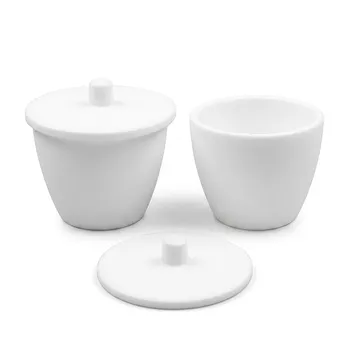
From everyday basic labware (beakers, crucibles, and reagent bottles) to advanced custom-machined PTFE hydrothermal liners and microwave digestion vessels, we provide the tools you need for success. Whether you require high-purity trace analysis instruments, fluid transfer components (tubing, fittings, valves), or bespoke reaction apparatus, our end-to-end custom CNC fabrication ensures we can deliver non-standard parts and high-volume orders with absolute precision.
Ready to optimize your MOF production? Our experts are here to provide high-performance PTFE and PFA supplies crafted to your exact specifications. Contact us today to discuss your project needs!
References
- Mitra Bagheri, Juqin Zeng. Green Synthesis of MOF‐Based Materials for Electrochemical Reduction of Carbon Dioxide. DOI: 10.1002/cssc.202400684
This article is also based on technical information from Kintek Knowledge Base .
Related Products
- Custom TFM Reaction Vessel with Stainless Steel Jacket and PTFE Inner Cup for High Corrosion Resistance
- PTFE Lined High Pressure Digestion Vessel 50ml High Temperature Hydrothermal Synthesis Tank
- High Pressure Custom TFM Reactor Stainless Steel Outer Vessel PTFE Inner Cup for Corrosive Synthesis
- High Purity TFM Microwave Digestion Vessels PTFE Acid Evaporation Liners Domestic GT-400 Equivalent Laboratory Reaction Containers
- High Purity PTFE Microwave Digestion Vessel Replacement Liner for Acid Sample Preparation and Trace Analysis
People Also Ask
- Why are high-performance pressure-resistant reaction vessels required for oxygen-assisted hydrothermal conversion at 150 °C?
- How do magnetic stirring and reaction vessels impact MOF-derived carbon quality? Optimize Your Composite Performance
- Why are high-quality fluoropolymer-lined reaction vessels required for alk-Ti3C2Tx MXene? Ensure Purity & HF Resistance
- Why are PTFE-lined reaction vessels necessary for forced degradation studies? Ensure high-purity results and accuracy.
- Why is a high-purity PTFE lined reaction vessel required for the acidic etching of MXenes? Ensure Material Purity.