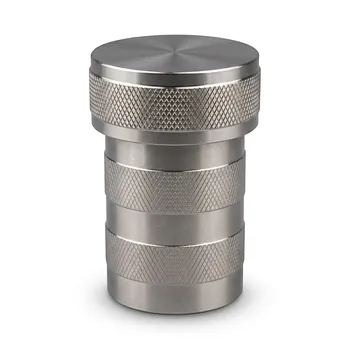
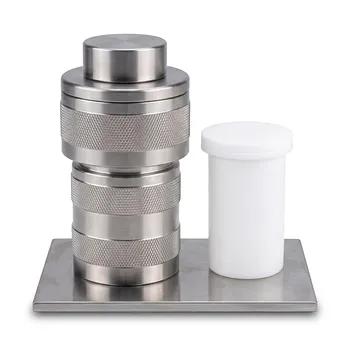
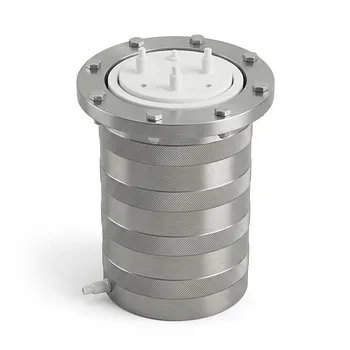
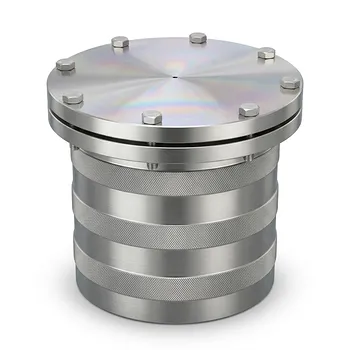
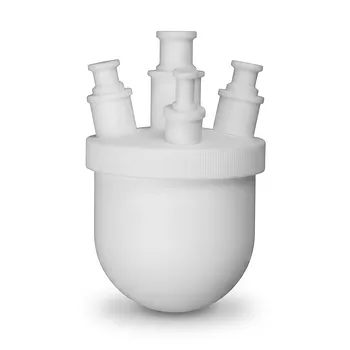
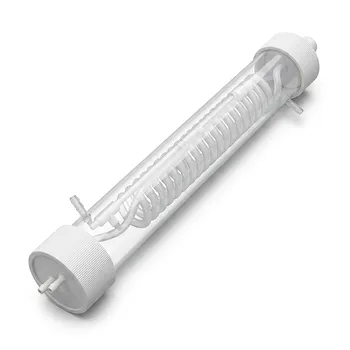
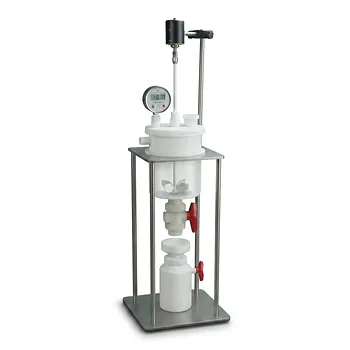
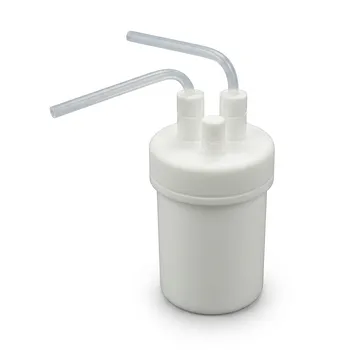
The high-pressure hydrothermal synthesis reactor is the critical engine for structural transformation, providing the sealed, high-temperature, and high-pressure environment necessary to convert precursor materials into organized $TiO_2$ nanotubes. By enabling solvents to reach supercritical or subcritical states, the reactor facilitates the dissolution of bulk particles and their subsequent self-assembly into complex nanostructures.
Core Takeaway: The reactor functions as a controlled chemical pressure cooker that enhances precursor solubility and drives the phase transition and morphological evolution of $TiO_2$ from amorphous particles into high-aspect-ratio nanotubes.
Driving Morphological Evolution
Achieving Subcritical and Supercritical Solvent States
In a sealed hydrothermal environment, solvents such as high-concentration sodium hydroxide (NaOH) can be heated far beyond their atmospheric boiling points. These conditions create subcritical or supercritical states, which drastically increase the solubility of $TiO_2$ precursor powders.
Facilitating the Self-Assembly Process
The reactor provides the energy required for the delamination and folding of titanium species. As the precursor dissolves, it recrystallizes into intermediate nanosheets which, under sustained pressure, naturally curl and self-assemble into stable nanotubular structures.
Ensuring Uniformity and Dispersion
The constant pressure within the autoclave ensures that chemical reactions occur uniformly throughout the solution. This environment is essential for achieving atomic-level dispersion of any dopants or secondary species, preventing the segregation of components common in open-air methods.
Controlling Phase Transition and Purity
Managing the Crystalline Phase
The high-pressure environment is a decisive factor in determining the final crystalline morphology of the titanium dioxide. Specifically, the reactor facilitates the transition from amorphous phases to the anatase phase, which is often preferred for its superior photocatalytic and electrochemical properties.
Protecting Product Integrity with Liners
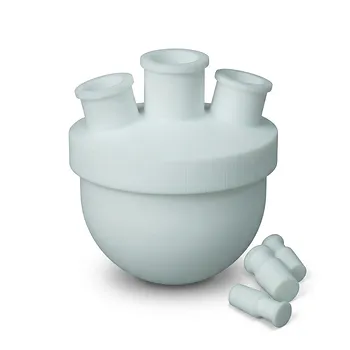
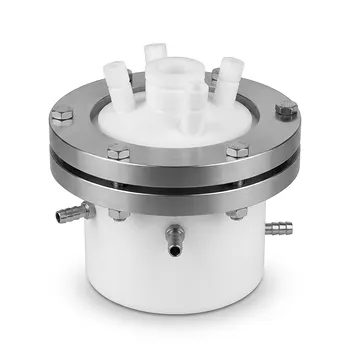
Because hydrothermal synthesis often involves highly corrosive alkaline or acidic environments, reactors utilize PTFE (polytetrafluoroethylene) or PFA liners. These liners protect the stainless steel outer shell from corrosion while ensuring that no metallic impurities leach into the high-purity $TiO_2$ nanotubes.
Enabling In-Situ Growth
The reactor allows for the in-situ growth of nanotubes directly onto substrates, such as titanium foil or mesh. This capability is vital for creating highly ordered arrays that provide efficient gas diffusion channels and optimized surface areas for secondary loadings, like platinum nanoparticles.
Understanding the Trade-offs
While high-pressure reactors are essential for nanotube synthesis, they introduce specific operational challenges. The sealed nature of the system prevents real-time monitoring of the reaction's progress, requiring precise pre-calculation of temperature and duration.
Furthermore, the slow cooling process required to maintain structural integrity can significantly extend production cycles. High-pressure systems also demand rigorous safety protocols, as the combination of high heat and caustic chemicals poses a risk of mechanical failure or leakage if the equipment is not maintained to exacting standards.
How to Optimize Your Synthesis Strategy
Applying the correct reactor parameters is essential for achieving specific material characteristics. Your choice of pressure and temperature settings should be dictated by your end-use case.
- If your primary focus is Maximum Surface Area: Utilize higher concentrations of $NaOH$ and extended residence times within the reactor to ensure complete conversion of nanosheets into nanotubes.
- If your primary focus is Phase Purity: Closely monitor and maintain temperature thresholds (typically near $200^\circ\text{C}$) to ensure a clean transition to the anatase phase without forming rutile impurities.
- If your primary focus is Scalability: Prioritize reactors with high-capacity PTFE liners and robust thermal jackets to ensure uniform heat distribution across larger precursor volumes.
By precisely controlling the hydrothermal environment, researchers can transition from bulk material synthesis to the engineering of sophisticated, high-performance $TiO_2$ nanostructures.
Summary Table:
| Key Function | Operational Mechanism | Synthesis Impact |
|---|---|---|
| Solvent Activation | Supercritical state creation | Increases TiO2 precursor solubility |
| Morphology Driving | Delamination and folding | Facilitates nanotube self-assembly |
| Phase Transition | High-pressure thermal control | Shifts morphology to Anatase phase |
| Contamination Prevention | PTFE/PFA reactor liners | Ensures high-purity chemical environment |
Elevate your material synthesis with KINTEK’s high-performance fluoropolymer laboratory supplies. We provide an extensive range of PTFE and PFA solutions, from essential hydrothermal synthesis liners and digestion vessels to comprehensive fluid transfer components like tubing and valves. Whether you need everyday basic labware (beakers, crucibles, bottles), sample prep tools (filters, pipettes), or advanced reaction apparatus like electrochemical cells and microchannel reactors, KINTEK offers end-to-end custom CNC fabrication for both bespoke setups and high-volume orders. Achieve the phase purity and structural integrity your research demands—contact our technical experts today!
References
- Tanti Haryati, Yudi Aris Sulistiyo. Two-Stage Hydrothermal Synthesis of TiO₂ Nanotubes with Variation of Precursor Type for Diazinon Photodegradation. DOI: 10.14710/jksa.28.4.195-199
This article is also based on technical information from Kintek Knowledge Base .
Related Products
- High Temperature Corrosion Resistant Hydrothermal Synthesis Reactor with TFM Inner Liner and Straight Cylinder Design
- PTFE Lined High Pressure Digestion Vessel 50ml High Temperature Hydrothermal Synthesis Tank
- High Pressure Custom TFM Reactor Stainless Steel Outer Vessel PTFE Inner Cup for Corrosive Synthesis
- High Temperature PTFE Reaction Flask 1000ml Single Neck Round and Flat Bottom Laboratory Bottle
- Custom TFM Reaction Vessel with Stainless Steel Jacket and PTFE Inner Cup for High Corrosion Resistance
People Also Ask
- What is the role of a corrosion-resistant reactor in the synthesis of lignin-based carbon dots? Ensure Maximum Purity
- What are the technical advantages of using hydrothermal synthesis reactors for advanced electronic & optical nanomaterials?
- How does a hydrothermal synthesis reactor facilitate the production of crystalline materials with tailored morphologies? Precision Crystal Growth
- Why is the sealing reliability of a hydrothermal synthesis reactor critical for 24-hour cycles? Ensure Nano-Precision
- What role do hydrothermal synthesis reactors play in CQD preparation? Achieve High-Purity Nanomaterial Synthesis