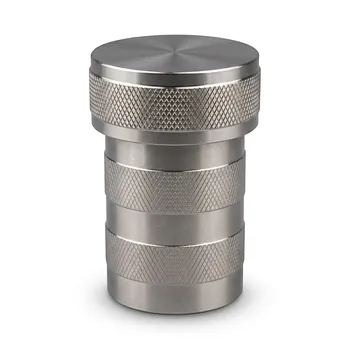
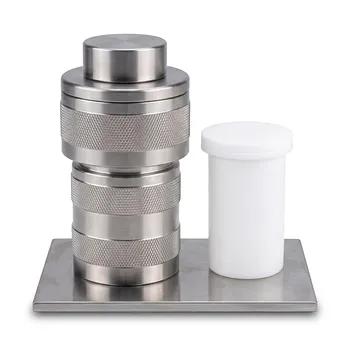
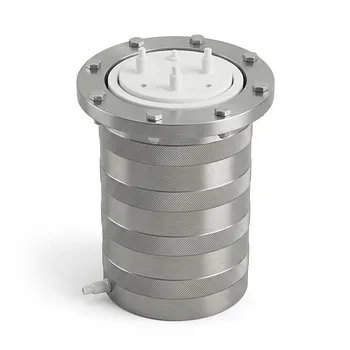
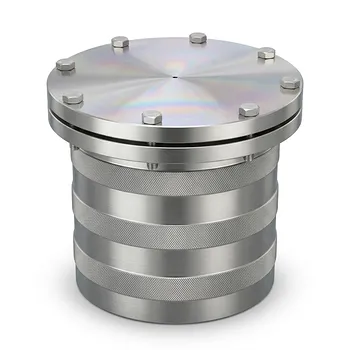
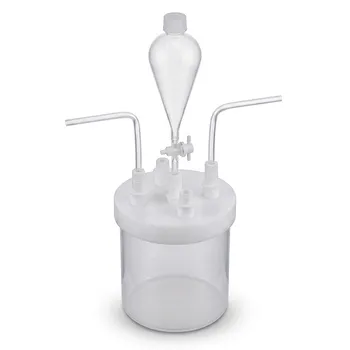
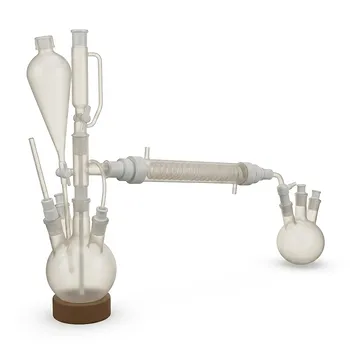
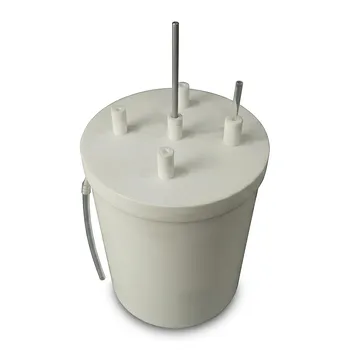
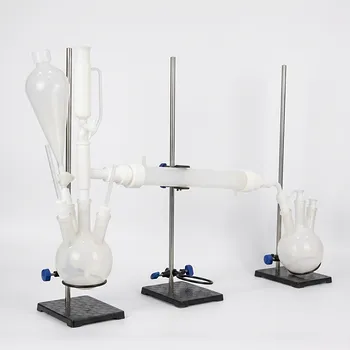
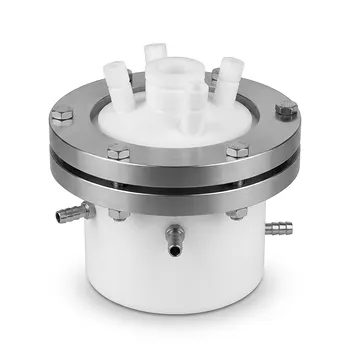
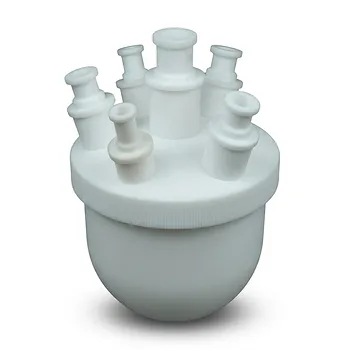
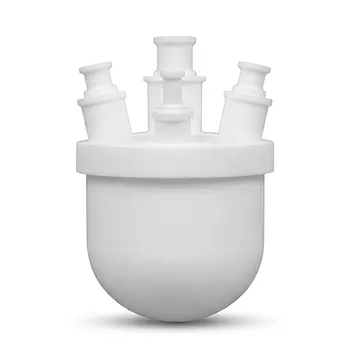
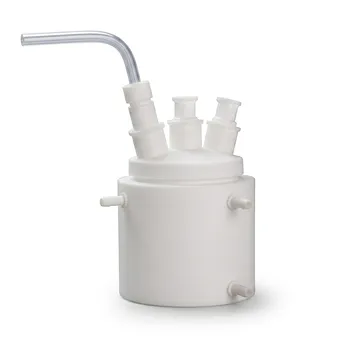
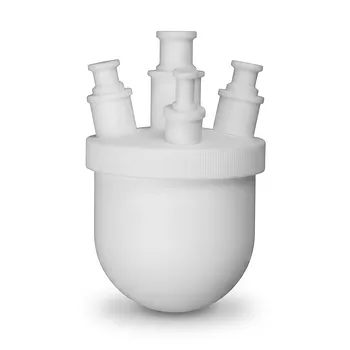
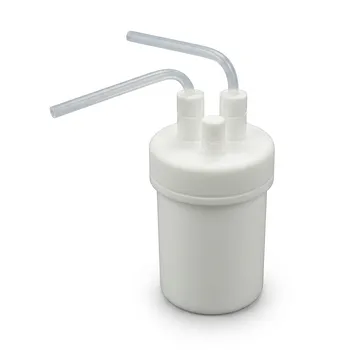
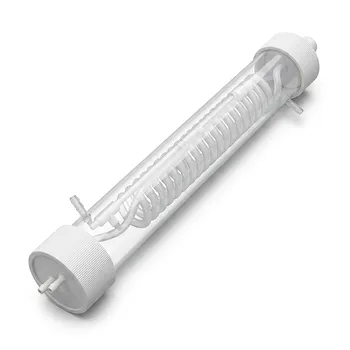
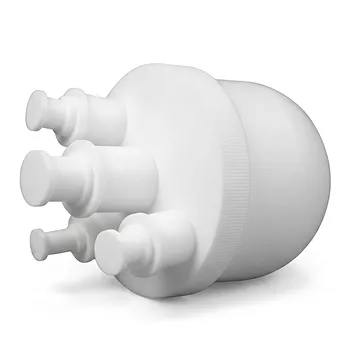
The high-pressure hydrothermal synthesis reactor acts as a controlled chemical crucible. It provides a sealed environment that maintains the high temperatures and pressures necessary to drive the transformation of precursors into tungsten trioxide ($WO_3$). This specialized setting facilitates the complete dissolution and subsequent recrystallization of solutes, ensuring the production of $WO_3 \cdot 0.33H_2O$ with precise crystallinity and morphology.
The primary function of a high-pressure reactor in $WO_3$ synthesis is to create a subcritical environment that enhances precursor solubility and accelerates reaction rates. This enables the controlled nucleation and growth of crystalline nanostructures that are unattainable at atmospheric pressure.
The Role of the Reactor Environment
Maintaining Autogenous Pressure
The reactor seals the precursor solution, allowing pressure to build naturally as the solvent is heated beyond its boiling point. This autogenous pressure is critical for keeping the solvent in a subcritical liquid state at elevated temperatures.
Without this sealed environment, the solvent would simply evaporate, preventing the system from reaching the energy levels required for phase transformation.
Enhancing Solvent Properties
High-pressure conditions significantly increase the solubility of reactants in the precursor solution. This ensures the full dissolution of solutes, which is the foundational step for high-quality crystal formation.
Under these conditions, water acts as an aggressive solvent that accelerates the chemical reactions, such as the reduction of metal oxides, far more effectively than at standard pressure.
Controlling the Crystallization Process
Promoting Nucleation and Growth
The reactor environment allows $WO_3 \cdot 0.33H_2O$ to undergo controlled nucleation. Steady, high-pressure conditions within the vessel ensure that crystals grow uniformly from the solution.
This process is essential for the transition from a disorganized precursor solution into highly crystalline nanostructures.
Precision in Morphology and Phase
By precisely adjusting the temperature—typically around 160°C to 200°C—and the reaction time, researchers can induce specific crystal facets.
This level of control allows for the engineering of specific geometric morphologies, such as nanocubes or flake structures, which are vital for the material's eventual performance in applications like heterojunctions.
Understanding the Trade-offs
Kinetic vs. Thermodynamic Stability
While high temperatures accelerate reaction rates, they can sometimes lead to unwanted phase transitions or the growth of impurity phases.
Achieving the exact crystalline phase requires a delicate balance between the solubility of the precursors and the rate of precipitation.
System Complexity and Safety
The use of high-pressure autoclaves necessitates robust equipment and stringent safety protocols to manage the risks associated with pressurized vessels.
Because the reactor is sealed during the process, researchers cannot easily monitor the reaction in real-time, making precise pre-calculation of time and temperature parameters mandatory.
Strategic Implementation for Material Synthesis
The choice of reactor parameters should be dictated by the specific requirements of your $WO_3$ application.
- If your primary focus is high crystallinity: Ensure the reactor maintains a stable, high temperature for an extended duration to allow for slow, complete recrystallization.
- If your primary focus is specific nanostructures: Precisely control the precursor concentration and the "ramp-up" time of the reactor to influence the initial nucleation sites.
- If your primary focus is composite integration: Utilize the subcritical pressure to facilitate in-situ growth of $WO_3$ directly onto the surface of other matrix materials for tighter coupling.
The high-pressure reactor is the fundamental tool that unlocks the unique chemical kinetics required to transform raw precursors into advanced $WO_3$ nanostructures.
Summary Table:
| Function | Benefit | Key Result |
|---|---|---|
| Autogenous Pressure | Maintains subcritical liquid state | Prevents solvent evaporation at high heat |
| Enhanced Solubility | Complete reactant dissolution | Foundation for high-quality crystal formation |
| Precision Morphology | Controlled nucleation and growth | Engineered nanostructures (e.g., nanocubes) |
| Phase Stability | Precise thermodynamic control | High-purity crystalline facets and phases |
Optimize Your Synthesis with KINTEK Fluoropolymer Excellence
Achieve superior precision in your hydrothermal synthesis with KINTEK’s high-performance laboratory solutions. We manufacture virtually all laboratory supplies from PTFE and PFA, including specialized hydrothermal synthesis liners, microwave digestion vessels, and high-purity trace analysis instruments.
From everyday basic labware like beakers, bottles, and centrifuge tubes to advanced custom CNC-machined reactors and bespoke laboratory setups, KINTEK provides end-to-end fabrication tailored to your specific research needs. Whether you require high-volume consumables or complex non-standard parts, our absolute focus on high-performance fluoropolymers ensures maximum chemical resistance and purity for your $WO_3$ nanostructure engineering.
Enhance your material research today. Contact us now to discuss your custom requirements and see how our advanced apparatus can streamline your laboratory workflow!
References
- C.C. Wu, Chia‐Ying Chiang. Unraveling Crystal Phase-Driven Activity and Selectivity of WO<sub>3</sub> for Photoelectrochemical Biomass Valorization. DOI: 10.1021/acs.inorgchem.4c05048
This article is also based on technical information from Kintek Knowledge Base .
Related Products
- High Temperature Corrosion Resistant Hydrothermal Synthesis Reactor with TFM Inner Liner and Straight Cylinder Design
- PTFE Lined High Pressure Digestion Vessel 50ml High Temperature Hydrothermal Synthesis Tank
- High Pressure Custom TFM Reactor Stainless Steel Outer Vessel PTFE Inner Cup for Corrosive Synthesis
- Custom TFM Reaction Vessel with Stainless Steel Jacket and PTFE Inner Cup for High Corrosion Resistance
- High Purity PFA Reaction Vessel for Biopharmaceutical Synthesis and Corrosive Chemical Fluid Handling with Customizable Tube Fittings
People Also Ask
- What is the role of a corrosion-resistant reactor in the synthesis of lignin-based carbon dots? Ensure Maximum Purity
- What are the technical advantages of using hydrothermal synthesis reactors for advanced electronic & optical nanomaterials?
- How does a hydrothermal synthesis reactor facilitate the production of crystalline materials with tailored morphologies? Precision Crystal Growth
- Why is the sealing reliability of a hydrothermal synthesis reactor critical for 24-hour cycles? Ensure Nano-Precision
- What role do hydrothermal synthesis reactors play in CQD preparation? Achieve High-Purity Nanomaterial Synthesis