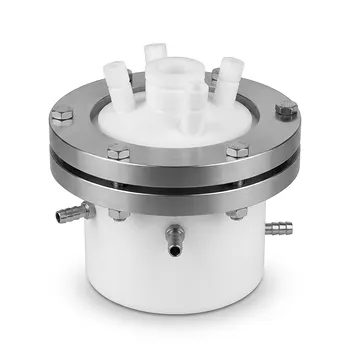
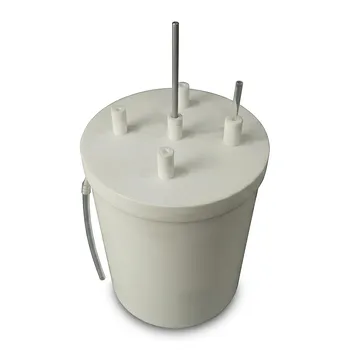
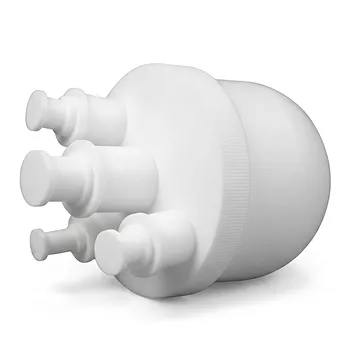
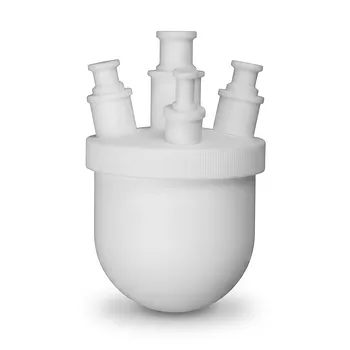
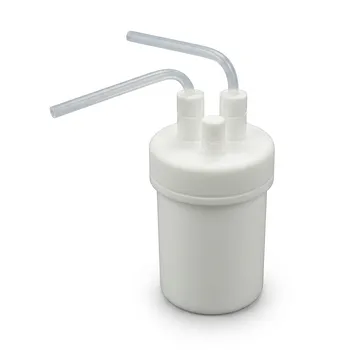
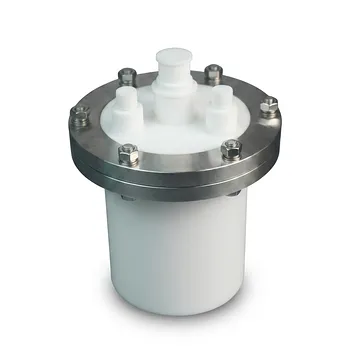
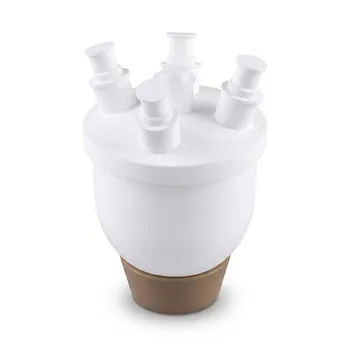
The high-pressure hydrothermal synthesis reactor acts as a thermal catalyst chamber that enables the chemical breakdown of PET by maintaining solvents like ethylene glycol and water in a liquid state at temperatures far exceeding their atmospheric boiling points. This specific environment facilitates the high-efficiency cleavage of ester bonds, allowing for the recovery of valuable monomers such as terephthalic acid (BDC).
The reactor's primary function is to create a sealed, high-energy environment that forces reactants to remain liquid at 210°C. This state accelerates the depolymerization of PET into its original chemical building blocks through intensive chemical degradation and enhanced solubility.
The Role of Superheated Solvents in Depolymerization
Achieving Temperatures Beyond Atmospheric Limits
In standard conditions, solvents like water and ethylene glycol would evaporate before reaching the energy levels required for PET breakdown. The sealed environment of the hydrothermal reactor allows these solvents to reach a temperature of 210°C without boiling away.
Maintaining Liquid Phase Reactants
By utilizing autogenous pressure—the pressure generated naturally by heating a liquid in a sealed space—the reactor keeps the reactants in a liquid or subcritical state. This state is critical because it ensures constant contact between the solvent and the PET plastic, which is necessary for a continuous chemical reaction.
Chemical Mechanisms Inside the Reactor
Cleavage of Ester Bonds
The primary goal of PET depolymerization is to break the ester bonds that hold the polymer chain together. The high-pressure environment provides the thermal energy required to facilitate this cleavage efficiently, turning solid plastic back into liquid chemical precursors.
Accelerating Chemical Degradation
High-pressure conditions significantly accelerate the rate of chemical degradation. This allows for a much faster recovery of terephthalic acid (BDC) and other monomer ligands compared to atmospheric recycling methods.
Enhancing Solubility and Mass Transfer
Under high-pressure and high-temperature conditions, the solubility of the PET precursors increases dramatically. This ensures that the reactants are fully dissolved and can interact freely, leading to a more complete and uniform depolymerization process.
Material Integrity and Efficiency
The Importance of PTFE Liners
Many hydrothermal reactors utilize a polytetrafluoroethylene (PTFE) liner inside the stainless steel body. This liner provides chemical inertness, preventing the harsh depolymerization chemicals from corroding the reactor and ensuring that no metal impurities contaminate the recovered monomers.
High-Efficiency Monomer Recovery
The combination of controlled pressure and sustained high temperature ensures that the yield of recovered materials is high. This efficiency is what makes hydrothermal synthesis a viable path for circular economy initiatives involving plastic waste.
Understanding the Trade-offs
Pressure Safety and Equipment Limits
The primary risk associated with these reactors is the extreme internal pressure. If the temperature is not strictly monitored, the autogenous pressure can exceed the structural limits of the vessel, necessitating reliable safety valves and burst disks.
Scaling and Cooling Times
While hydrothermal synthesis is highly efficient at a lab scale, it involves significant thermal lag. The time required for the reactor to heat up to 210°C and, more importantly, cool down safely can limit the throughput of the recycling process.
How to Apply This to Your Project
When selecting or operating a hydrothermal reactor for PET depolymerization, consider your specific recovery goals.
- If your primary focus is maximum monomer purity: Ensure your reactor is equipped with a high-quality PTFE liner to prevent metal ion contamination during the 210°C reaction.
- If your primary focus is process speed: Optimize the solvent-to-PET ratio to maximize autogenous pressure, which accelerates the cleavage of ester bonds.
- If your primary focus is safety and longevity: Regularly inspect the reactor's seals and structural integrity, as the repeated cycling of high-pressure environments can lead to material fatigue.
By mastering the high-pressure environment of the hydrothermal reactor, you can effectively transform PET waste into high-value chemical raw materials.
Summary Table:
| Key Feature | Functional Role in PET Depolymerization |
|---|---|
| Superheated Solvents | Reaches 210°C without evaporation to provide maximum thermal energy. |
| Autogenous Pressure | Maintains reactants in a liquid/subcritical state for continuous contact. |
| Ester Bond Cleavage | Accelerates the chemical breakdown of polymer chains into monomers like BDC. |
| PTFE Liners | Ensures chemical inertness and prevents metal contamination of recovered materials. |
| Enhanced Solubility | Improves mass transfer and ensures a complete, uniform reaction process. |
Elevate Your Research with Precision Fluoropolymer Engineering
To achieve maximum purity in PET depolymerization and high-pressure chemical recycling, your equipment must withstand extreme thermal and corrosive conditions. KINTEK specializes in manufacturing high-performance laboratory supplies crafted exclusively from PTFE and PFA, ensuring your experiments remain free from contamination.
Whether you need standard hydrothermal synthesis liners, microwave digestion vessels, or bespoke laboratory setups, our end-to-end custom CNC fabrication delivers exactly what your project demands. From basic labware like beakers and reagent bottles to complex fluid transfer components and reaction apparatus, we provide the durability and chemical inertness essential for advanced material science.
Ready to optimize your lab's efficiency? Contact us today to discuss your custom requirements and discover how KINTEK’s high-performance fluoropolymer solutions can support your next breakthrough.
References
- N.P. Dlamini, Henrietta W. Langmi. Synthesis of MIL-53(Al) Metal-Organic Framework from Aluminium-Lined Multi-Layered Packaging Materials and Polyethylene Terephthalate Bottles. DOI: 10.1007/s10904-025-04062-2
This article is also based on technical information from Kintek Knowledge Base .
Related Products
- High Temperature Corrosion Resistant Hydrothermal Synthesis Reactor with TFM Inner Liner and Straight Cylinder Design
- High Pressure Custom TFM Reactor Stainless Steel Outer Vessel PTFE Inner Cup for Corrosive Synthesis
- PTFE Distillation Condensation Apparatus High Temperature Hydrofluoric Acid Resistant Fluorination Reaction Flask
- PTFE Lined High Pressure Digestion Vessel 50ml High Temperature Hydrothermal Synthesis Tank
- High Temperature Teflon Continuous Reaction System and HF Resistant Three Neck Flask for Petrochemical Processing
People Also Ask
- What is the role of a corrosion-resistant reactor in the synthesis of lignin-based carbon dots? Ensure Maximum Purity
- What are the technical advantages of using hydrothermal synthesis reactors for advanced electronic & optical nanomaterials?
- How does a hydrothermal synthesis reactor facilitate the production of crystalline materials with tailored morphologies? Precision Crystal Growth
- Why is the sealing reliability of a hydrothermal synthesis reactor critical for 24-hour cycles? Ensure Nano-Precision
- What role do hydrothermal synthesis reactors play in CQD preparation? Achieve High-Purity Nanomaterial Synthesis