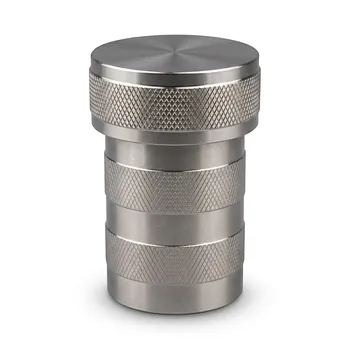
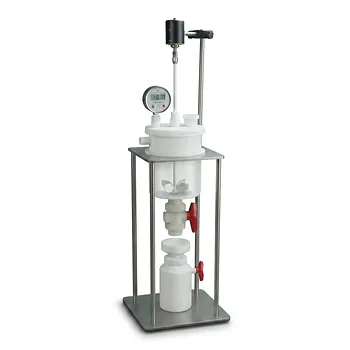
The high-pressure hydrothermal reactor serves as a specialized chemical environment that facilitates the bottom-up synthesis of Nitrogen-doped Carbon Quantum Dots (NCQDs). By providing a sealed, high-temperature, and high-pressure atmosphere, it forces precursors like citric acid and urea to undergo a series of transformations—including condensation, polymerization, and carbonization—that are impossible under standard atmospheric conditions. This controlled setting ensures the formation of a graphitized carbon core while simultaneously enabling effective nitrogen doping and surface functionalization.
The primary function of the reactor is to create a supercritical or near-critical environment that accelerates the molecular cross-linking and carbonization of organic precursors. This process converts simple molecules into uniform, nanoscale carbon structures with specific fluorescent properties and surface chemistries.
The Physicochemical Role of the Reactor
Creation of a High-Energy Environment
The reactor is designed to maintain temperatures often exceeding 200°C and high internal pressures within a sealed vessel. These conditions significantly enhance the reactivity of the solvent and precursors, providing the energy required to break and form chemical bonds.
Facilitating Molecular Transformation
Under these intense conditions, small organic molecules undergo a rapid progression of reactions: dehydration, condensation, and polymerization. As the process continues, these polymers transition into a carbonized state, forming the foundational core of the quantum dot.
Promoting Effective Nitrogen Doping
The high-pressure environment is critical for "forcing" nitrogen atoms from precursors like urea or ammonia into the developing carbon lattice. This in-situ doping is what gives NCQDs their unique electronic and optical properties, distinguishing them from standard carbon dots.
Structural and Chemical Development
Formation of the Graphitized Core
The reactor enables precise control over the nucleation and growth of carbon nuclei. This results in a well-defined, graphitized core that provides the structural integrity necessary for the material to exhibit quantum size effects.
Surface Functionalization and Passivation
As the dots form, the reactor facilitates the attachment of surface active groups, such as hydroxyl and amino groups. This "passivation" layer is essential for water solubility and helps stabilize the fluorescent state of the NCQDs.
Maintaining Morphological Uniformity
By providing a consistent, closed environment, the hydrothermal method ensures that the resulting nanostructures are uniformly spherical. This structural consistency is vital for applications requiring predictable optical performance and high fluorescent purity.
Understanding the Trade-offs
Process Transparency and Monitoring
One major limitation of high-pressure hydrothermal synthesis is that it occurs within a "black box." Because the reactor is a sealed metal vessel, researchers cannot monitor the reaction in real-time to observe exactly when nucleation occurs.
Scalability and Safety Constraints
While highly effective for laboratory-scale synthesis, scaling this process involves significant safety risks due to the high pressures involved. Large-scale reactors require specialized engineering to prevent mechanical failure and ensure uniform heat distribution throughout the vessel.
Reaction Time and Cooling
The process often requires several hours of sustained heat followed by a slow cooling period to ensure crystal stability. This makes it a relatively slow synthesis method compared to microwave-assisted or laser-ablation techniques.
How to Apply This to Your Project
Making the Right Choice for Your Goal
To achieve the best results with a high-pressure hydrothermal reactor, align your parameters with your desired material characteristics.
- If your primary focus is High Fluorescence Yield: Maximize nitrogen doping by selecting precursors with high nitrogen content (like urea) and ensuring a sufficiently long reaction time for surface passivation.
- If your primary focus is Material Purity: Utilize high-purity PTFE or PFA liners inside the reactor to prevent the metal body from contaminating the solution, especially when using acidic catalysts.
- If your primary focus is Small Particle Size: Carefully control the temperature and reaction duration to stop the growth phase before the particles aggregate into larger clusters.
The high-pressure hydrothermal reactor remains the definitive tool for synthesizing high-quality NCQDs by providing the extreme conditions necessary for complex molecular restructuring.
Summary Table:
| Synthesis Phase | Process Facilitated by Reactor | Impact on NCQDs |
|---|---|---|
| Energy Activation | Sustained High Temp (>200°C) & Pressure | Provides energy for molecular bond breaking and cross-linking. |
| Carbonization | Dehydration & Polymerization | Converts organic precursors into a stable, graphitized carbon core. |
| Nitrogen Doping | High-pressure in-situ incorporation | Embeds nitrogen into the carbon lattice for enhanced optical traits. |
| Surface Control | Passivation & Functionalization | Attaches amino/hydroxyl groups for water solubility and stability. |
Elevate Your Nanomaterial Synthesis with KINTEK Precision
Ensure the highest purity and reliability in your NCQD production with KINTEK’s high-performance fluoropolymer solutions. We specialize in manufacturing a comprehensive range of laboratory supplies crafted from PTFE and PFA, specifically designed to withstand the harsh conditions of hydrothermal synthesis while preventing metallic contamination.
From everyday basic labware like beakers, crucibles, and reagent bottles to advanced fluid transfer components including tubing, fittings, and valves, KINTEK provides everything your lab needs. Our expertise includes:
- Sample Prep & Filtration: Separatory funnels, burettes, filters, and high-purity trace analysis tools.
- General Consumables: Stirring bars, O-rings, gaskets, and digestion tubes.
- Advanced Apparatus: Custom electrochemical cells, battery testing fixtures, and microwave digestion vessels.
- Bespoke Engineering: End-to-end custom CNC fabrication for complex non-standard machined parts and unique laboratory setups.
At KINTEK, we maintain an exclusive focus on high-performance fluoropolymers to support your most demanding research. Whether you need high-volume orders or one-off custom components, our engineering team is ready to deliver.
Contact KINTEK today to optimize your laboratory setup!
References
- Jiexin Wang, Yumei Li. Construction of hydrogen bond mediated nitrogen doped carbon quantum dot fluorescent probe and its application in trace detection of ibuprofen in water. DOI: 10.56028/aetr.15.1.337.2025
This article is also based on technical information from Kintek Knowledge Base .
Related Products
- High Temperature Corrosion Resistant Hydrothermal Synthesis Reactor with TFM Inner Liner and Straight Cylinder Design
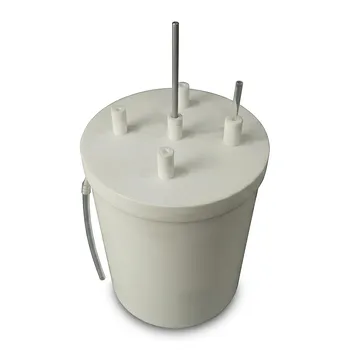
- High Pressure Custom TFM Reactor Stainless Steel Outer Vessel PTFE Inner Cup for Corrosive Synthesis
- PTFE Lined High Pressure Digestion Vessel 50ml High Temperature Hydrothermal Synthesis Tank
- Custom TFM Reaction Vessel with Stainless Steel Jacket and PTFE Inner Cup for High Corrosion Resistance
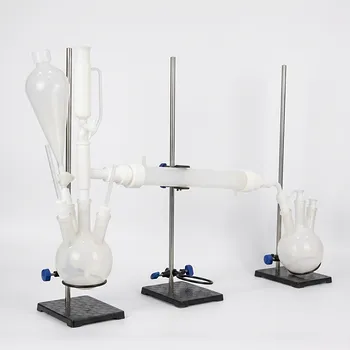
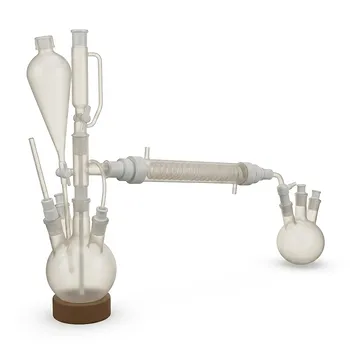
- High Purity PFA Constant Pressure Condensation Reaction System Acid Resistant High Temperature Customizable Teflon Labware
People Also Ask
- What is the role of a corrosion-resistant reactor in the synthesis of lignin-based carbon dots? Ensure Maximum Purity
- What are the technical advantages of using hydrothermal synthesis reactors for advanced electronic & optical nanomaterials?
- How does a hydrothermal synthesis reactor facilitate the production of crystalline materials with tailored morphologies? Precision Crystal Growth
- Why is the sealing reliability of a hydrothermal synthesis reactor critical for 24-hour cycles? Ensure Nano-Precision
- What role do hydrothermal synthesis reactors play in CQD preparation? Achieve High-Purity Nanomaterial Synthesis