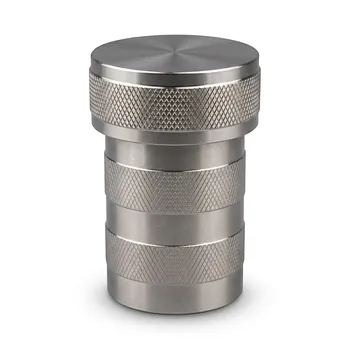
The high-pressure hydrothermal autoclave serves as the critical reaction vessel that enables the precise morphological engineering of $ZnCo_{2}O_{4}$ into complex microflower structures. It maintains a sealed environment at a constant $120^{\circ}C$, allowing precursors to undergo chemical reactions under pressures that prevent the solvent from boiling away. This specific environment regulates crystal growth kinetics, forcing individual nanosheets to self-assemble into a high-surface-area "flower" architecture.
The autoclave provides the thermodynamic and kinetic control necessary to transform simple chemical precursors into sophisticated $ZnCo_{2}O_{4}$ microstructures. By maintaining high pressure and steady heat, it facilitates the transition from dissolved ions to organized, high-performance crystalline materials.
The Role of the Sealed Reaction Environment
Overcoming Solvent Boiling Points
In an open container, aqueous solutions are limited by the boiling point of water. The sealed autoclave allows the internal pressure to rise, keeping the solvent in a liquid state at $120^{\circ}C$ or higher. This "superheated" state significantly increases the energy available for the reaction without losing the liquid medium.
Facilitating Precursor Dissolution
High pressure and temperature enhance the solubility of metal precursors that would otherwise remain solid or poorly mixed. This ensure a homogeneous distribution of zinc and cobalt ions, which is essential for the formation of a pure $ZnCo_{2}O_{4}$ phase. Complete dissolution is the first step toward the subsequent recrystallization process.
Promoting Oriented Crystallization
The autoclave environment provides the stability needed for "oriented crystallization." Rather than forming random clumps, the atoms arrange themselves into specific planes. This programmatic control is what allows the material to grow into distinct shapes like nanosheets rather than irregular particles.
Driving the Microflower Morphology
Regulating Growth Kinetics
The "microflower" shape is not accidental; it is a result of regulated growth kinetics within the pressurized vessel. The constant $120^{\circ}C$ temperature provides a steady rate of reaction that favors the formation of two-dimensional nanosheets. These sheets then serve as the building blocks for the larger 3D structure.
Enabling Structural Self-Assembly
As the nanosheets grow, the high-pressure environment encourages them to aggregate and interlock. They naturally assemble into a spherical, flower-like morphology to minimize surface energy. This complex architecture is what gives $ZnCo_{2}O_{4}$ its unique properties compared to bulk materials.
Maximizing Surface Area for Performance
The primary goal of creating a microflower structure is to increase the specific surface area. By branching out into thin "petals," the material exposes more active sites. This is vital for electrochemical applications, where more contact area leads to faster and more efficient reactions.
Understanding the Trade-offs and Limitations
Safety and Equipment Monitoring
Operating at high pressure and temperature introduces significant safety risks. The integrity of the autoclave seals and the reliability of the pressure release valves are critical. Any failure in temperature control can lead to dangerous pressure spikes beyond the vessel's rated capacity.
Limited Real-Time Observation
Because the reaction occurs inside a thick-walled, sealed steel vessel, researchers cannot observe the synthesis in real-time. This "black box" nature means that the exact moment of morphology transition is difficult to pinpoint. Success depends heavily on post-reaction analysis and iterative testing.
Sensitivity to Temperature Fluctuations
Small deviations from the $120^{\circ}C$ setpoint can drastically alter the final product. If the temperature is too low, the nanosheets may not fully assemble; if too high, the microflowers may collapse or over-crystallize. Precise thermal management is the most difficult aspect of scaling this process.
How to Apply This to Your Synthesis Goals
Recommendations for Material Design
- If your primary focus is maximizing electrochemical active sites: Prioritize maintaining the $120^{\circ}C$ temperature for the full duration to ensure the nanosheets are thin and the microflower structure is fully "bloomed."
- If your primary focus is high material purity and crystallinity: Focus on the cooling phase after the reaction, as slow, controlled cooling within the autoclave can improve the final crystalline integrity of the $ZnCo_{2}O_{4}$.
- If your primary focus is industrial scalability: Invest in autoclaves with high-precision digital thermal controllers to minimize batch-to-batch variability in morphology.
By mastering the high-pressure environment of the autoclave, you can transition from simple chemical mixing to advanced structural engineering of functional nanomaterials.
Summary Table:
| Key Role | Mechanism | Impact on ZnCo2O4 Structure |
|---|---|---|
| Thermodynamic Control | Maintains liquid state at 120°C | Prevents solvent boiling and ensures consistent energy for reaction. |
| Precursor Dissolution | High pressure increases solubility | Creates a homogeneous ion distribution for pure phase formation. |
| Morphological Engineering | Regulates growth kinetics | Forces 2D nanosheets to self-assemble into 3D microflower architectures. |
| Surface Optimization | Increases active site exposure | Maximizes specific surface area for enhanced electrochemical performance. |
Elevate Your Synthesis with KINTEK’s High-Performance Fluoropolymers
Precise morphological control in hydrothermal synthesis requires reaction vessels that can withstand extreme conditions without compromising purity. KINTEK specializes in manufacturing a comprehensive range of laboratory supplies crafted from high-performance PTFE and PFA, specifically designed for advanced materials research.
From hydrothermal synthesis liners and microwave digestion vessels to basic labware like beakers, crucibles, and high-purity trace analysis instruments, we provide the tools necessary for stable and repeatable results. Whether you need standard consumables—such as stirring bars, O-rings, and tubing—or complex, custom CNC-fabricated reaction apparatus and non-standard machined parts, our end-to-end fabrication capabilities ensure your laboratory is equipped for excellence.
Ready to optimize your ZnCo2O4 synthesis or custom reaction setup?
Contact KINTEK Today for Bespoke Laboratory Solutions
References
- Rajeshvari Samatbhai Karmur, Narendra Nath Ghosh. Combined Electrochemical and DFT Investigations of ZnCo<sub>2</sub>O<sub>4</sub>–WO<sub>3</sub>@Ti<sub>3</sub>C<sub>2</sub>T<i><sub>x</sub></i> MXene Nanofiber Nanocomposite as a Cathode for a High-Performance Flexible Asymmetric Supercapacitor. DOI: 10.1021/acs.energyfuels.5c03152
This article is also based on technical information from Kintek Knowledge Base .
Related Products
- High Temperature Corrosion Resistant Hydrothermal Synthesis Reactor with TFM Inner Liner and Straight Cylinder Design
- PTFE Lined High Pressure Digestion Vessel 50ml High Temperature Hydrothermal Synthesis Tank
- Custom TFM Reaction Vessel with Stainless Steel Jacket and PTFE Inner Cup for High Corrosion Resistance
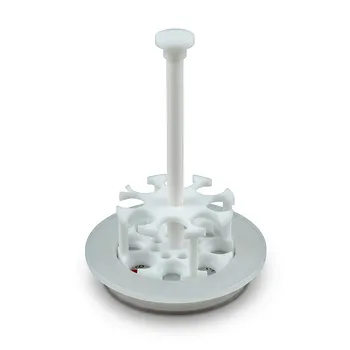
- High Performance TFM Microwave Digestion Vessel Rack 15 Position Customizable Sample Preparation Support
- High Pressure Custom TFM Reactor Stainless Steel Outer Vessel PTFE Inner Cup for Corrosive Synthesis
People Also Ask
- What is the role of a corrosion-resistant reactor in the synthesis of lignin-based carbon dots? Ensure Maximum Purity
- What are the technical advantages of using hydrothermal synthesis reactors for advanced electronic & optical nanomaterials?
- How does a hydrothermal synthesis reactor facilitate the production of crystalline materials with tailored morphologies? Precision Crystal Growth
- Why is the sealing reliability of a hydrothermal synthesis reactor critical for 24-hour cycles? Ensure Nano-Precision
- What role do hydrothermal synthesis reactors play in CQD preparation? Achieve High-Purity Nanomaterial Synthesis