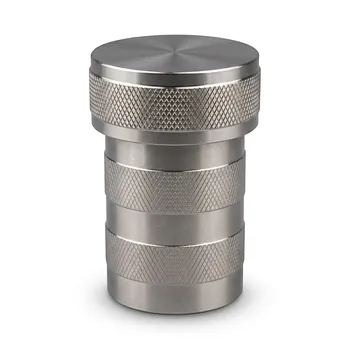
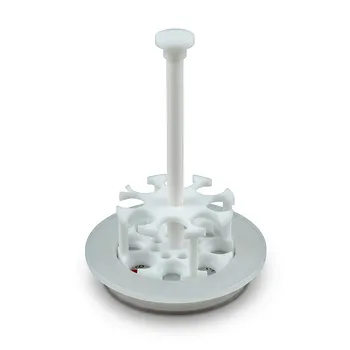
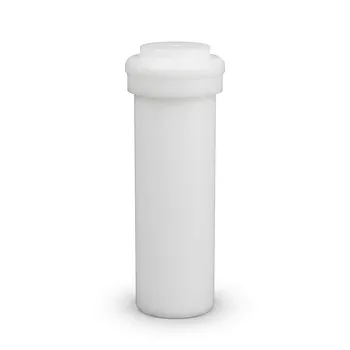
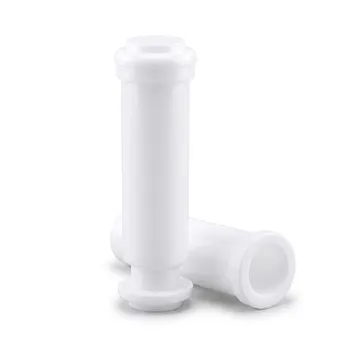
The high-pressure hydrothermal autoclave serves as the primary reaction vessel required to overcome the energy barriers of bottom-up polymer synthesis. It provides a sealed, high-temperature environment (typically 160°C) that facilitates the complex chemical transformations of precursors into non-conjugated zwitterionic polymer dots. By maintaining autogenous pressure, the autoclave allows reactants to undergo aza-Michael addition and hydrolysis, resulting in a robust nanoparticle with a high fluorescence quantum yield of approximately 28%.
The hydrothermal autoclave is the essential driver for the synthesis of polymer dots, utilizing high temperature and pressure to force the creation of a stable poly(amidoamine) core and a functionalized zwitterionic surface that would be impossible to achieve under standard atmospheric conditions.
Driving Complex Chemical Transformations
Facilitating the aza-Michael Addition
The autoclave provides the thermal energy necessary to initiate the aza-Michael addition among precursors. This reaction is the foundational step that assembles the poly(amidoamine) backbone, which forms the structural framework of the polymer dot. Without the sealed, high-temperature environment, these precursors would not effectively collide or bond to create a cohesive polymer network.
Catalyzing Surface Hydrolysis
Once the polymer backbone begins to form, the high-pressure environment triggers a secondary hydrolysis reaction. This process is critical because it generates a high density of carboxylate and amine groups on the particle surface. These functional groups are what give the polymer dot its zwitterionic character, allowing it to maintain stability and unique electronic properties in various environments.
Ensuring Structural and Optical Integrity
Formation of a Robust Core
The high-pressure conditions ensure that the resulting polymer dots possess a dense, robust core. By keeping solvents in a liquid state well above their boiling points, the autoclave promotes deep interaction between monomers, leading to higher crystallinity and purity. This structural density is vital for the stability of the nanoparticle in aqueous solutions.
Achieving High Fluorescence Quantum Yield
A primary function of the hydrothermal process is the optimization of the particle's optical properties. The controlled, high-energy environment leads to the formation of specific sub-structures within the polymer dot that enable a fluorescence quantum yield of roughly 28%. This efficiency is significantly higher than many other synthesis methods, making these dots highly effective for imaging and sensing applications.
Understanding the Trade-offs and Constraints
Risks of Thermal Degradation
While high temperatures are necessary for synthesis, excessive heat or prolonged reaction times can lead to over-carbonization. If the temperature exceeds the stability threshold of the precursors, the polymer dots may lose their specific zwitterionic surface chemistry, resulting in a loss of solubility or a decrease in fluorescence.
Pressure and Safety Limitations
The use of high-pressure autoclaves requires strict adherence to safety protocols, particularly regarding fill limits and cooling rates. If the vessel is overfilled, the autogenous pressure generated at 160°C can exceed the safety rating of the PTFE liner or the stainless steel shell, leading to equipment failure or inconsistent particle size distribution.
How to Apply This to Your Synthesis Goals
Choosing the Right Path for Your Project
Success in synthesizing non-conjugated polymer dots depends on balancing reaction time with temperature to achieve the desired surface charge and brightness.
- If your primary focus is Maximum Fluorescence: Prioritize maintaining a steady 160°C for the full duration of the reaction to ensure the poly(amidoamine) core is fully matured.
- If your primary focus is Zwitterionic Surface Density: Monitor the hydrolysis phase closely, as the balance between carboxylate and amine groups is highly sensitive to the pressure levels inside the autoclave.
- If your primary focus is Material Purity: Utilize a high-purity PTFE liner within the autoclave to prevent the reaction solution from contacting the metal walls, which eliminates potential metal ion contamination.
By precisely controlling the hydrothermal environment, you can tailor the zwitterionic surface and core density to produce highly stable, brightly fluorescent nanoparticles for advanced technical applications.
Summary Table:
| Synthesis Stage | Function of Autoclave | Key Outcome |
|---|---|---|
| aza-Michael Addition | Provides thermal energy to initiate precursor bonding | Formation of the poly(amidoamine) backbone |
| Surface Hydrolysis | High-pressure catalysis of secondary reactions | High density of carboxylate and amine groups |
| Optical Optimization | Creates a controlled, high-energy environment | Achievement of ~28% fluorescence quantum yield |
| Core Formation | Maintains autogenous pressure for monomer interaction | Dense, robust nanoparticle core with high crystallinity |
Elevate Your Synthesis Precision with KINTEK Fluoropolymer Expertise
To achieve high fluorescence quantum yields and maintain the zwitterionic integrity of your polymer dots, the purity of your reaction environment is paramount. KINTEK provides an exhaustive range of high-performance labware crafted specifically from PTFE and PFA to withstand the rigorous demands of hydrothermal synthesis.
From high-purity hydrothermal synthesis liners and microwave digestion vessels that prevent metal ion contamination, to custom CNC-fabricated reaction apparatus and fluid transfer components (tubing, fittings, valves), we deliver the specialized tools required for advanced material science. Whether you need standard labware like beakers and reagent bottles or complex, non-standard machined parts, KINTEK’s absolute focus on fluoropolymers ensures your experiments are backed by chemical inertness and thermal stability.
Ready to optimize your lab's performance? Contact us today to discuss your custom fabrication needs or high-volume orders!
References
- Soumen Ghosh, Subrata Chattopadhyay. A fluorescent nonconjugated zwitterionic polymer dot: hydrothermal synthesis and application in the nano-molar sensing of 2,4,6-trinitrophenol. DOI: 10.1039/d5nr00455a
This article is also based on technical information from Kintek Knowledge Base .
Related Products
- High Temperature Corrosion Resistant Hydrothermal Synthesis Reactor with TFM Inner Liner and Straight Cylinder Design
- PTFE Lined High Pressure Digestion Vessel 50ml High Temperature Hydrothermal Synthesis Tank
- Custom TFM Reaction Vessel with Stainless Steel Jacket and PTFE Inner Cup for High Corrosion Resistance
- High Performance TFM Microwave Digestion Vessel Rack 15 Position Customizable Sample Preparation Support
- High Pressure Custom TFM Reactor Stainless Steel Outer Vessel PTFE Inner Cup for Corrosive Synthesis
People Also Ask
- What is the role of a corrosion-resistant reactor in the synthesis of lignin-based carbon dots? Ensure Maximum Purity
- What are the technical advantages of using hydrothermal synthesis reactors for advanced electronic & optical nanomaterials?
- How does a hydrothermal synthesis reactor facilitate the production of crystalline materials with tailored morphologies? Precision Crystal Growth
- Why is the sealing reliability of a hydrothermal synthesis reactor critical for 24-hour cycles? Ensure Nano-Precision
- What role do hydrothermal synthesis reactors play in CQD preparation? Achieve High-Purity Nanomaterial Synthesis