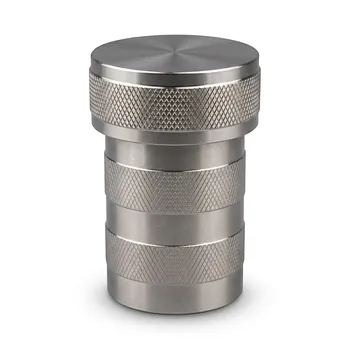
In the hydrothermal synthesis of MIL-101(Cr), a high-pressure autoclave serves as a specialized reaction vessel that maintains a sealed environment at 220 °C and high pressure. This specific environment is essential for facilitating effective collisions between trivalent chromium ions and terephthalic acid ligands, enabling them to assemble into a super-tetrahedral microporous structure. Without these extreme physical conditions, the framework would lack the MTN topology and structural integrity required for high-quality crystallinity.
The high-pressure autoclave provides the thermodynamic and kinetic energy necessary to drive the coordination assembly of metal-organic frameworks. By maintaining solvents in a liquid state far above their boiling points, it ensures precursors are fully dissolved and reactive enough to form complex, stable crystal structures.
Creating the Superheated Reaction Environment
Maintaining Liquid Phases Above Boiling Points
The primary role of the autoclave is to provide a sealed chamber where heating generates autogenous pressure. This pressure allows water or other solvents to remain in a liquid state at temperatures significantly exceeding their normal boiling points.
Increasing Precursor Solubility
At these elevated temperatures, the solubility of precursors—specifically the terephthalic acid ligands—is dramatically increased. This ensures that the reactants are fully dissolved in the medium, providing a homogenous environment for the reaction to occur.
Accelerating Reaction Kinetics
The high-pressure environment increases the frequency and energy of molecular collisions. For MIL-101(Cr), this is the "engine" that drives the trivalent chromium ions to bond with organic monomers at a rate that allows for organized growth.
Facilitating the Assembly of MIL-101(Cr)
Achieving MTN Topology
The autoclave provides the specific energy profile required to guide the assembly of a super-tetrahedral microporous structure. This specific arrangement, known as MTN topology, is what gives MIL-101(Cr) its high surface area and unique pore characteristics.
Enabling Structural Self-Repair
The hydrothermal environment allows for the reversible formation and "repair" of coordination bonds. This "error-correction" during the synthesis process is what leads to high crystallinity and a regular pore structure rather than an amorphous solid.
Ensuring Structural Integrity
By controlling the temperature-pressure relationship, the autoclave ensures the final MIL-101(Cr) framework is robust. This structural integrity is vital for the material to maintain its porosity during subsequent activation or application phases.
Understanding the Trade-offs and Constraints
Potential for Metal Contamination
While the high-pressure environment is necessary, the corrosive nature of the precursors at high temperatures can damage the autoclave’s stainless steel walls. This can lead to metal ion contamination, which compromises the purity of the synthesized MIL-101(Cr).
Material Limitations (PTFE Liners)
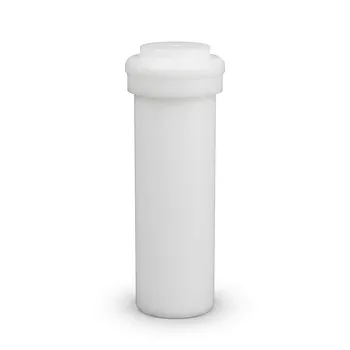
To prevent contamination, PTFE (Teflon) liners are often used; however, they have thermal limits (typically around 180°C to 250°C). Exceeding these limits can cause the liner to deform or release impurities, potentially ruining the synthesis batch.
Safety and Pressure Management
The use of autogenous pressure carries inherent risks if the temperature is not strictly monitored. Rapid pressure spikes can occur if the vessel is overfilled or if the temperature exceeds the design specifications of the autoclave.
How to Apply This to Your Synthesis Goals
The choice of autoclave settings and liners depends heavily on the desired characteristics of your final material.
- If your primary focus is High Crystallinity: Ensure the autoclave remains at the target temperature of 220 °C for the full duration to allow for complete coordination and structural "repair."
- If your primary focus is Material Purity: Always use a high-purity PTFE liner to prevent the reaction solution from contacting the metal walls, which eliminates the risk of chromium contamination from external sources.
- If your primary focus is Morphological Control: Precisely control the heating and cooling rates of the autoclave to influence the orientation of crystal growth and the resulting particle size.
The high-pressure autoclave is not merely a container, but a precision instrument that dictates the structural success of MIL-101(Cr) synthesis.
Summary Table:
| Feature | Role in Synthesis | Outcome |
|---|---|---|
| High Pressure | Maintains liquid solvents >100°C | Enhanced precursor solubility |
| 220°C Temperature | Provides kinetic energy | Rapid coordination assembly |
| Sealed Environment | Generates autogenous pressure | Stable MTN topology growth |
| PTFE Liners | Prevents metal contact | High-purity MOF product |
Master MIL-101(Cr) Synthesis with KINTEK’s High-Performance Solutions
Achieving the perfect MTN topology requires equipment that can withstand extreme hydrothermal conditions without compromising purity. KINTEK specializes in manufacturing premium laboratory supplies crafted from PTFE and PFA, specifically designed for high-performance research.
Whether you need high-purity hydrothermal synthesis liners, microwave digestion vessels, or complex non-standard machined parts via our end-to-end CNC fabrication, we provide the tools to prevent metal contamination and ensure structural integrity. From everyday consumables like O-rings and stirring bars to advanced reaction apparatus and fluid transfer components, we deliver absolute precision for your laboratory setup.
Ready to elevate your research? Contact KINTEK today to optimize your MOF production!
References
- Yue Qin, Xin Hong. Preparation and adsorption denitrification performance of MOFs material MIL-101(Cr). DOI: 10.3724/2097-213x.2024.jfct.0038
This article is also based on technical information from Kintek Knowledge Base .
Related Products
- High Temperature Corrosion Resistant Hydrothermal Synthesis Reactor with TFM Inner Liner and Straight Cylinder Design
- PTFE Lined High Pressure Digestion Vessel 50ml High Temperature Hydrothermal Synthesis Tank
- Custom TFM Reaction Vessel with Stainless Steel Jacket and PTFE Inner Cup for High Corrosion Resistance
- High Pressure Custom TFM Reactor Stainless Steel Outer Vessel PTFE Inner Cup for Corrosive Synthesis
- High Purity PFA Reaction Vessel for Biopharmaceutical Synthesis and Corrosive Chemical Fluid Handling with Customizable Tube Fittings
People Also Ask
- What is the role of a corrosion-resistant reactor in the synthesis of lignin-based carbon dots? Ensure Maximum Purity
- What are the technical advantages of using hydrothermal synthesis reactors for advanced electronic & optical nanomaterials?
- How does a hydrothermal synthesis reactor facilitate the production of crystalline materials with tailored morphologies? Precision Crystal Growth
- Why is the sealing reliability of a hydrothermal synthesis reactor critical for 24-hour cycles? Ensure Nano-Precision
- What role do hydrothermal synthesis reactors play in CQD preparation? Achieve High-Purity Nanomaterial Synthesis