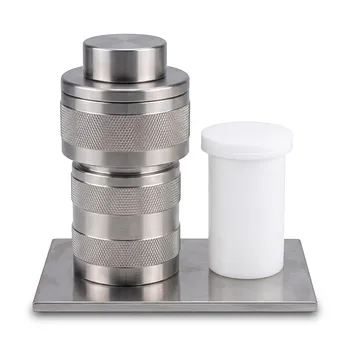
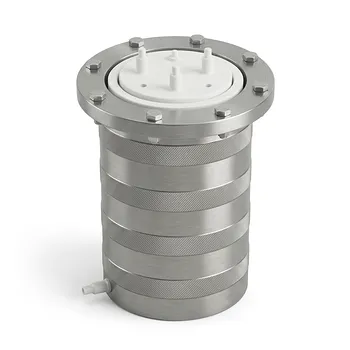
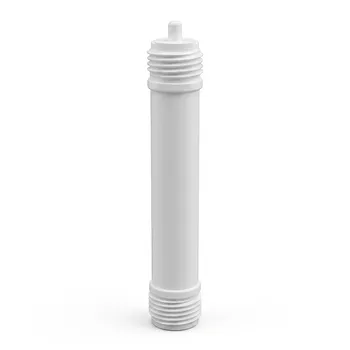
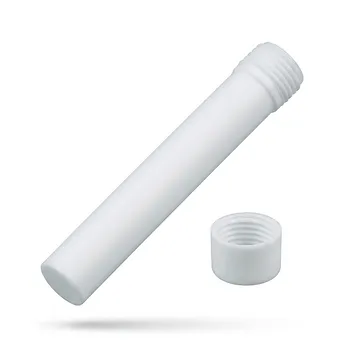
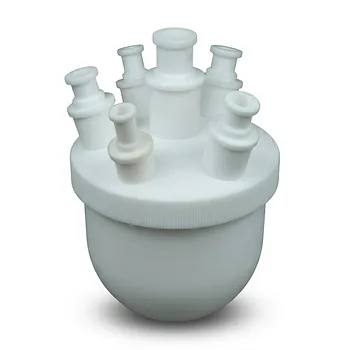
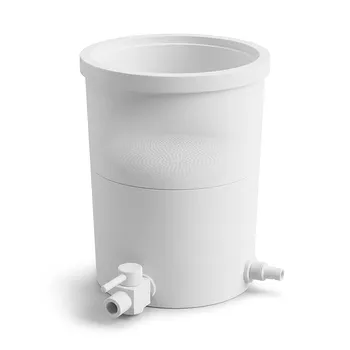
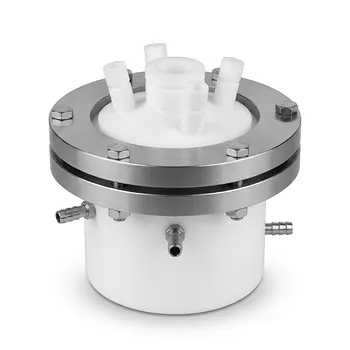
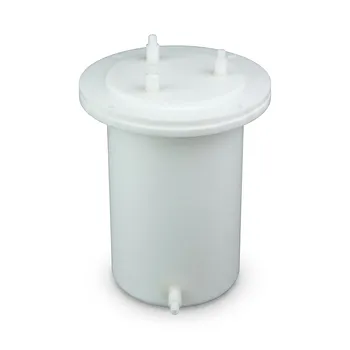
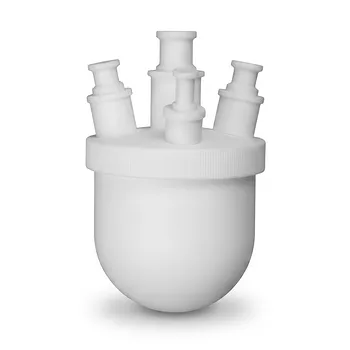
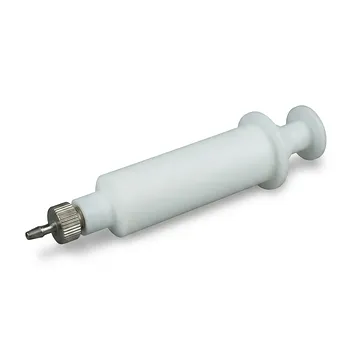
The PTFE liner serves as an indispensable chemical shield and high-pressure vessel. In the hydrothermal synthesis of iron-doped Bismuth Vanadate (BiVO4), it provides the necessary inertness to withstand highly corrosive nitric acid and sodium hydroxide while ensuring high sample recovery through its non-stick surface.
Core Takeaway: The PTFE liner is critical because it creates a chemically isolated, non-reactive environment that enables the high-pressure growth of pure BiVO4 crystals without corroding the reactor or contaminating the sample.
Facilitating Synthesis in Corrosive Environments
Resistance to Extreme pH Levels
The synthesis of iron-doped BiVO4 involves precursor solutions containing concentrated nitric acid and sodium hydroxide. PTFE (Polytetrafluoroethylene) is uniquely resistant to these aggressive chemicals, preventing the liner from degrading or reacting during the synthesis process.
Protection of the External Autoclave
Without the PTFE liner, the corrosive precursors would directly attack the stainless steel walls of the hydrothermal autoclave. The liner acts as a primary barrier, protecting the structural integrity of the outer pressure vessel from erosion and chemical pitting.
Optimizing Product Yield and Purity
Prevention of Wall Adhesion
PTFE possesses extremely low surface energy, creating a "non-stick" environment. This ensures that the synthesized BiVO4 nanostructures do not adhere to the vessel walls, leading to higher recovery rates and easier collection of the final powder.
Eliminating Metal Contamination
By isolating the reaction medium from the metal reactor walls, the PTFE liner prevents metal ion leaching. This is essential for maintaining the electronic properties of iron-doped BiVO4, as unintended impurities from the steel vessel could interfere with the material’s photocatalytic performance.
Enabling High-Temperature Crystal Growth
Managing High-Pressure Conditions
The liner allows the reaction to occur at temperatures reaching 180°C to 200°C, which is well above the solvent's boiling point. This high-pressure environment facilitates the direct nucleation and growth of nanoparticles, often eliminating the need for subsequent high-temperature calcination.
Control Over Morphology and Crystallinity
The stable thermal environment provided by the liner allows for the precise formation of specific structures, such as nanosheets or microporous frameworks. This stability ensures that the iron dopants are uniformly integrated into the Bismuth Vanadate lattice rather than forming secondary phases.
Understanding the Trade-offs
Temperature Limitations
While PTFE is highly stable, it has a functional upper limit, typically around 220°C to 250°C. Exceeding these temperatures can cause the liner to soften or deform, potentially leading to a loss of the hermetic seal and subsequent reactor failure.
Thermal Expansion Disparity
PTFE has a higher coefficient of thermal expansion than the stainless steel shell surrounding it. If the cooling process is too rapid, the liner may contract at a different rate, which can lead to mechanical stress or cracking over multiple synthesis cycles.
How to Apply This to Your Project
When utilizing PTFE liners for hydrothermal synthesis, your approach should be dictated by your specific material requirements and safety constraints.
- If your primary focus is Maximum Purity: Always use a new or meticulously cleaned PTFE liner to ensure no cross-contamination from previous synthesis runs affects the doping concentration.
- If your primary focus is Structural Integrity: Ensure the reaction temperature does not exceed 200°C for extended periods to prevent "creep" or deformation of the PTFE material.
- If your primary focus is High Recovery Rates: Leverage the non-stick properties by using a centrifuge to collect the precipitate directly from the liner, minimizing manual scraping that could damage the surface.
Selecting the correct PTFE liner is the single most important factor in ensuring a safe, repeatable, and pure hydrothermal synthesis of iron-doped BiVO4.
Summary Table:
| Key Feature | Benefit for BiVO4 Synthesis | Functional Detail |
|---|---|---|
| Chemical Inertness | Corrosion Resistance | Resists aggressive nitric acid and sodium hydroxide precursors. |
| Non-stick Surface | Higher Product Yield | Low surface energy prevents nanoparticle adhesion to vessel walls. |
| Metal Isolation | Exceptional Purity | Prevents metal ion leaching from the stainless steel autoclave. |
| Thermal Stability | Controlled Growth | Enables stable nucleation and crystal growth at 180°C–200°C. |
Elevate Your Research with KINTEK’s Precision Fluoropolymers
Maximize the success of your hydrothermal synthesis with high-performance PTFE and PFA solutions from KINTEK. Whether you require standard PTFE liners, microwave digestion vessels, or bespoke reaction apparatus, our absolute focus on fluoropolymer excellence ensures your experiments remain free from contamination and corrosion.
From everyday basic labware like beakers, crucibles, and reagent bottles to complex custom CNC-fabricated parts and fluid transfer components, KINTEK provides everything you need for a high-performance laboratory. Contact our experts today to secure the reliable, high-purity tools your advanced material synthesis demands.
References
- M. Maran, Yoshito Andou. Assessing the Photocatalytic Performance of Hydrothermally Synthesized Fe-Doped BiVO4 Under Low-Intensity UV Irradiation. DOI: 10.1007/s13369-025-10278-8
This article is also based on technical information from Kintek Knowledge Base .
Related Products
- PTFE Lined High Pressure Digestion Vessel 50ml High Temperature Hydrothermal Synthesis Tank
- High Pressure Custom TFM Reactor Stainless Steel Outer Vessel PTFE Inner Cup for Corrosive Synthesis
- Custom TFM Reaction Vessel with Stainless Steel Jacket and PTFE Inner Cup for High Corrosion Resistance
- High Purity PTFE Microwave Digestion Vessel for Soil and Food Analysis Acid Resistant Fluoropolymer Sample Preparation Liners
- High Purity TFM Microwave Digestion Vessels PTFE Acid Evaporation Liners Domestic GT-400 Equivalent Laboratory Reaction Containers
People Also Ask
- What are the benefits of using a PTFE-lined vessel for carbon-sulfur cathode treatment? Maximize Purity & Performance
- Why are PTFE-lined pressure digestion vessels required for the preparation of Ag/CeO2 catalysts? Purity & Performance
- What is the function of high-pressure PTFE digestion vessels in mineral analysis? Optimize Sample Mineralization
- What safety features are typically incorporated into high-pressure PTFE digestion vessel designs? Ensure Lab Safety
- What is the function of PTFE lined high-pressure vessels in g-C3N4 synthesis? Achieve High-Purity Material Growth