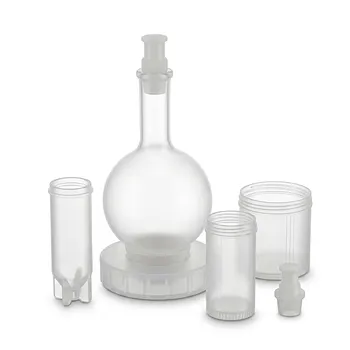
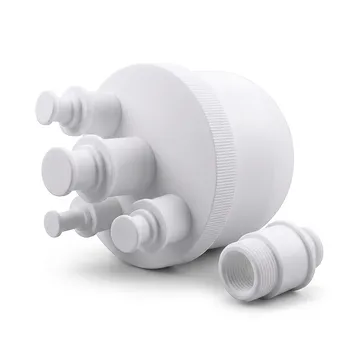
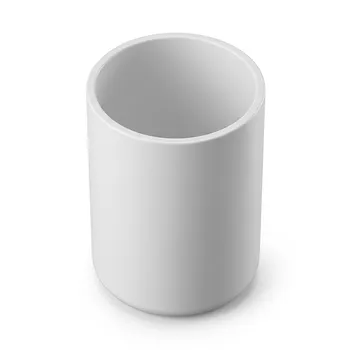
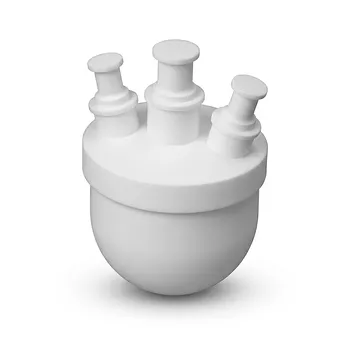
Fluoropolymers are ideal for high-performance laboratory equipment because they combine chemical inertness, thermal stability, low surface energy, and low friction in one material family. Polymers such as PTFE and PFA resist strong acids, bases, oxidizing reagents, and many organic solvents while remaining stable across demanding temperature ranges. Their non-stick surfaces reduce sample adhesion and contamination, while their low friction and wear resistance support reliable tubing, valves, seals, and moving components.
The central advantage of fluoropolymers is their ability to preserve material integrity and sample purity under chemical, thermal, and mechanical stress. They do not simply resist one form of laboratory abuse; they address several simultaneously.
Why Fluoropolymers Withstand Aggressive Chemistry
Strong carbon-fluorine bonds limit chemical attack
Fluorine is tightly bonded within the polymer structure, producing a chemically stable backbone with limited reactivity. This makes fluoropolymers highly resistant to corrosion and degradation when exposed to many strong acids, bases, oxidizing agents, and organic solvents.
For reaction vessels and digestion equipment, this resistance helps prevent cracking, swelling, embrittlement, or surface deterioration during aggressive chemical procedures.
Chemical inertness protects sample integrity
A laboratory material must resist the chemicals it contains without introducing substances into them. Fluoropolymers generally have low chemical reactivity and low absorption, reducing the likelihood that reagents will be altered by the apparatus.
This is particularly important in trace analysis, high-purity reagent handling, and semiconductor-related processing, where small amounts of leached or reacted material can affect results.
Resistance extends beyond corrosion
Fluoropolymers resist more than visible surface corrosion. Their chemical stability also helps preserve dimensions, flexibility, sealing performance, and internal surface quality during prolonged exposure to harsh media.
That stability is valuable in tubing, fittings, valves, storage containers, and vessel liners that must perform consistently over repeated chemical cycles.
Why They Perform Under Elevated Temperatures
High thermal stability supports demanding reactions
Fluoropolymers retain useful performance across a broad temperature range compared with many conventional plastics. This allows PTFE, PFA, and related materials to be used in heated fluid transfer, digestion, chemical storage, and reaction applications.
The exact operating limit depends on the polymer grade, temperature, mechanical load, exposure time, and design. Thermal stability should therefore be evaluated using the manufacturer’s continuous-use and pressure-temperature ratings.
Thermal resistance reduces degradation risk
At elevated temperatures, less stable plastics can soften, oxidize, deform, or release degradation products. Fluoropolymers are comparatively resistant to these failure modes, helping preserve apparatus integrity and minimize contamination risk.
Their performance is especially useful when chemical aggressiveness and heat occur together, as in digestion procedures and heated solvent handling.
Thermal stability is not unlimited
Fluoropolymers can eventually degrade when exposed to sufficiently high temperatures or specific reactive environments. Their use in high-temperature equipment requires attention to decomposition limits, mechanical load, ventilation, and the compatibility of the particular grade.
Why Their Surfaces Improve Laboratory Handling
Low surface energy creates non-stick behavior
Fluoropolymer surfaces have exceptionally low surface energy. Liquids and solids are less likely to adhere strongly to them, which makes vessels, tubing, and fittings easier to drain, clean, and empty.
This is useful when working with viscous materials, reactive residues, or samples that must be recovered with minimal loss.
Hydrophobicity and lipophobicity reduce retention
Many fluoropolymers repel both water-based and oily substances more effectively than ordinary polymer surfaces. This dual resistance can reduce residual films and material hold-up in containers and fluid-handling paths.
Lower retention helps minimize cross-contamination between procedures, although cleaning and validation remain necessary for analytical work.
Low adhesion supports sample recovery
Reduced adhesion can improve the recovery of valuable or very small samples from beakers, digestion vessels, liners, and transfer components. It also limits the amount of material that remains trapped on internal surfaces after draining.
For trace analysis, this property complements chemical inertness: the apparatus is less likely to react with the sample and less likely to retain it.
Why Low Friction Matters in Fluid Handling
Low friction improves component movement
Fluoropolymers have an exceptionally low coefficient of friction. This allows seals, valve components, bearings, and sliding interfaces to move with less resistance.
In laboratory equipment, that can support smoother valve operation, lower actuation force, and more reliable repeated use.
Wear resistance supports long service life
Their tribological performance combines low friction with useful resistance to wear. This is important for components exposed to repeated cycling, particularly valves, pump parts, gaskets, and precision fluid-transfer assemblies.
The result is more consistent performance and less particulate generation from mechanical contact.
Low friction is application-specific
Low friction does not make every fluoropolymer component suitable for every mechanical duty. Load, pressure, temperature, creep, reinforcement, mating materials, and surface finish all influence wear and dimensional stability.
How These Properties Work Together
Chemical stability preserves purity
Chemical inertness helps ensure that reaction vessels and fluid paths do not participate in the chemistry they are intended to contain. This supports reliable results when handling aggressive reagents or high-purity samples.
Low adhesion simplifies cleaning
The same low-energy surface that resists sample adhesion can make cleaning and rinsing more effective. Reduced residue lowers the risk that one procedure will influence the next.
Thermal and mechanical durability support repeatability
A material that resists heat, chemical attack, friction, and wear is more likely to maintain its shape and surface condition over repeated cycles. Stable geometry is essential for seals, tubing connections, reaction vessels, and calibrated fluid-handling systems.
Understanding the Trade-offs
Mechanical stiffness can be lower than metal or glass
Fluoropolymers are generally less rigid than metals and glass. Under sustained load, pressure, or elevated temperature, some grades can creep or deform.
Designers may need thicker walls, mechanical support, reinforcement, or a fluoropolymer lining over a structurally stronger substrate.
Permeability can limit containment
Chemical resistance does not mean complete impermeability. Some gases, vapors, and solvents can permeate fluoropolymer walls over time, especially through thin tubing or under pressure.
For volatile or highly sensitive chemicals, wall thickness, temperature, exposure duration, and the specific polymer grade must be considered.
Compatibility still requires verification
Fluoropolymers resist a very broad range of chemicals, but they are not universally compatible. Certain highly reactive substances, extreme temperatures, and specialized chemical conditions can cause attack or degradation.
A compatibility chart is a starting point, not a substitute for application-specific testing and supplier data.
Processing and cost may be higher
Fluoropolymers can be more difficult and expensive to process than commodity plastics. Their value is strongest where purity, chemical resistance, thermal performance, or service life justifies the additional material and fabrication cost.
How to Apply This to Your Project
The right fluoropolymer should be selected according to the complete operating environment, not a single attractive property.
- If your primary focus is chemical resistance: Choose a chemically compatible grade such as PTFE or PFA and verify performance against the exact reagents, concentrations, temperatures, and exposure times.
- If your primary focus is sample purity: Prioritize low extractables, low absorption, low surface adhesion, and validated cleaning performance for the intended analytical method.
- If your primary focus is heated reactions or digestion: Confirm the material’s continuous-use temperature, pressure-temperature rating, thermal cycling behavior, and ventilation requirements.
- If your primary focus is valves, seals, or moving parts: Evaluate friction, wear, creep, load, and dimensional stability together rather than relying on chemical compatibility alone.
- If your primary focus is long-term fluid containment: Check permeability, wall thickness, fitting design, permeation through seals, and the expected duration of chemical exposure.
Fluoropolymers give laboratory designers a powerful combination of purity, chemical resistance, thermal stability, and low-friction performance, provided the selected grade is matched carefully to the real operating conditions.
Summary Table:
| Property | Benefit for Lab Equipment |
|---|---|
| Chemical inertness | Resists acids, bases, solvents; prevents contamination |
| Thermal stability | Withstands high temperatures without degradation |
| Low surface energy | Non-stick, easy cleaning, low sample retention |
| Low friction | Smooth operation of valves, seals, and moving parts |
| Wear resistance | Long service life, reduced particulate generation |
Enhance your lab's performance with KINTEK's high-purity fluoropolymer equipment. From PTFE/PFA labware to custom CNC-machined parts, we deliver chemical resistance, thermal stability, and low friction for your most demanding applications. Contact us today to discuss your needs and experience the KINTEK advantage! Get in touch
Related Products
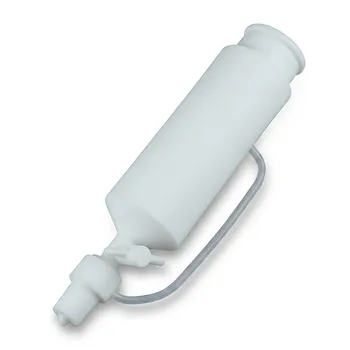
- Custom PTFE Constant Pressure Separatory Funnel 100ml Fluoropolymer Labware for Corrosive Chemical Transfer
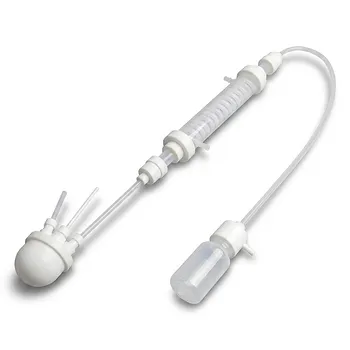
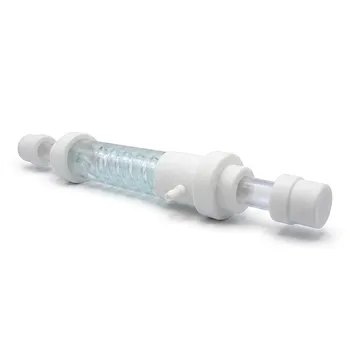
- Corrosion Resistant Hydrogen Fluoride Reflux Apparatus PTFE Flask Condenser Separatory Funnel Collection Bottle High Temperature Laboratory System
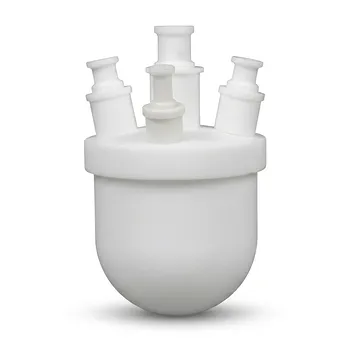
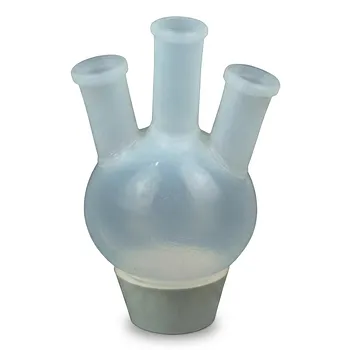
- Custom PTFE Flask 250ml High Purity Fluoropolymer Laboratory Vessel for Chemical Research
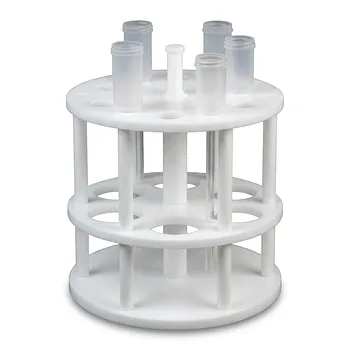
- Custom PFA Microcolumn Racks and PTFE Machined Low Background Corrosion Resistant Laboratory Fixtures
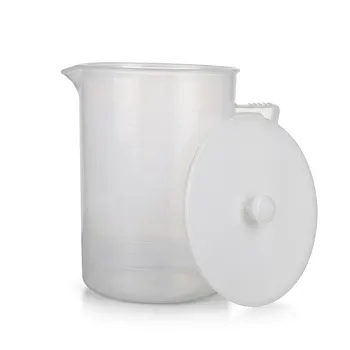
- High Purity PFA Beaker with Handle and Large Capacity Washable Soak Basket Multi Spec Teflon Laboratory Labware
People Also Ask
- Which material characteristics make fluoropolymers suitable for lithium-ion battery separators, and how do fluoropolymer laboratory supplies support separator performance testing?
- How does structural integration of flame-retardant elements in fluorinated polymers compare to small-molecule additives, and why is this relevant to fluoropolymer laboratory material selection?
- How do perfluorinated monomer building blocks impart superhydrophobic and oleophobic properties? Low surface energy is critical for fluoropolymer labware.
- What performance changes occur when increasing the fluorine content in fluoropolymer materials used for specialized laboratory supplies?
- How does resin stratification occur during the curing of fluoropolymer coatings, and why might solid fluoropolymer laboratory apparatus be preferred over surface coatings for aggressive chemical applications?