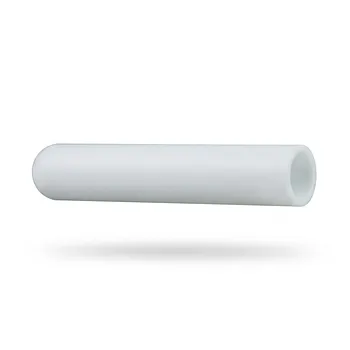
PTFE capillary tubing is defined primarily by four geometric parameters: Inner Diameter (ID), Outer Diameter (OD), Wall Thickness, and Concentricity. These dimensions, often governed by standards like ASTM D3295, dictate the tubing's classification and its ability to handle pressure, maintain flow uniformity, and resist mechanical deformation in demanding environments.
The performance of PTFE capillary tubing depends on the precise balance between its internal volume (ID) and the structural mass of its walls. High concentricity and low surface roughness are critical to ensuring that the material's inherent chemical inertness is not compromised by physical weak spots or boundary-layer drag.
The Critical Dimensions of PTFE Capillaries
Inner Diameter (ID) and Flow Control
The inner diameter is the most critical parameter for fluid dynamics, typically ranging from 0.1 mm to 5 mm. This dimension determines the volumetric flow rate and the internal surface area exposed to the medium.
Small IDs are essential for precision applications, such as chromatography or medical dosing, where "dead volume" must be minimized. However, as the ID decreases, the resistance to flow increases significantly, requiring higher pump pressures.
Outer Diameter (OD) and System Integration
The outer diameter defines the tubing's physical footprint and its compatibility with standard compression fittings and manifolds. A consistent OD is necessary to ensure leak-proof seals in high-purity fluidic systems.
In aerospace and industrial assemblies, the OD also dictates the bend radius limits. PTFE's flexibility allows for tight routing, but the OD must remain stable to prevent kinking or "ovality" during installation.
Wall Thickness and Structural Integrity
Categorization via ASTM D3295
Wall thickness is used to classify PTFE tubing into specific grades: light-wall, thin-wall, standard-wall, and heavy-wall. These classifications help engineers select the appropriate "beefiness" for the application's mechanical demands.
A thicker wall provides a more robust barrier against permeation and physical damage. Conversely, thinner walls offer better flexibility and faster thermal transfer, which may be required in heat exchange applications.
Impact on Pressure Ratings
Because PTFE is a relatively soft polymer, the ratio of wall thickness to ID directly determines the burst pressure. Thinner walls are generally confined to low- or moderate-pressure applications.
Engineers must account for the fact that PTFE's strength decreases as temperature rises toward its +260 °C limit. A "heavy-wall" specification is often necessary if the system operates at both elevated pressures and high temperatures.
Precision Metrics: Concentricity and Surface Finish
The Necessity of High Concentricity
Concentricity measures how centered the ID is relative to the OD, with high-performance capillaries requiring values greater than 95%. Poor concentricity results in uneven wall thickness, creating "thin spots" that are prone to premature failure.
Uniform walls ensure that the tube expands evenly under pressure. This geometric precision is vital for maintaining long-term dimensional stability in hydraulic or fuel-transfer circuits.
Surface Roughness and Boundary Layers
The internal surface finish of PTFE capillaries is exceptionally smooth, often reaching an Ra < 0.2 µm. This microscopic smoothness minimizes boundary-layer drag, allowing for more efficient fluid transport.
A smooth finish also prevents the "shedding" of particles and reduces the likelihood of bacterial growth or cross-contamination. This makes it the standard choice for analytical chemistry and medical-grade fluid handling.
Understanding the Trade-offs
Mechanical Creep and Cold Flow
While PTFE is chemically nearly indestructible, it is prone to creep (cold flow) under sustained mechanical load. Over time, the tubing may permanently deform if subjected to constant pressure or tight clamps.
This means that while the geometry might be perfect at installation, it can shift over months of use. Support structures and proper fitting selection are required to mitigate this inherent material limitation.
Hydrophobicity and Capillary Pressure
PTFE is highly hydrophobic, with water contact angles between 100° and 110°. In very small capillary diameters, this creates negative capillary pressure for aqueous solutions, meaning the liquid will not rise spontaneously.
This property is an advantage for gas-liquid separation but can be a challenge if the goal is passive wicking. For non-polar liquids, however, wetting is significantly improved, changing the flow characteristics entirely.
How to Apply This to Your Project
When selecting PTFE capillary tubing, your geometric choices should be driven by the specific stressors of your operating environment.
- If your primary focus is high-pressure safety: Opt for "heavy-wall" classifications and ensure a concentricity rating of 95% or higher to eliminate structural weak points.
- If your primary focus is precision analytical flow: Prioritize an ID near the lower end of the spectrum (0.1 mm to 0.5 mm) and a surface finish of Ra < 0.2 µm to minimize dead volume and drag.
- If your primary focus is extreme temperature cycling: Use standard-wall thickness to balance the need for mechanical mass with the flexibility required to survive thermal expansion and contraction.
- If your primary focus is gas-liquid separation: Leverage the material's natural hydrophobicity in small-diameter capillaries to create high breakthrough pressures for aqueous phases.
By matching these geometric parameters to your functional requirements, you ensure the long-term reliability of your fluidic system.
Summary Table:
| Geometric Parameter | Typical Specification | Critical Impact on Performance |
|---|---|---|
| Inner Diameter (ID) | 0.1 mm to 5 mm | Controls volumetric flow rate and internal "dead volume." |
| Outer Diameter (OD) | Industry Standard Sizes | Ensures leak-proof seals with fittings and determines bend radius. |
| Wall Thickness | Light to Heavy-Wall | Directly dictates burst pressure and structural mass. |
| Concentricity | > 95% | Prevents "thin spots" and ensures even expansion under pressure. |
| Surface Finish | Ra < 0.2 µm | Minimizes boundary-layer drag and prevents particle shedding. |
Elevate Your Fluidic Precision with KINTEK
Need PTFE capillary tubing or custom fluoropolymer components that meet the strictest geometric tolerances? At KINTEK, we specialize in high-performance materials designed for the most demanding laboratory environments.
From everyday basic labware like beakers, measuring cylinders, and reagent bottles to specialized high-purity trace analysis instruments, we provide the building blocks for scientific discovery. Our expertise spans comprehensive fluid transfer components (tubing, fittings, valves), sample prep tools, and general consumables, extending all the way to advanced reaction apparatus such as custom electrochemical cells and microwave digestion vessels.
Why choose KINTEK?
- Unmatched Material Focus: Absolute specialization in high-performance PTFE and PFA.
- Custom Fabrication: End-to-end CNC machining for complex, non-standard parts and bespoke setups.
- Scalability: We handle everything from unique prototype designs to high-volume industrial orders.
Don't let geometric inconsistencies compromise your results. Contact us today to discuss your custom specifications and see how our fluoropolymer expertise can optimize your laboratory systems.
Related Products
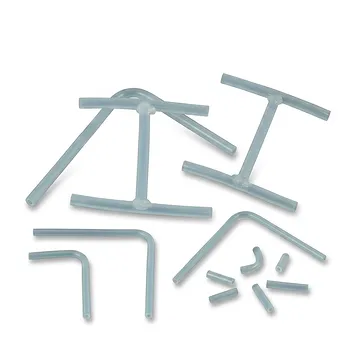
- High Performance PFA Coiled Spring Tubing and Custom PTFE Fabrication Services with Welded Fittings and Precision Bent Components
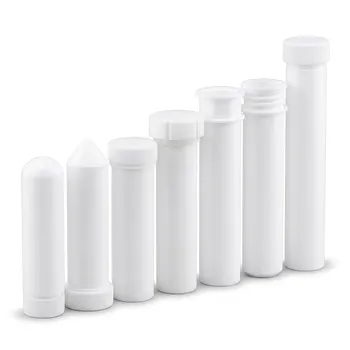
- Custom High Purity PTFE Digestion Tubes and Centrifuge Tubes for Trace Metal Analysis
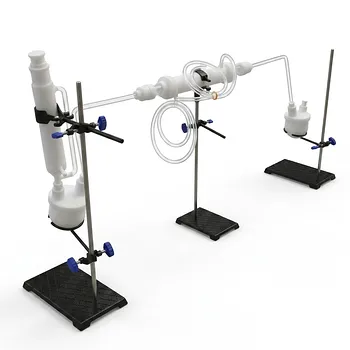
- Custom PTFE Condenser Tube Hydrofluoric Acid Resistant Reflux Device Constant Pressure Separatory Funnel
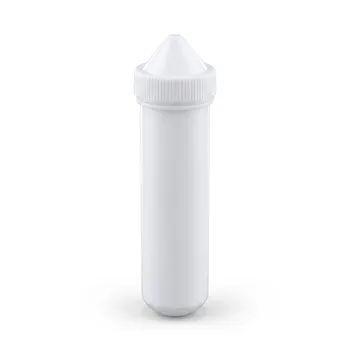
- High Purity PTFE Digestion Tubes and Custom Centrifuge Tubes 100ml for Trace Analysis and Chemical Digestion
- Custom PTFE Condenser Tube Reflux Reaction Condensation Purification Device Semiconductor Chemical Lab Equipment
People Also Ask
- What are the technical advantages of high-precision PFA tubing in MXene production? Maximize Purity and Yield.
- What technical advantages do PFA tubing and fittings offer? Master Precision Fluid Transfer and Flow Chemistry
- What are the technical advantages of high-quality PFA tubing? Achieve Ultimate Purity and Precision in Fluid Handling
- What are the key benefits of PTFE in custom fabrication? Unlock Performance in Extreme Conditions
- What fabrication services are available for PTFE? Shearing, Stamping, Laser Cutting, Molding & Machining