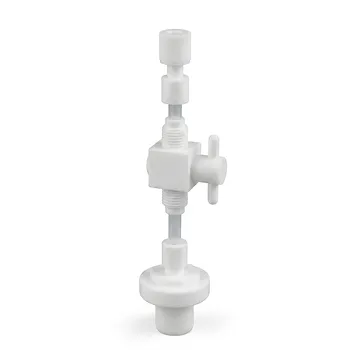
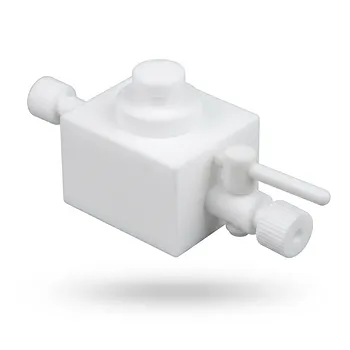
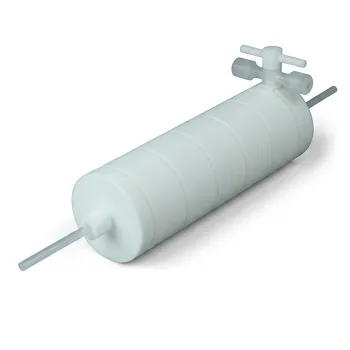
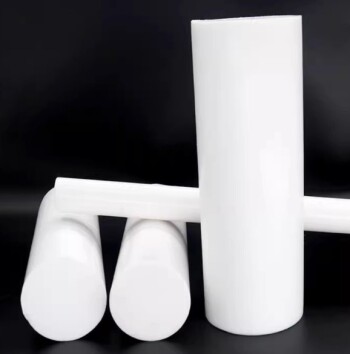
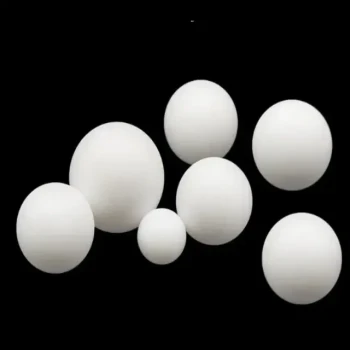
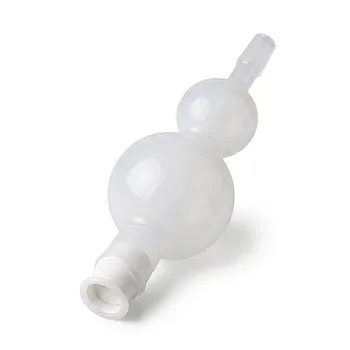
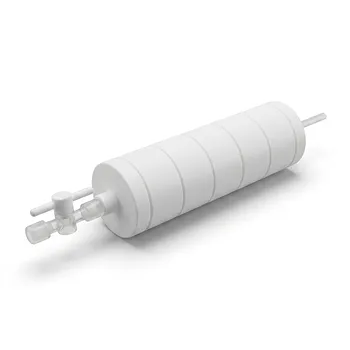
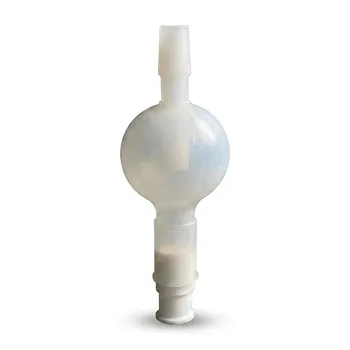
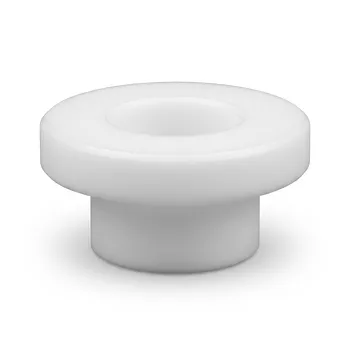
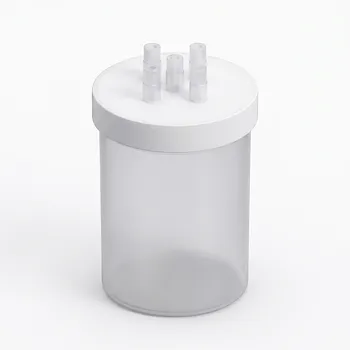
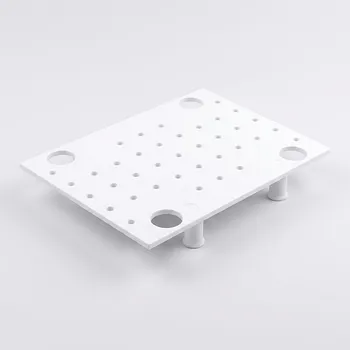
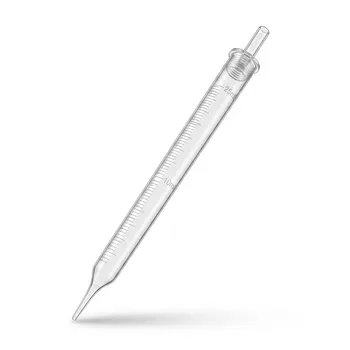
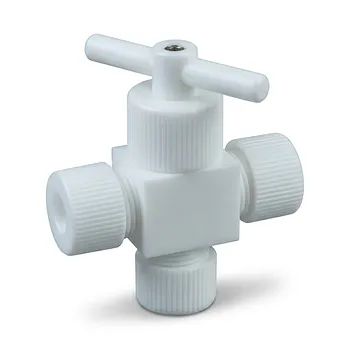
The key molecular feature is a fluorine-protected carbon backbone. PTFE and PFA contain highly fluorinated, essentially perfluorinated polymer structures in which strong, short carbon–fluorine (C–F) bonds surround and shield the carbon chain. This molecular architecture makes them highly resistant to acids, bases, solvents, oxidizing and reducing agents, while their low-energy surfaces minimize wetting, adsorption, and contamination in laboratory use.
PTFE and PFA resist chemical attack because fluorine forms a dense, protective sheath around the polymer backbone. The combination of strong C–F bonds, limited molecular accessibility, and very low surface energy prevents most reagents from reacting with, dissolving, or adhering strongly to the material.
Why the Molecular Structure Resists Chemical Attack
Strong carbon–fluorine bonds
Fluorine forms exceptionally strong covalent bonds with carbon. These bonds require substantial chemical energy to break, giving PTFE and PFA high resistance to aggressive acids, bases, organic solvents, and reactive laboratory reagents.
The fluorinated structure also remains stable across a broad temperature range, including applications involving thermal stress such as digestion procedures.
A fluorine sheath protects the carbon backbone
In PTFE, the polymer chain adopts a helical conformation with fluorine atoms positioned around the carbon backbone. This fluorine sheath physically and electronically shields the more chemically vulnerable carbon–carbon bonds from attack.
As a result, most reagents cannot readily reach or react with the underlying polymer chain. This helps explain PTFE’s practical insolubility in ordinary solvents and its resistance to strong acids and bases.
High fluorine density creates chemical uniformity
PTFE is built from highly fluorinated repeating units, while PFA retains a similarly perfluorinated backbone with fluorinated side-group modifications that improve melt processability. In both materials, the high density of fluorine produces a chemically stable, nonreactive surface.
PFA therefore preserves the central chemical-resistance advantages of PTFE while offering greater processing flexibility for certain laboratory components.
How Surface Chemistry Protects Samples
Exceptionally low surface energy
Fluorinated surfaces have very low surface energy. This gives PTFE and PFA strong hydrophobic and oleophobic behavior, reducing their tendency to be wetted by water-based and organic liquids.
Lower wettability also reduces the amount of sample that spreads across or remains attached to the vessel or component surface.
Minimal adsorption and residue retention
The chemically nonreactive, low-energy surface discourages strong adhesion of sample constituents and residues. This is especially important when handling trace-level analytes, where even small amounts of carryover can affect results.
Fluoropolymer vessels, tubing, and fittings can therefore help reduce sample loss, memory effects, and cross-contamination between procedures.
Low risk of leachables
Because the polymer backbone is resistant to chemical degradation, PTFE and PFA are unlikely to release degradation products or react with samples under their intended operating conditions. This supports their use in trace analysis vessels, digestion containers, and high-purity fluid-handling systems.
However, material purity, processing history, temperature, and the specific reagent combination still matter; chemical resistance is not an absolute guarantee against every possible exposure.
Why PTFE and PFA Perform in Demanding Laboratory Applications
Resistance to aggressive reagents
The protected fluorinated backbone allows these materials to withstand many concentrated acids, strong bases, organic solvents, and oxidizing or reducing environments. This makes them suitable for chemical containment and transfer where conventional polymers could swell, crack, dissolve, or contaminate the sample.
Their resistance is particularly valuable in trace analysis, where the container must not contribute measurable chemical background.
Stability during thermal processing
The same strong molecular bonding that resists chemical attack also provides high thermal endurance. PTFE and PFA can maintain useful performance during elevated-temperature procedures such as microwave digestion, provided the application remains within the material’s specified temperature and pressure limits.
Temperature, pressure, mechanical loading, and reagent chemistry must be evaluated together rather than treated independently.
Biological and chemical inertness
The fluorinated molecular structure provides broad biological and chemical inertness. It does not readily support reactions with biological or chemical samples, helping preserve sample composition during storage, preparation, and transfer.
This is why fluoropolymers are used in digestion tubes, wash bottles, tubing, fittings, and other components where purity is more important than low material cost.
Understanding the Trade-offs
Chemical resistance does not eliminate all limitations
PTFE and PFA are highly resistant, but they are not universally immune to every chemical or condition. Certain highly reactive fluorinating systems, molten alkali metals, extreme temperatures, or combinations of heat and mechanical stress may present compatibility concerns.
A compatibility decision should therefore consider the exact reagent, concentration, temperature, exposure time, pressure, and mechanical load.
Low surface energy complicates manufacturing
The same low surface energy that reduces sample adhesion also makes fluoropolymers difficult to bond, coat, and print. Layer-to-layer adhesion can be challenging, and many conventional adhesives do not adhere reliably without specialized surface treatment.
Processing can be demanding
PTFE has extremely high melt viscosity and is difficult to process by conventional melt methods. PFA is more readily melt-processable, but fluoropolymer processing still requires careful control because overheating can generate corrosive decomposition products.
For complex precision laboratory components, machining or specialized fabrication may therefore be preferred over ordinary molding or additive manufacturing.
Low adhesion can affect seals and assemblies
A nonstick surface is beneficial for cleanability and sample recovery, but it can make joining, sealing, and overmolding more difficult. Component design may need mechanical retention, compatible sealing geometries, or purpose-developed bonding methods.
Choosing the Right Fluoropolymer for the Application
PTFE and PFA share the same fundamental chemical-resistance mechanism, but their processing and component-design characteristics can differ. The correct choice depends on whether the priority is maximum chemical inertness, fabrication method, transparency, flexibility, or dimensional requirements.
- If your primary focus is chemical inertness: Choose a high-purity PTFE or PFA component whose compatibility has been verified for the specific reagents, temperature, and exposure duration.
- If your primary focus is trace-analysis integrity: Prioritize low-extractables, low-adsorption surfaces, clean manufacturing, and designs that minimize residue retention and carryover.
- If your primary focus is thermal digestion: Confirm the complete temperature–pressure–reagent combination rather than relying only on a general temperature rating.
- If your primary focus is complex component fabrication: Consider PFA when melt processability is advantageous, or use specialized machining and fabrication methods for PTFE.
- If your primary focus is long service life: Evaluate chemical exposure together with mechanical stress, sealing requirements, and the possibility of thermal cycling.
Understanding the fluorine-protected molecular architecture lets you select PTFE and PFA based on measurable application requirements rather than on the label “chemical resistant” alone.
Summary Table:
| Molecular Feature | Role in Chemical Resistance | Practical Benefit |
|---|---|---|
| Strong C–F bonds | High bond energy prevents breakdown | Resistance to acids, bases, solvents |
| Fluorine sheath | Shields carbon backbone from attack | Low reactivity, insolubility |
| High fluorine density | Uniform, nonreactive surface | Broad chemical compatibility |
| Low surface energy | Reduces wetting and adhesion | Minimal sample carryover and contamination |
| Chemical inertness | No degradation or leachables | Ideal for trace analysis and high-purity use |
Elevate your lab's performance with our premium PTFE and PFA labware, designed for unmatched chemical resistance and trace analysis integrity. From beakers to custom CNC machined parts, we deliver reliable solutions for your demanding applications. Contact us today to discuss your requirements and experience the KINTEK advantage!
Related Products
- High Purity PFA Crucible and Corrosion Resistant PTFE Beaker for Trace Analysis and Custom Laboratory Applications
- PTFE PFA Vacuum Filtration System Corrosion Resistant Customizable Shatterproof Laboratory Device
- High Purity PFA PTFE Flare Stop Valves Customizable 2-Way 3-Way Reducing Fluoropolymer Fluid Control Solutions
- Corrosion Resistant PTFE Support with PFA Transparent Reaction Tank and High Purity PFA Sampling Tube for Trace Analysis
- High Purity PFA Coiled Tubing Custom PTFE Machining PFA Welding and Precision Bending Solutions
People Also Ask
- Why are high-purity vessels critical for BiFeO3 synthesis? Ensuring Phase Purity
- Why is the use of high-purity PFA or PTFE labware critical during TiO2 nanoparticle purification? Protect Sample Purity
- Why is high-purity PFA trace analysis labware used for MXene? Ensure Superior Material Integrity in Research
- Why is high-purity PFA labware necessary for Znx@LS-2 zeolite ICP-OES analysis? Ensure Trace-Level Precision
- Why is high-purity PFA trace analysis labware recommended for trace element detection? Achieve Gold Standard PPT Accuracy