PTFE and PFA resist sticking because their fluorinated surfaces have extremely low surface energy, weak intermolecular attraction, and low friction. In these polymers, carbon–fluorine bonds create a chemically stable, tightly bound outer surface with very low electronic polarizability. The result is poor wetting by many liquids and weak attraction between the material and sample molecules, which reduces residue, carryover, and sample retention.
Core takeaway: The key is not simply that PTFE and PFA contain strong C–F bonds. Their highly fluorinated, low-polarizability surfaces generate weak adhesive forces and low surface energy, so liquids bead rather than spread and solutes have little tendency to remain attached to the walls.
Why Fluorinated Surfaces Are Difficult to Wet
Strong C–F bonds create a stable surface
PTFE consists of carbon chains surrounded by fluorine atoms, while PFA has a closely related perfluorinated structure with minor ether-linkage modifications. The strong C–F bonds shield the carbon backbone and give the exposed surface exceptional chemical stability.
Because the outer surface is dominated by fluorine, many contacting substances interact primarily with a tightly bound, chemically inert fluorinated layer rather than with more reactive carbon sites.
High electronegativity reduces surface attraction
Fluorine is highly electronegative, so the electrons in C–F bonds are held relatively tightly. This makes the surface weakly polarizable: its electron cloud is difficult to distort when another molecule approaches.
The C–F bonds are individually polar, but the largely regular arrangement in PTFE substantially reduces the net permanent dipole of the surface. Consequently, many ordinary dipole–dipole and dispersion interactions with contacting molecules are weak.
Low polarizability weakens van der Waals adhesion
Molecular adhesion often comes from van der Waals forces, including interactions caused by temporary or induced dipoles. A low-polarizability fluorinated surface produces relatively weak versions of these interactions.
This gives PTFE and PFA very low surface energy and a low critical surface tension, commonly associated with poor wetting. A droplet is therefore more likely to remain rounded or move along the surface than spread into a strongly attached film.
How These Properties Reduce Sample Retention
Poor wetting limits the contact area
When a liquid wets a surface well, it spreads across a large area and can leave a thin residual film. PTFE and PFA generally promote poor wetting, so droplets tend to bead and detach more readily.
Less spreading means less liquid remains distributed across the walls of tubing, valves, bottles, and vessels after draining or transfer.
Weak adhesion reduces residue formation
Solutes can remain behind when solvent evaporates, particularly if they adsorb to or chemically interact with the container wall. The low-energy fluoropolymer surface provides few favorable sites for strong adsorption.
This is especially valuable in trace analysis, where even a small residue can create memory effects, cross-contamination, or a biased subsequent measurement.
Low friction assists mechanical release
PTFE is also known for an exceptionally low coefficient of friction. This does not by itself explain all non-stick behavior—friction describes resistance to sliding, whereas adhesion describes molecular attachment—but it helps droplets, particles, seals, and deposits move across the surface with less resistance.
In fluid-transfer components, the combination of low adhesion and low friction makes draining, rinsing, and removal of deposits easier.
Smooth, chemically inert surfaces support recovery
PTFE and PFA do not normally provide the reactive surface chemistry found in metals, glass surface sites, or many untreated plastics. Their chemical inertness therefore reduces opportunities for adsorption, reaction, or irreversible binding.
This supports high sample recovery, although actual recovery still depends on fluid composition, viscosity, geometry, flow conditions, and surface condition.
PTFE and PFA: Same Principle, Different Materials
PTFE provides the classic low-energy fluoropolymer surface
PTFE has a highly fluorinated and relatively symmetric molecular structure. Its exposed fluorine-rich surface gives it very low surface energy, low friction, and strong resistance to chemical attack.
These characteristics make PTFE useful for valves, tubing, vessels, crucibles, and other components used with aggressive reagents or trace-level samples.
PFA adds processing and flexibility advantages
PFA is a perfluorinated copolymer related to PTFE. Its structure includes perfluoroalkoxy groups, which make it melt-processable while preserving the key fluoropolymer characteristics.
Its surface remains low-energy, chemically resistant, and low-adhesion, so PFA can provide similar low-retention behavior in molded or transparent laboratory vessels and fluid-transfer components.
What “Low Retention” Means in Practice
It primarily reduces surface adsorption
The relevant mechanism is mainly reduced adsorption and wetting at the material–fluid interface. Molecules have fewer energetic incentives to attach to the fluoropolymer surface.
This is different from claiming that no sample can ever remain. Entrained liquid, dead volume, surface roughness, evaporation, and particulate trapping can still produce measurable retention.
It helps limit carryover
If less material adheres to tubing walls, valves, or storage vessels, less of the previous sample is available to contaminate the next one. This is particularly important when transitioning between high- and low-concentration samples.
The benefit is strongest when components are also designed for effective draining and rinsing, because material properties cannot eliminate retention caused by unfavorable geometry.
It simplifies cleaning
Because residues are weakly attached, rinsing or flushing can remove them more effectively than from a surface with higher energy or stronger chemical affinity. This can reduce cleaning effort and the risk of introducing cleaning-related contamination.
However, cleaning validation remains necessary for highly concentrated, viscous, particulate, or chemically unusual samples.
Understanding the Trade-offs
Non-stick does not mean zero retention
PTFE and PFA reduce adhesion; they do not guarantee complete sample recovery. Small amounts of liquid may remain in fittings, corners, valve cavities, tubing bends, or other dead-volume regions.
A low-retention material must therefore be paired with appropriate component geometry and operating procedures.
Low friction is not the complete explanation
It is common to attribute all non-stick behavior to PTFE’s low coefficient of friction. That is incomplete: friction affects sliding, while the fundamental chemical origin of low adhesion is the fluorinated surface’s low surface energy and weak intermolecular attraction.
Surface condition still matters
Scratches, deposits, particles, manufacturing residues, and roughness can create sites where liquid becomes mechanically trapped. Aging or repeated chemical and thermal exposure may also alter the practical performance of a component even when the bulk polymer remains resistant.
Fluids do not all behave the same way
Wetting depends on both the solid surface and the liquid. A liquid’s polarity, surface tension, viscosity, dissolved solids, and concentration influence how readily it spreads, drains, or leaves residue on PTFE or PFA.
Therefore, application testing is preferable when quantitative recovery or carryover limits are important.
Applying the Chemistry to Component Selection
The material’s chemical behavior is only one part of a low-retention design. Select fluoropolymer components together with suitable geometry, cleaning methods, and transfer conditions.
- If your primary focus is maximum sample recovery: Choose clean, fluoropolymer-wetted flow paths with minimal dead volume, and validate recovery using the actual sample matrix.
- If your primary focus is preventing cross-contamination: Use PTFE or PFA components to reduce adsorption, then combine them with adequate flushing, draining, and blank checks.
- If your primary focus is aggressive chemical handling: Favor PTFE or PFA for their strong C–F-bonded, chemically resistant surfaces, while confirming compatibility with the specific reagent and temperature.
- If your primary focus is easy cleaning: Use the low-energy surface to reduce residue adhesion, but control scratches, particulates, evaporation, and inaccessible cavities that can still retain material.
Understanding low polarizability, low surface energy, and low friction explains why PTFE and PFA are effective choices when clean transfer and minimal sample retention matter.
Summary Table:
| Property | Contribution to Low Retention |
|---|---|
| Low surface energy | Causes poor wetting, so liquids bead up and drain easily. |
| Low polarizability | Weak van der Waals interactions, reducing adhesion. |
| Chemical inertness | Minimal adsorption or reaction with sample molecules. |
| Low friction | Assists mechanical release of deposits and droplets. |
Maximize your sample recovery and minimize carryover with our high-performance PTFE and PFA fluid handling components.
At KINTEK, we specialize in crafting virtually all imaginable lab supplies from PTFE and PFA, including tubing, fittings, valves, and storage vessels. Our products are designed to leverage the low surface energy and chemical inertness of these fluoropolymers, ensuring superior non-stick performance and sample integrity. Whether you need standard components or custom CNC-machined parts, we deliver solutions tailored to your exact requirements.
Contact us today to discuss how our PTFE and PFA products can enhance your lab's efficiency and accuracy. Get in touch with our team.
Related Products
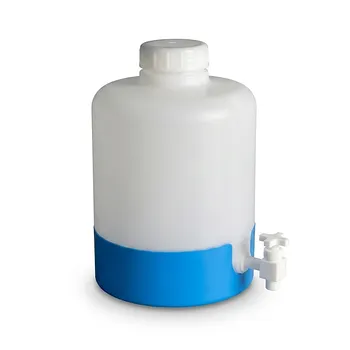
- High Corrosion Resistant PTFE Faucet Polytetrafluoroethylene Valve for Chemical Storage Drums and Fluid Transfer Systems Customizable Industrial Grade
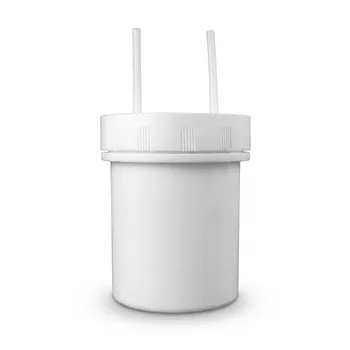
- High Purity Opaque White PTFE Chemical Storage Barrels and Customizable Fluoropolymer Reaction Sampling Vessels
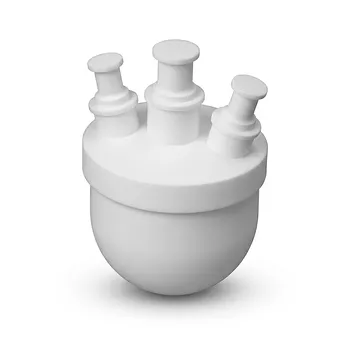
- Custom PTFE Flask Large Volume 18L Corrosion Resistant Low Background High Purity Chemical Vessel
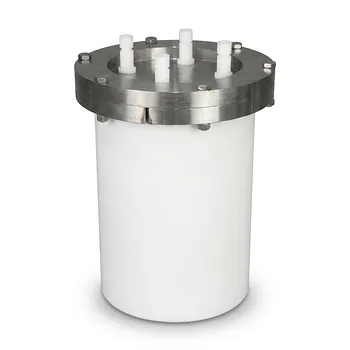
- PTFE Hydrofluoric Acid Dilutor and Corrosion Resistant Reaction Vessel with Flange Sealing White PTFE Raw Material Storage Barrel
- Corrosion Resistant High Purity PFA Valve and Weldable Transparent Tubing for Semiconductor Fluid Transfer
People Also Ask
- What is the typical operating temperature and pressure range for PTFE valves? Key Specs for Optimal Performance
- What specific advantages do PTFE valves offer? Unmatched Corrosion Resistance for Industrial Chemical Handling
- How do PTFE valves and components support high-purity liquid transfer? Ensure Product Integrity with Inert Materials
- What industries commonly use PTFE valves and components? Essential for Chemical & Purity Applications
- What are the key properties of PTFE valves? Ensure Purity, Safety, and Reliability in Demanding Processes