The three-electrode testing system and 6 M KOH electrolyte are essential for isolating the intrinsic electrochemical properties of the Ti3C2@NiCo2S4 electrode while maximizing its redox potential. The three-electrode setup ensures that the measurements reflect only the behavior of the material itself by eliminating interference from the counter electrode, while the 6 M KOH provides a concentrated source of hydroxyl ions ($OH^-$) necessary for the high-speed Faraday redox reactions that drive the performance of transition metal sulfides.
The combination of a three-electrode configuration and high-concentration alkaline electrolyte provides a high-precision environment for characterization. This setup allows for the accurate determination of specific capacitance and stability by separating potential control from current flow and ensuring unhindered ion transport.
The Role of the Three-Electrode Configuration
Isolating the Working Electrode
The primary advantage of the three-electrode system is its ability to focus exclusively on the working electrode (the Ti3C2@NiCo2S4 material). By using a reference electrode to monitor potential and a separate counter electrode to complete the circuit, the system prevents the polarization of the counter electrode from affecting the data.
Eliminating Voltage Drop Interference
This configuration separates the current circuit from the potential detection circuit. This separation is critical because it effectively eliminates voltage drop (IR drop) interference caused by the resistance of the electrolyte, allowing for the precise measurement of redox peak positions.
Precision in Kinetic Measurements
By maintaining a stable reference potential via electrodes like the mercury/mercuric oxide (Hg/HgO) or Saturated Calomel Electrode (SCE), researchers can accurately measure intrinsic parameters. This includes specific capacitance, impedance, and the pseudocapacitive characteristics inherent to the MXene-sulfide composite.
The Function of 6 M KOH Electrolyte
Fueling Faraday Redox Reactions
The NiCo2S4 component of the electrode relies on Faraday redox reactions to store and release energy. The 6 M KOH aqueous electrolyte provides an abundance of hydroxyl ions, which act as the active species in these reactions, ensuring the material can reach its full theoretical capacity.
Optimizing Charge Exchange Kinetics
High-concentration electrolytes improve the charge exchange kinetics of the system. This allows the Ti3C2@NiCo2S4 electrode to maintain high performance even at high current densities, where lower concentrations might lead to ion depletion and increased resistance.
Supporting Composite Stability
The alkaline environment is particularly suited for transition metal sulfides and MXene composites. It facilitates the necessary chemical environment for stable cycling while providing the high ionic conductivity required for rapid charging and discharging.
Understanding the Trade-offs and Pitfalls
Corrosivity and Material Degradation
A 6 M KOH solution is highly corrosive, which poses a challenge for long-term testing hardware. Standard glass or low-grade plastic containers can degrade or leach impurities, which may lead to errors in calculating specific capacitance and cycling stability.
The Necessity of Inert Components
To avoid data contamination, all testing components—including cell lids and fluid connections—must be made of high-performance plastics like Polytetrafluoroethylene (PTFE) or Perfluoroalkoxy (PFA). These materials prevent the leaching of impurity ions that could artificially alter the electrochemical signature of the Ti3C2@NiCo2S4.
Electrolyte Resistance and Heating
While 6 M KOH offers high conductivity, extremely high concentrations can sometimes lead to increased viscosity or localized heating at high power. It is crucial to monitor the thermal stability of the system during long-term cyclic testing to ensure the integrity of the results.
How to Apply This to Your Evaluation
When setting up your electrochemical evaluation for Ti3C2@NiCo2S4 or similar composites, your choice of configuration should align with your specific research objectives.
- If your primary focus is determining intrinsic material limits: Use a three-electrode system with a Hg/HgO reference electrode to eliminate all external variables and isolate the material's true pseudocapacitance.
- If your primary focus is high-rate power performance: Utilize 6 M KOH to ensure that ion transport is not the rate-limiting step, allowing you to observe how the Ti3C2 backbone facilitates electron transfer.
- If your primary focus is long-term durability testing: Ensure your testing cell is constructed from PTFE or PFA to prevent electrolyte contamination and structural failure due to the corrosive nature of the KOH.
By meticulously separating electrode signals and providing a chemically rich environment, you ensure that the recorded performance reflects the true potential of your material.
Summary Table:
| Component | Primary Function | Key Benefit for Ti3C2@NiCo2S4 |
|---|---|---|
| 3-Electrode System | Isolates Working Electrode | Eliminates IR drop & counter-electrode interference for precise data. |
| 6 M KOH Electrolyte | Provides Abundant $OH^-$ | Fuels Faraday redox reactions and optimizes high-rate charge kinetics. |
| Reference Electrode | Maintains Stable Potential | Allows accurate measurement of specific capacitance and impedance. |
| PTFE/PFA Housing | Chemical Compatibility | Prevents KOH corrosion and ensures zero ionic contamination of samples. |
Secure Your Electrochemical Precision with KINTEK
High-concentration alkaline testing demands materials that never compromise your data. From everyday basic labware (beakers, measuring cylinders, crucibles, and reagent bottles) to advanced standard or custom electrochemical cells and battery testing fixtures, KINTEK manufactures virtually all imaginable laboratory supplies crafted exclusively from high-performance PTFE and PFA.
Whether you need high-purity fluid transfer components (tubing, fittings, valves), sample prep tools, or complex bespoke laboratory setups via our end-to-end custom CNC fabrication, we ensure your Ti3C2@NiCo2S4 evaluations are free from contamination and structural failure. From high-volume consumables like O-rings and gaskets to specialized hydrothermal synthesis liners and microchannel reactors, we deliver absolute material integrity for your research.
Ready to upgrade your lab setup? Contact our fluoropolymer experts today to discuss your custom fabrication needs!
References
- Abhinaba Das, Pallab Bhattacharya. Ti3C2-Mxene-dispersion and morphology controlled battery-type nickel cobalt sulphide based nanocomposites for the application as aqueous asymmetric supercapacitor with improved rate. DOI: 10.1186/s11671-025-04396-3
This article is also based on technical information from Kintek Knowledge Base .
Related Products
- Custom PTFE Double Head Lab Spatula Scraper Non Stick Corrosion Resistant Chemical Handling Tool
- Custom PTFE Double Headed Lab Spatula Chemical Resistant Non Stick Pharmaceutical Grade Fluoropolymer Sampling Tool
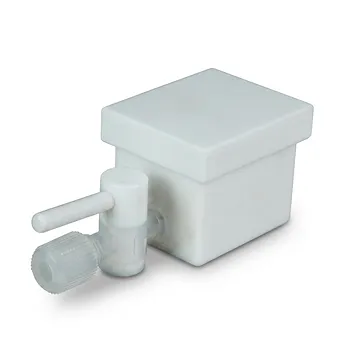
- Custom PTFE Corrosion Resistant Insulating Electrophoresis Reaction Cell with Septum and Valves for Low Background Trace Analysis
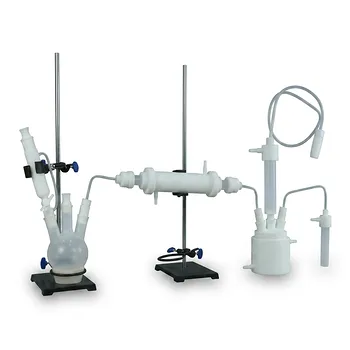
- Custom PTFE Condensation Reflux Distillation Purification System 500ml Corrosion Resistant Low Background
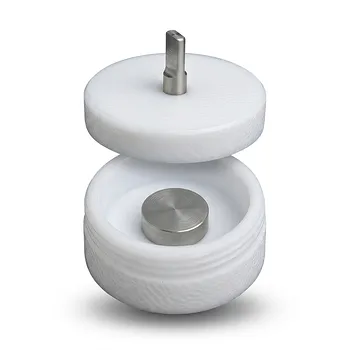
- Acid Resistant PTFE Button Cell Battery Test Fixture Customizable Machining High Purity Electrochemical Testing Clamp
People Also Ask
- What advantages do PTFE's surface properties provide for lab tools? Optimize Sample Recovery and Tool Longevity
- What molecular characteristics provide PTFE laboratory tools with ultra-low surface energy and anti-stick properties for fluid transfer? Discover the science behind PTFE's non-stick performance.
- What is the relationship between polymerization temperature during PTFE synthesis and the physical shrinkage properties of molded PTFE laboratory labware? Lower-temp polymerization yields lower shrinkage for precision.
- How is PTFE used in laboratory settings? Essential for Chemical Resistance and Sample Purity
- What chemical reactivity properties must be considered when utilizing PTFE labware and custom fluoropolymer components in contact with reactive metal powders? Key safety insights for high-purity applications.