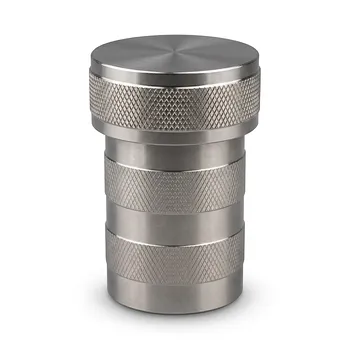
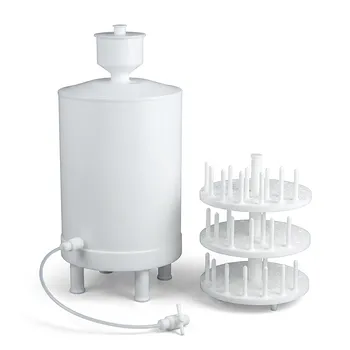
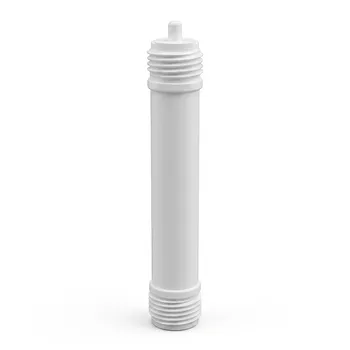
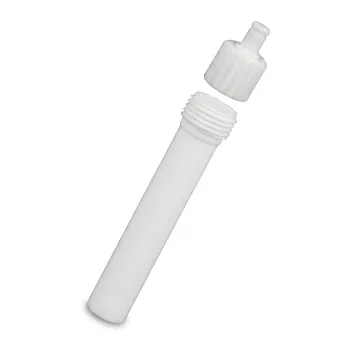
The synthesis of Single-Atom Catalyst (SAC) precursors requires a highly controlled environment to ensure precise atomic distribution. High-pressure hydrothermal autoclaves and their corrosion-resistant liners provide the sealed, high-temperature, and high-pressure conditions (solvothermal conditions) necessary to facilitate the full coordination and self-assembly of organic ligands with nickel ions. This process creates stable, "pre-embedded" single-atom nickel precursors, which are essential for the subsequent formation of high-performance catalysts during pyrolysis.
The primary function of this equipment is to overcome kinetic barriers through autogenous pressure and sustained heat, allowing reactants to self-assemble into crystalline structures that maintain individual nickel atoms in a fixed, isolated state.
Creating the Solvothermal Environment
Facilitating Coordination and Self-Assembly
The autoclave creates a closed system where solvents can be heated significantly above their normal boiling points. In the case of Ni-salen crystalline polymers, these conditions (such as 80 °C for 5 days) ensure that organic ligands and nickel ions achieve full coordination. This sustained energy allows for the self-assembly of the precursors within mixed solvent systems like 1,3,5-trimethylbenzene and ethanol.
Overcoming Kinetic Barriers
Under high pressure, reactants achieve more thorough mixing and can overcome the energy thresholds required for complex structural formation. This environment is critical for moving beyond simple precipitation to the development of "pre-embedded" nickel precursors. These precursors act as a structural template, ensuring the nickel remains atomically dispersed rather than clustering into metallic nanoparticles.
The Critical Role of Corrosion-Resistant Liners
Maintaining Chemical Purity
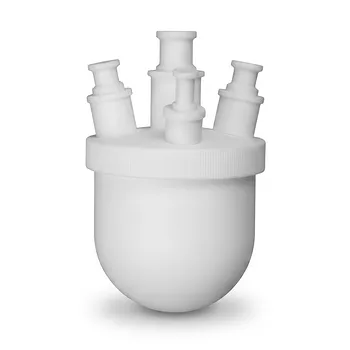
Liners made from high-purity materials like Polytetrafluoroethylene (PTFE) or Perfluoroalkoxy (PFA) are chemically inert. They prevent highly alkaline or oxidizing reaction solutions from reacting with the metal walls of the autoclave. This is vital for Ni-SAC synthesis because it eliminates metal ion contamination from the stainless steel shell, ensuring the final catalyst's stoichiometric ratio is precise.
Ensuring Pressure Integrity
The liner acts as the primary seal within the autoclave assembly, maintaining the autogenous pressure generated during heating. This pressure is what allows solvents to remain in a liquid state at high temperatures, facilitating the uniform nucleation and oriented growth of crystalline structures. Without a proper seal, the transition to a gaseous state would disrupt the delicate self-assembly of the nickel-ligand framework.
Understanding the Trade-offs
Temperature and Time Constraints
While higher temperatures can accelerate reactions, materials like PTFE have strict thermal limits (typically up to 180°C–220°C). Exceeding these limits can cause the liner to deform or "creep," leading to seal failure and potential safety hazards. Furthermore, the long reaction times (often several days) required for high-quality Ni-SAC precursors mean that equipment turnover is slow, limiting high-throughput production.
Scalability and Safety
Hydrothermal synthesis is highly effective at the laboratory scale but faces challenges in industrial scaling. The requirement for massive, high-pressure-rated vessels increases capital costs and introduces significant safety risks associated with pressurized steam and chemical vapors. Additionally, the batch nature of autoclave synthesis can lead to slight variations in crystallinity between different runs.
Applying These Principles to Your Synthesis
Making the Right Choice for Your Goal
To achieve the best results in Ni-SAC precursor synthesis, the choice of equipment must align with the specific chemical requirements of your ligands and solvents.
- If your primary focus is atomic isolation: Prioritize long-duration solvothermal cycles (e.g., 5 days) at moderate temperatures to ensure full ligand coordination without thermal degradation.
- If your primary focus is material purity: Always utilize high-purity PTFE or PFA liners and perform a rigorous acid-wash cleaning cycle between runs to prevent cross-contamination of metal species.
- If your primary focus is morphology control: Focus on the solvent ratio (such as ethanol/trimethylbenzene) and the autogenous pressure to guide the self-assembly into specific crystalline structures like nanosheets.
The synergy between the autoclave’s physical pressure and the liner’s chemical protection is the fundamental requirement for transforming simple nickel salts into sophisticated single-atom precursors.
Summary Table:
| Component | Primary Function | Benefit for Ni-SAC Synthesis |
|---|---|---|
| Hydrothermal Autoclave | Provides high-pressure/temp environment | Overcomes kinetic barriers for ligand coordination |
| Corrosion-Resistant Liner | Chemical isolation (PTFE/PFA) | Prevents metal ion contamination from the vessel walls |
| Solvothermal Conditions | Sustained energy & autogenous pressure | Facilitates self-assembly into stable crystalline precursors |
| Sealing Mechanism | Maintains liquid state above boiling point | Ensures uniform nucleation and oriented atomic growth |
Elevate Your Ni-SAC Research with KINTEK’s Precision Labware
To achieve flawless atomic dispersion and high-purity catalyst precursors, your equipment must be as precise as your science. KINTEK specializes in manufacturing high-performance fluoropolymer laboratory supplies designed to withstand the most demanding solvothermal conditions.
Whether you need everyday basic labware (beakers, crucibles, reagent bottles), comprehensive fluid transfer components (tubing, valves), or advanced reaction apparatus like custom hydrothermal synthesis liners and microwave digestion vessels, we provide the chemical inertness your research demands. Our expertise extends to bespoke laboratory setups and complex non-standard machined parts via end-to-end custom CNC fabrication.
Ready to ensure absolute purity and performance in your laboratory?
Contact KINTEK today to discuss your custom fluoropolymer needs
References
- Fuqing Yu, Hongming Wang. Enhancing CO<sub>2</sub> Electroreduction Precision to Ethylene and Ethanol: The Role of Additional Boron Catalytic Sites in Cu‐Based Tandem Catalysts. DOI: 10.1002/advs.202410118
This article is also based on technical information from Kintek Knowledge Base .
Related Products
- PTFE Lined High Pressure Digestion Vessel 50ml High Temperature Hydrothermal Synthesis Tank
- High Temperature Corrosion Resistant Hydrothermal Synthesis Reactor with TFM Inner Liner and Straight Cylinder Design
- Custom TFM Reaction Vessel with Stainless Steel Jacket and PTFE Inner Cup for High Corrosion Resistance
- High Pressure Custom TFM Reactor Stainless Steel Outer Vessel PTFE Inner Cup for Corrosive Synthesis
- PTFE Acid Steam Cleaning System HF Resistant Trace Analysis Beaker Digestion Tank Customizable
People Also Ask
- What are the benefits of using a PTFE-lined vessel for carbon-sulfur cathode treatment? Maximize Purity & Performance
- Why are PTFE-lined pressure digestion vessels required for the preparation of Ag/CeO2 catalysts? Purity & Performance
- What safety features are typically incorporated into high-pressure PTFE digestion vessel designs? Ensure Lab Safety
- What is the function of high-pressure PTFE digestion vessels in mineral analysis? Optimize Sample Mineralization
- What is the function of PTFE lined high-pressure vessels in g-C3N4 synthesis? Achieve High-Purity Material Growth