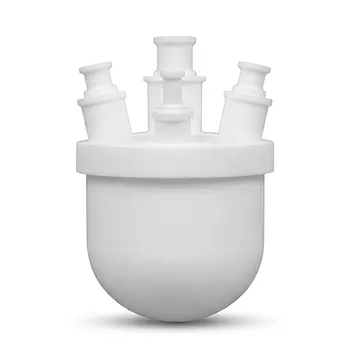
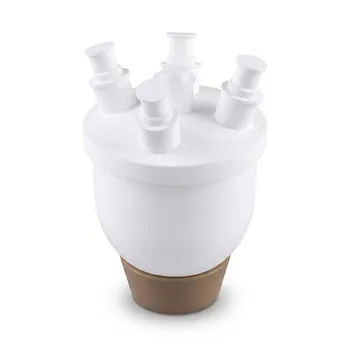
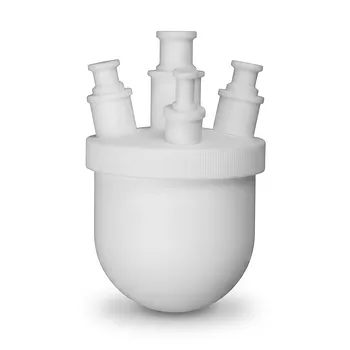
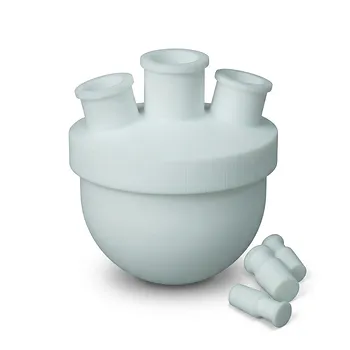
The synthesis of M/PtBi intermetallic nanosheets requires high-precision reaction vessels that prioritize environmental stability and containment. Specifically, these vessels must be chemically inert, capable of sustaining temperatures up to 220 °C, and equipped with high-performance sealing mechanisms. This rigorous setup is essential to prevent the leakage of volatile solvents, ensuring that both pressure and precursor concentrations remain constant throughout the growth process.
To achieve uniform nanosheet morphology and size, the reaction vessel must act as a perfectly controlled micro-environment. Any deviation in temperature resistance or sealing integrity will lead to solvent loss and chemical fluctuations, ultimately compromising the intermetallic structure.
The Critical Role of Thermal and Chemical Resistance
Managing High-Temperature Stability
The colloidal synthesis of M/PtBi nanosheets is a high-energy process that operates at a threshold of 220 °C. The reaction vessel must maintain structural integrity at these temperatures without leaching contaminants or undergoing thermal deformation.
Ensuring Chemical Inertness
The vessel material must be chemically inert to withstand aggressive precursors and long reaction times. This prevents unwanted side reactions between the vessel walls and the metallic precursors, which would otherwise alter the intended stoichiometry of the intermetallic nanosheets.
Precision Sealing and Environmental Control
Preventing Volatile Solvent Loss
High-performance sealing is mandatory to contain solvents like oleylamine and octadecene. While these solvents have high boiling points, they can still exhibit significant volatility at 220 °C; a failure in sealing leads to a gradual change in the liquid volume.
Maintaining Kinetic Consistency
Constant reaction pressure and precursor concentrations are the primary drivers of uniform nanosheet size. By preventing evaporation, the vessel ensures that the chemical potential remains stable, allowing the nanosheets to grow with a consistent morphology across the entire batch.
Understanding the Trade-offs
Durability vs. Precision Sealing
High-performance seals, such as specialized O-rings or gaskets, often degrade faster when repeatedly exposed to 220 °C and organic solvents. While a tighter seal ensures better morphological control, it increases the maintenance overhead and the risk of seal failure if not inspected regularly.
Pressure Accumulation Risks
A perfectly sealed vessel at high temperatures creates internal pressure that must be carefully managed. While constant pressure is vital for the synthesis, exceeding the vessel's pressure rating can lead to equipment failure or safety hazards, necessitating a balance between containment and structural safety margins.
How to Apply This to Your Project
When selecting or designing your reaction environment for M/PtBi synthesis, prioritize the vessel’s ability to maintain a "steady state."
- If your primary focus is size uniformity: Invest in high-grade autoclaves or Schlenk-line compatible vessels with reinforced PTFE or Viton seals to eliminate solvent evaporation.
- If your primary focus is material purity: Prioritize high-quality borosilicate glass or quartz vessels that offer the highest levels of chemical inertness at the 220 °C operating point.
- If your primary focus is experimental safety: Ensure your vessel is rated for at least 25% above your target operating pressure to account for the vapor pressure of oleylamine at peak temperatures.
The integrity of the reaction vessel is the silent partner in successful intermetallic nanosheet synthesis, providing the stability required for atomic-level precision.
Summary Table:
| Functional Requirement | Key Purpose | Impact on Synthesis |
|---|---|---|
| Thermal Stability | Sustains 220 °C without deformation | Prevents vessel failure and contamination |
| Chemical Inertness | Resists aggressive precursors | Ensures material purity and stoichiometry |
| Precision Sealing | Prevents volatile solvent loss | Maintains constant precursor concentration |
| Pressure Integrity | Manages internal vapor pressure | Ensures safety and uniform kinetic growth |
Elevate Your Synthesis with KINTEK’s High-Performance Fluoropolymer Solutions
Achieving atomic-level precision in M/PtBi intermetallic nanosheet synthesis requires a reaction environment that never compromises. KINTEK manufactures a comprehensive range of laboratory supplies crafted exclusively from high-performance PTFE and PFA, designed to withstand the most demanding thermal and chemical conditions.
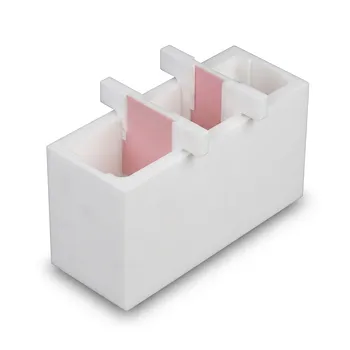
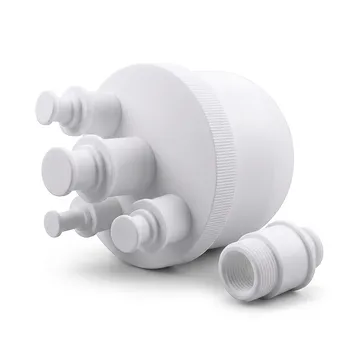
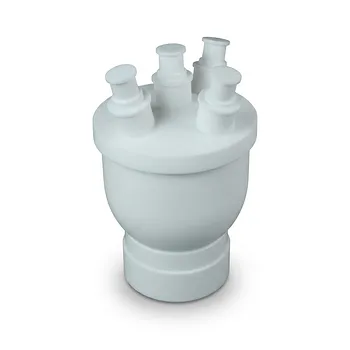
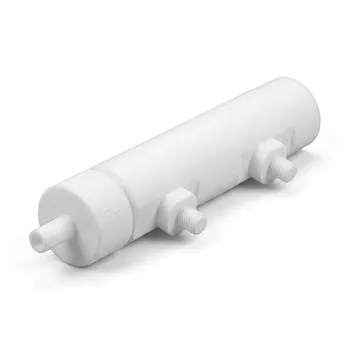
Whether you need standard labware (beakers, flasks, and digestion tubes), precision fluid transfer components (tubing, valves, and fittings), or advanced custom-engineered reaction apparatus like hydrothermal synthesis liners and microwave digestion vessels, we have you covered. Our end-to-end custom CNC fabrication capabilities allow us to deliver everything from high-volume consumables to complex, bespoke laboratory setups tailored to your specific research parameters.
Ensure the success of your next experiment with KINTEK’s expertise in fluoropolymer durability and chemical resistance.
Contact KINTEK Today to Discuss Your Custom Project
References
- Yujia Liao, Jing‐Li Luo. Boosting Alcohol Oxidation Electrocatalysis with Multifactorial Engineered Pd1/Pt Single-Atom Alloy-BiOx Adatoms Surface. DOI: 10.1007/s40820-025-01678-4
This article is also based on technical information from Kintek Knowledge Base .
Related Products
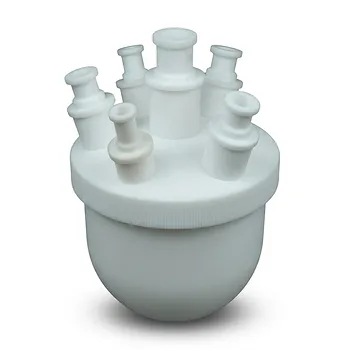
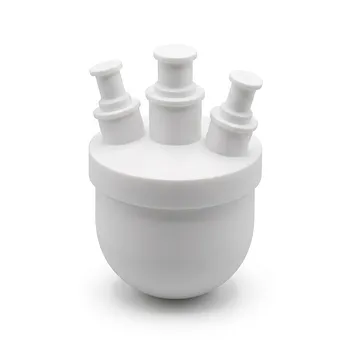
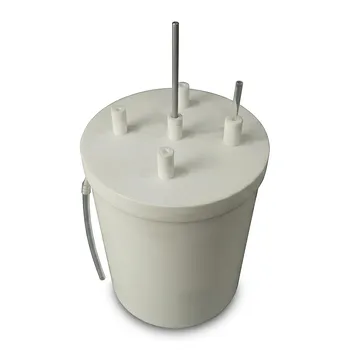
- Custom Multi Neck PTFE Flask 18L Laboratory Chemical Reactor Vessel for High Purity Synthesis and Stirring Applications
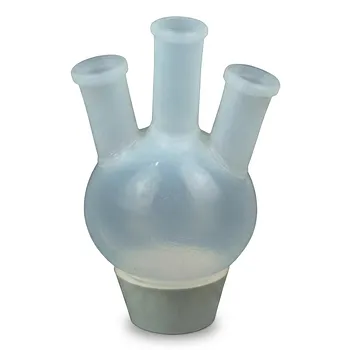
- Custom High Purity PTFE Multi Neck Flask 200ml Chemical Synthesis Reaction Vessel
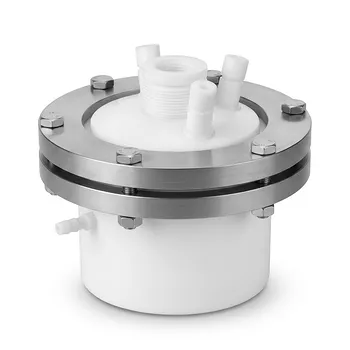
- Custom PTFE Multilayer Reaction Apparatus High Temperature Corrosion Resistant Threaded Modular Sieve System
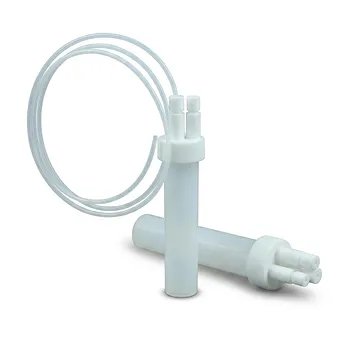
- High Purity PTFE Corrosion Resistant Reaction Vessel with Luer Fittings and Caps for Trace Analysis
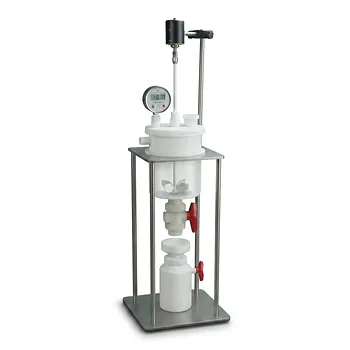
- Customizable PTFE Reaction Vessel with Electric Stirring Paddle and Buchner Funnel Vacuum Filtration System
People Also Ask
- What are the key steps for structural integrity in molded PTFE lab reaction vessels? Master fine powder processing.
- What customization options are available for PTFE materials? Tailor Performance for Your Application
- How does hardware selection optimize research? Enhance Workflows with Custom Reaction Vessels
- Why is the choice of reaction vessel material critical during B-NiBDC synthesis? Optimize MOF Purity & Performance
- Why are custom PTFE laboratory vessels and complex apparatus manufactured via sintering and CNC machining rather than conventional melt-injection molding?