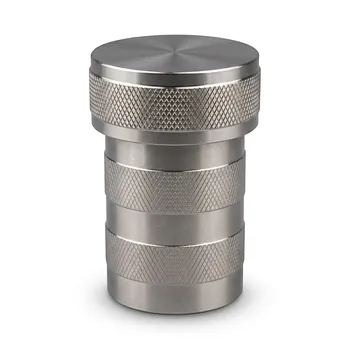
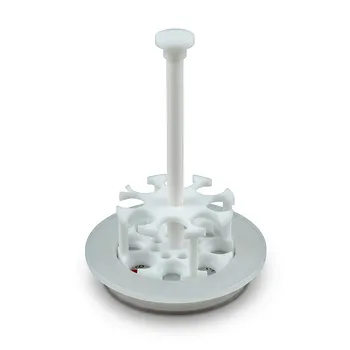
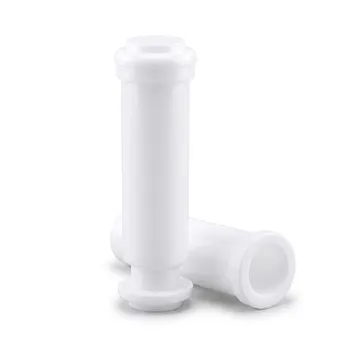
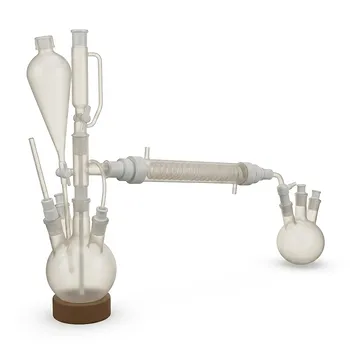
A high-pressure hydrothermal autoclave acts as a specialized chemical reactor that provides a sealed, high-temperature, and high-pressure environment essential for transforming copper precursors into one-dimensional nanowires. By maintaining conditions such as 120°C and 198 kPa, it overcomes atmospheric boiling points and accelerates the reduction reaction rate, enabling the precise kinetic control required for directional crystal growth.
The autoclave provides the critical high-pressure kinetics needed to drive copper atoms toward specific crystal facets. This environment, combined with selective capping agents, forces spherical nuclei to grow anisotropically into high-aspect-ratio nanowires.
The Kinetic Engine: Accelerating Reaction Rates
Driving High-Temperature Reduction
The autoclave creates autogenous pressure, which allows the aqueous reaction solution to reach temperatures well above its normal boiling point while remaining in a liquid state. This high-temperature environment significantly accelerates the reduction reaction rate of copper ions, providing the energy necessary for rapid crystallization.
Enhancing Precursor Solubility
Under the high-pressure conditions generated within the sealed vessel, the solubility of precursors like copper chloride and glucose is increased. This ensures a homogenous reaction environment where copper atoms are readily available for assembly onto the growing crystal structure.
Morphological Control: Enabling Anisotropic Growth
Facet-Selective Adsorption
The primary function of the autoclave in morphology control is facilitating the interaction between capping agents (such as hexadecylamine) and the copper crystal facets. The pressure helps drive these agents to selectively adsorb onto specific sides of the copper nuclei, effectively "blocking" growth in those directions.
Alignment into One-Dimensional Structures
Because growth is restricted on certain facets, copper atoms are forced to align directionally along non-restricted paths. This transition from a symmetrical, spherical nucleus to an anisotropic one-dimensional structure is the fundamental process that creates a nanowire rather than a standard nanoparticle.
Material Integrity and System Purity
The Role of the PTFE Liner
Most autoclaves utilize a Polytetrafluoroethylene (PTFE) or Teflon liner to house the reaction. This material is chosen for its exceptional chemical inertness, which prevents the caustic reaction mixture from corroding the outer stainless steel shell.
Preventing Ion Contamination
By isolating the chemical reaction from the metal walls of the autoclave, the PTFE liner prevents cross-contamination from foreign metal ions. This ensures the high purity of the copper nanowires, which is vital for maintaining their electrical conductivity and structural integrity.
Understanding the Trade-offs
Safety and Pressure Management
Operating at high temperatures and pressures requires a robust stainless steel outer shell to prevent vessel failure. However, the reliance on autogenous pressure means that precise control over the internal environment is indirect; if the temperature fluctuates, the pressure changes unpredictably, potentially ruining the batch morphology.
Scalability and Monitoring Challenges
Hydrothermal synthesis in an autoclave is inherently a batch process, making it difficult to scale for mass production compared to continuous flow methods. Additionally, because the vessel is opaque and sealed, real-time monitoring of the nanowire growth is impossible, requiring researchers to rely on post-reaction analysis to verify results.
Applying This Knowledge to Your Project
Recommendations for Successful Synthesis
- If your primary focus is high aspect ratio: Ensure the autoclave is sealed perfectly to maintain maximum autogenous pressure, as lower pressures often result in thicker, shorter rods rather than thin nanowires.
- If your primary focus is material purity: Always inspect the PTFE liner for scratches or degradation before use, as even minor exposure to the stainless steel shell can introduce impurities that disrupt the copper crystal lattice.
- If your primary focus is morphological uniformity: Strictly control the cooling rate of the autoclave after the reaction is complete to prevent secondary precipitation or aggregation of the wires.
The high-pressure autoclave is the indispensable tool that provides the extreme physical environment necessary to force copper atoms into the precise, elongated geometries required for advanced nanotechnology applications.
Summary Table:
| Key Mechanism | Function in Synthesis | Benefit to Nanowire Quality |
|---|---|---|
| Autogenous Pressure | Accelerates reduction reaction rates | Provides energy for rapid crystallization |
| Facet-Selective Adsorption | Facilitates capping agent interaction | Forces growth into high-aspect-ratio 1D structures |
| Enhanced Solubility | Ensures homogenous precursor distribution | Promotes uniform crystal assembly |
| PTFE Liner Isolation | Prevents caustic corrosion and ion leaching | Guarantees high purity and electrical conductivity |
Master Your Nanomaterial Synthesis with KINTEK
Achieving high-aspect-ratio copper nanowires requires absolute precision and material purity. KINTEK specializes in high-performance fluoropolymer solutions designed for extreme hydrothermal environments. We manufacture virtually all essential laboratory supplies from PTFE and PFA, including high-purity hydrothermal synthesis liners, microwave digestion vessels, and custom reaction apparatus.
From everyday basic labware like beakers and reagent bottles to complex fluid transfer components (tubing, valves, fittings) and bespoke CNC-fabricated parts, KINTEK ensures your research is protected from contamination. Whether you need standard consumables or a comprehensive, non-standard laboratory setup, our end-to-end fabrication capabilities are ready to deliver.
Contact us today to optimize your lab setup and see how our exclusive focus on fluoropolymer performance can elevate your material synthesis results.
References
- J Gopu, Krishna C. Etika. Hydrothermal synthesis of conductive copper nanowires: effect of oleylamine and dextrose concentrations. DOI: 10.1039/d5ra07427d
This article is also based on technical information from Kintek Knowledge Base .
Related Products
- High Temperature Corrosion Resistant Hydrothermal Synthesis Reactor with TFM Inner Liner and Straight Cylinder Design
- PTFE Lined High Pressure Digestion Vessel 50ml High Temperature Hydrothermal Synthesis Tank
- Custom TFM Reaction Vessel with Stainless Steel Jacket and PTFE Inner Cup for High Corrosion Resistance
- High Performance TFM Microwave Digestion Vessel Rack 15 Position Customizable Sample Preparation Support
- High Pressure Custom TFM Reactor Stainless Steel Outer Vessel PTFE Inner Cup for Corrosive Synthesis
People Also Ask
- What is the role of a corrosion-resistant reactor in the synthesis of lignin-based carbon dots? Ensure Maximum Purity
- What are the technical advantages of using hydrothermal synthesis reactors for advanced electronic & optical nanomaterials?
- How does a hydrothermal synthesis reactor facilitate the production of crystalline materials with tailored morphologies? Precision Crystal Growth
- Why is the sealing reliability of a hydrothermal synthesis reactor critical for 24-hour cycles? Ensure Nano-Precision
- What role do hydrothermal synthesis reactors play in CQD preparation? Achieve High-Purity Nanomaterial Synthesis