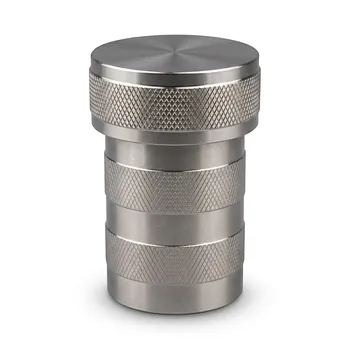
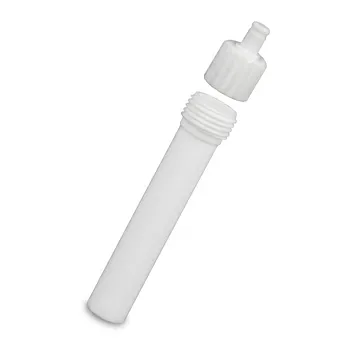
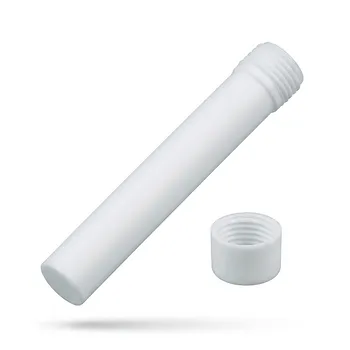
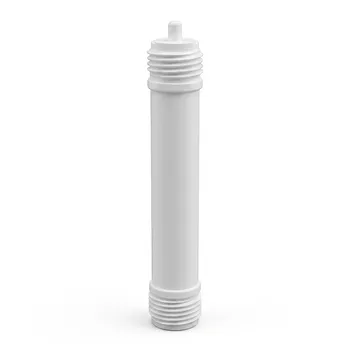
Hydrothermal synthesis reactors and their liners function as controlled, high-pressure environments that enable the precise crystallization and phase control of metal sulfide composites. These tools provide the necessary high-temperature, liquid-phase conditions to force the complete dissolution and recombination of precursors, such as cobalt sources and thiourea, into specific morphologies like hexagonal spherical cobalt disulfide ($CoS_2$).
The hydrothermal reactor creates a high-energy aqueous environment that facilitates reactions impossible at atmospheric pressure, while the internal liner acts as a critical chemical barrier to ensure material purity and protect the structural integrity of the vessel.
The Role of the Reactor in Material Synthesis
Creating the High-Energy Aqueous Environment
Hydrothermal reactors, often called autoclaves or digestion bombs, exploit the unique properties of water and solvents at temperatures above $100^\circ C$ and pressures exceeding 1 atm. This environment increases the solvating power of the liquid, allowing for the deep interaction of metal ions that would otherwise remain insoluble or poorly mixed.
Driving Nucleation and Morphology
For materials like $CoS_2$, the reactor maintains a stable, sealed state (e.g., $180^\circ C$ for 12 hours) to facilitate full mineralization. This sustained energy allows for directional growth and the formation of specific crystal planes, resulting in optimized pore structures and higher oxygen vacancy concentrations compared to conventional atmospheric methods.
Enabling Complex Phase Transformations
The high-pressure environment is essential for the simultaneous carbonization and crystallization required in composite materials. It allows for the formation of robust heterojunctions and specific $\pi-\pi$ stacking structures in framework materials, which are vital for enhancing catalytic efficiency and electrical conductivity.
The Critical Function of the Liner
Chemical Isolation and Purity
The liner, typically made from Polytetrafluoroethylene (PTFE) or Para-polyphenylene (PPL), serves as an inert inner chamber. Its primary job is to ensure the growth of adsorbents is not compromised by external impurities or metallic ions leaching from the outer stainless-steel shell.
Protecting the Structural Vessel
Liners provide a physical and chemical barrier against corrosive fluids that become highly reactive at elevated temperatures. By isolating these fluids, the liner prevents oxidation, dissolution, and stress-corrosion cracking of the reactor’s metal shell, ensuring the safety and longevity of the equipment.
Thermal and Pressure Resistance
Advanced liners are designed to withstand the internal stress generated during synthesis without deforming. Materials like PTFE or PFA are selected for their high-temperature stability, allowing the system to maintain a "sealed batch" state that is critical for the consistent production of metal sulfides.
Understanding the Trade-offs and Limitations
Temperature Constraints of Liner Materials
While liners are essential, they impose strict thermal limits on the synthesis process. PTFE liners are generally capped at $200^\circ C$, whereas PPL liners can handle slightly higher temperatures; exceeding these limits can cause the liner to soften, release toxic fumes, or fail mechanically.
Pressure Risks and Scaling Challenges
Hydrothermal synthesis is inherently a batch process, making it difficult to scale for mass production compared to continuous flow methods. Additionally, the high pressures involved require rigorous safety protocols, as any failure in the seal or the structural vessel can lead to rapid decompression.
Potential for Contamination Through Wear
Despite their chemical inertness, liners can degrade over multiple cycles, especially when exposed to highly acidic or alkaline precursors. Micro-fissures or surface degradation in the liner can eventually trap residues from previous experiments, leading to cross-contamination if not monitored carefully.
How to Apply This to Your Project
Making the Right Choice for Your Goal
To achieve the best results in metal sulfide synthesis, align your equipment choice with your specific material requirements:
- If your primary focus is high-purity $CoS_2$ crystal growth: Use a PTFE-lined reactor at temperatures around $180^\circ C$ to ensure complete mineralization without introducing metallic impurities.
- If your primary focus is achieving specific morphology or pore structures: Utilize the high-pressure capabilities of the autoclave to guide directional growth, focusing on precise temperature hold times to optimize the crystal planes.
- If your primary focus is working with high-temperature organic frameworks: Select a PPL (Para-polyphenylene) liner to provide the necessary thermal stability above the standard limits of PTFE.
By mastering the balance between the reactor’s high-energy environment and the liner’s protective isolation, you can synthesize metal sulfide composites with superior crystallinity and performance.
Summary Table:
| Component | Primary Function | Key Benefit for CoS2 Production |
|---|---|---|
| Hydrothermal Reactor | Creates high-pressure/temp environment | Drives nucleation and controls morphology/crystallization. |
| Internal Liner (PTFE/PPL) | Chemical isolation & protective barrier | Ensures high material purity and prevents vessel corrosion. |
| Aqueous Environment | Increases solvating power of liquids | Enables complex phase transformations impossible at 1 atm. |
| Temperature Control | Sustains energy for mineralization | Optimizes pore structures and oxygen vacancy concentrations. |
Elevate Your Material Synthesis with KINTEK Precision
Unlock the full potential of your research with KINTEK’s world-class laboratory supplies. From everyday essentials like beakers, crucibles, and reagent bottles to specialized tools for high-purity trace analysis, we provide the foundation for scientific excellence.
Our expertise shines in the production of high-performance fluoropolymer materials, offering everything from PTFE and PFA hydrothermal synthesis liners and microwave digestion vessels to advanced custom electrochemical cells and microchannel reactors. Whether you require standard consumables like stirring bars and O-rings or bespoke non-standard machined parts via our end-to-end custom CNC fabrication, KINTEK ensures absolute purity and durability for your most demanding $CoS_2$ and metal sulfide projects.
Ready to optimize your lab’s efficiency? Contact us today to discuss your custom requirements and high-volume orders!
References
- Cheng‐Che Wu, Sheng‐Heng Chung. Metal-based composite sulfur cathodes for lithium–sulfur electrochemical cells. DOI: 10.1038/s43246-025-00835-x
This article is also based on technical information from Kintek Knowledge Base .
Related Products
- High Temperature Corrosion Resistant Hydrothermal Synthesis Reactor with TFM Inner Liner and Straight Cylinder Design
- PTFE Lined High Pressure Digestion Vessel 50ml High Temperature Hydrothermal Synthesis Tank
- Custom TFM Reaction Vessel with Stainless Steel Jacket and PTFE Inner Cup for High Corrosion Resistance
- High Pressure Custom TFM Reactor Stainless Steel Outer Vessel PTFE Inner Cup for Corrosive Synthesis
- High Purity PTFE Microwave Digestion Vessel Replacement Liner for Acid Sample Preparation and Trace Analysis
People Also Ask
- What is the role of a corrosion-resistant reactor in the synthesis of lignin-based carbon dots? Ensure Maximum Purity
- What are the technical advantages of using hydrothermal synthesis reactors for advanced electronic & optical nanomaterials?
- How does a hydrothermal synthesis reactor facilitate the production of crystalline materials with tailored morphologies? Precision Crystal Growth
- Why is the sealing reliability of a hydrothermal synthesis reactor critical for 24-hour cycles? Ensure Nano-Precision
- What role do hydrothermal synthesis reactors play in CQD preparation? Achieve High-Purity Nanomaterial Synthesis