Thermal stability depends on more than the fluorine content alone. Temperature, exposure time, oxygen availability, molecular structure, reactive end groups, and contact with metals or metal salts all influence how a fluoropolymer behaves. Liquid perfluoropolyethers (PFPEs) can remain stable above 400°C in oxygen-rich environments, but metal-catalyzed chain scission can degrade their ether linkages; solid PTFE laboratory equipment has no comparable fluid ether backbone and is generally more resistant to this failure mechanism.
The key distinction is degradation chemistry: PFPE degradation at elevated temperature can be accelerated by metals through fluoride formation and cleavage of ether bonds, while PTFE primarily undergoes high-temperature pyrolytic decomposition of its carbon–fluorine backbone at sufficiently extreme temperatures.
What Determines Fluoropolymer Thermal Stability?
Fluorine content and bond strength
Perfluoropolymers such as PTFE and PFA generally have greater thermal stability than partially fluorinated materials such as ETFE, PVDF, and PCTFE.
The strong carbon–fluorine bonds provide resistance to chemical attack, oxidation, dissolution, and swelling. However, high bond strength does not mean that the material is immune to decomposition at all temperatures.
Molecular structure
Polymer architecture strongly affects thermal performance.
PTFE’s linear, unbranched structure contributes to its high thermal stability. PFA also provides strong high-temperature performance while retaining melt-processability, but its ether-containing side-chain structure creates different possible degradation pathways than PTFE.
PCTFE, by comparison, has a substantially narrower high-temperature operating window. It reaches a 25% weight-loss threshold at approximately 349°C in vacuum and 355°C in oxygen, compared with approximately 494°C in vacuum and 482°C in oxygen for PTFE under the referenced test conditions.
Temperature and exposure time
Thermal stability is not a single temperature value. It depends on both temperature and duration.
PTFE can be used continuously at temperatures around 260°C in appropriate laboratory applications, while measurable thermal degradation can begin slowly at lower temperatures and accelerate as temperature increases. A short exposure and a prolonged heat-aging cycle therefore cannot be treated as equivalent conditions.
Atmosphere and pressure
The surrounding environment changes both the rate and products of degradation.
Oxygen can promote oxidative pathways, while vacuum or inert conditions favor pyrolytic reactions. Pressure also affects product formation; for example, octafluorocyclobutane formation during PTFE pyrolysis decreases as reaction pressure increases.
Metals, oxides, and salts
Contact with metals, metal oxides, and metal salts is especially important for PFPEs.
These species can make the formation of metal fluorides thermodynamically favorable. That reaction removes fluorine from the PFPE environment and promotes cleavage of the polymer’s ether linkages.
End groups and processing history
Reactive end groups can influence stability, particularly in melt-processable materials such as PFA.
At extreme processing temperatures, reactive PFA end groups may participate in radical decomposition and cross-linking reactions. Manufacturing history, molecular weight, fillers, surface contamination, and prior heat exposure can therefore affect actual performance.
How PFPE Liquids Degrade at Elevated Temperature
Ether-link scission is the central mechanism
PFPEs are liquids built around a fluorinated polyether backbone. Their vulnerability in metal-containing systems comes from the presence of oxygen-containing ether linkages within that fluid chain.
At elevated temperature, metals or metal-containing residues can catalyze reactions that form metal fluorides. The resulting chemistry promotes chain scission along the ether linkages, reducing the molecular size and changing the liquid’s composition and performance.
The liquid state increases exposure
Because PFPE is a fluid, it can wet and circulate across metal surfaces, oxides, salts, and heated interfaces.
This creates repeated contact between the liquid polymer and catalytic sites. The practical result is that PFPE stability depends not only on the bulk temperature, but also on the chemistry and condition of every surface in contact with the liquid.
Oxygen stability does not eliminate catalytic risk
PFPEs may demonstrate thermal stability above 400°C in oxygen-rich environments. That statement describes resistance under a particular environmental condition; it does not guarantee stability when reactive metal surfaces are present.
A system can therefore be oxygen-compatible yet still experience accelerated degradation caused by metal-catalyzed fluoride formation.
How Solid PTFE Equipment Degrades
PTFE lacks PFPE’s vulnerable fluid ether links
Solid PTFE consists of a carbon–fluorine polymer backbone and does not contain the same polyether linkage structure found in PFPE liquids.
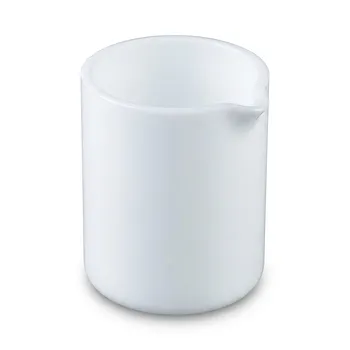
As a result, the specific metal-catalyzed ether-chain-scission mechanism that threatens PFPEs is not the primary concern for solid PTFE laboratory vessels, crucibles, and reaction apparatus.
PTFE primarily decomposes by pyrolysis at extreme temperatures
When PTFE is heated far beyond normal service conditions, its backbone can undergo thermal decomposition and depolymerization.
Under vacuum, tetrafluoroethylene (TFE) is a principal pyrolysis product. At higher temperatures, other fluorinated products can form, including octafluorocyclobutane, hexafluoropropylene, and—under extreme conditions—perfluoroisobutene.
These products are relevant to failure analysis and safety design, but they are associated with severe overheating rather than ordinary operation within PTFE’s intended laboratory temperature range.
Solid equipment retains structural integrity during normal use
For high-temperature digestion and reaction applications, solid PTFE provides a stable physical barrier between the sample and the apparatus.
Its resistance to aggressive acids, bases, and solvents helps limit leaching, swelling, and sample contamination. The material can still lose strength, deform, or release decomposition products if its safe temperature limits are exceeded.
Comparing the Two Degradation Mechanisms
PFPE: catalytic chemical breakdown
PFPE degradation is characterized by:
- A liquid fluorinated polyether structure.
- Vulnerable ether linkages within the polymer chain.
- Acceleration by metals, metal oxides, or metal salts.
- Formation of metal fluorides as a driving chemical process.
- Chain scission that can alter the liquid before obvious bulk failure occurs.
PTFE: high-temperature backbone pyrolysis
PTFE degradation is characterized by:
- A solid, linear carbon–fluorine backbone.
- No equivalent PFPE-style fluid ether-link mechanism.
- Strong resistance to metal-induced breakdown during normal elevated-temperature use.
- Decomposition primarily under sufficiently severe thermal conditions.
- Potential formation of hazardous fluorinated gases during extreme overheating.
The difference is therefore not simply “liquid versus solid.” It is primarily a difference in polymer chemistry, contact behavior, and dominant degradation pathway.
Understanding the Trade-offs
PTFE is resistant, not indestructible
PTFE laboratory equipment offers a broad thermal operating window, but it should not be treated as safe at unlimited temperature.
Exceeding recommended limits can cause creep, loss of mechanical strength, dimensional changes, off-gassing, and eventual decomposition. The apparatus may fail before substantial mass loss is visible.
PFA offers processing advantages
PFA provides high thermal stability while remaining melt-processable, which is valuable for molded, high-purity laboratory components.
However, its ether-containing side-chain structure and reactive end groups mean that its thermal behavior should not be assumed to be identical to PTFE’s. The specific grade, processing history, and temperature profile matter.
Decomposition products create a safety concern
At extreme temperatures, PTFE decomposition products can include hazardous fluorinated compounds.
For this reason, temperature control, ventilation, pressure management, and manufacturer-specific operating limits are essential for microwave digestion vessels and other heated fluoropolymer equipment.
Metal compatibility must be evaluated separately
A fluoropolymer’s bulk thermal rating does not fully describe its performance in a metal-containing assembly.
For PFPE lubrication or fluid applications, assess the compatibility of the fluid with metal substrates, oxides, salts, catalysts, and residues at the actual operating temperature.
Making the Right Choice for Your Goal
Material selection should consider the complete thermal, chemical, and mechanical environment—not just the nominal temperature rating.
- If your primary focus is high-temperature solid laboratory equipment: Prefer properly specified PTFE components when structural integrity, chemical inertness, and resistance to metal-induced degradation are required.
- If your primary focus is a high-temperature liquid lubricant or fluid: Evaluate PFPE compatibility with every contacting metal, oxide, and salt because catalytic chain scission may dominate its degradation behavior.
- If your primary focus is melt-processable high-purity components: Consider PFA, but verify its grade-specific thermal limits, end-group chemistry, and long-term heat-aging behavior.
- If your primary focus is preventing contamination and off-gassing: Stay within the validated operating range and account for exposure time, atmosphere, pressure, and the possibility of thermal decomposition products.
The safest high-temperature design matches the polymer’s degradation mechanism to the actual chemistry and surfaces present in the application.
Summary Table:
| Factor | Effect on PFPE Liquids | Effect on Solid PTFE |
|---|---|---|
| Fluorine Content | High, but ether linkages vulnerable | Very high, strong C-F bonds |
| Molecular Structure | Ether backbone prone to chain scission | Linear, no ether links |
| Temperature & Time | Stable >400°C in O2 but metal-catalyzed degradation | Stable up to 260°C continuous; pyrolysis at extreme temps |
| Atmosphere | Oxygen stable; metal-catalyzed risk | Inert or oxidative; pyrolysis products vary |
| Metals/Salts | Catalyze fluoride formation and chain scission | Generally resistant |
| End Groups | Less relevant | PFA has reactive end groups |
Ensure your lab's high-temperature performance with KINTEK's premium PTFE and PFA equipment. Our products are designed to withstand demanding conditions while maintaining purity and integrity. From beakers to custom CNC-machined parts, we provide solutions that resist degradation and contamination. Contact us today to discuss your application and discover how KINTEK can enhance your lab's efficiency and safety. Reach out now!
Related Products
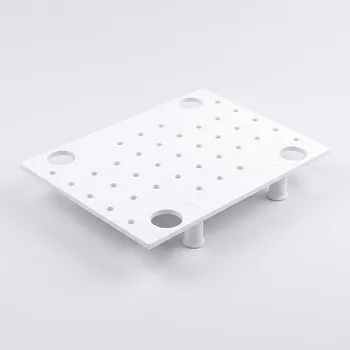
- High Temperature Resistant PTFE Thermal Insulation Board Corrosion Resistant Metal Free Fluoropolymer Stand for Ultra Clean Laboratories
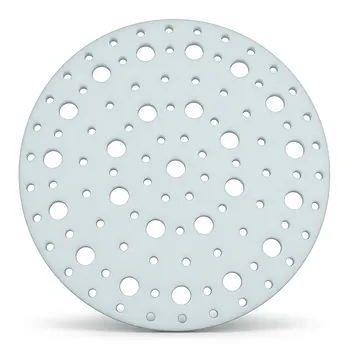
- High Temperature Resistant Insulating TFM Separator and Ultra Clean Laboratory PTFE Baffle Plate with Customizable Pore Size and Hole Configuration
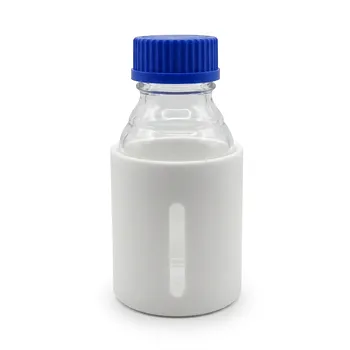
- Custom PTFE Thermal Insulation Sleeves Laboratory Vessel Condensation Jackets Virgin Fluoropolymer Machined Components
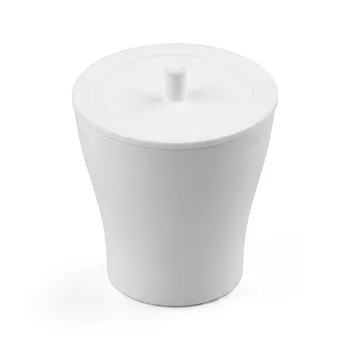
- High Temperature Resistant Thickened PTFE Beaker 2000ml for Chemical Processing and Laboratory Trace Analysis
- High Purity 30ml PTFE Corrosion Resistant Fluoropolymer Crucible with Graphite Heating Block Compatibility
People Also Ask
- What are the limitations of pure PTFE in high temperature applications? Understanding the 200°C Ceiling
- What materials are used to manufacture PTFE bars? A Guide to Virgin & Filled PTFE
- What factors should be considered when choosing PTFE bars for chemical applications? Select the Right Grade for Your Process
- What advantages do PTFE bars offer in chemical industries? Ensure Safety and Efficiency in Demanding Applications
- Why are PTFE bars considered essential in modern industrial applications? Unlock Unmatched Chemical & Thermal Resistance