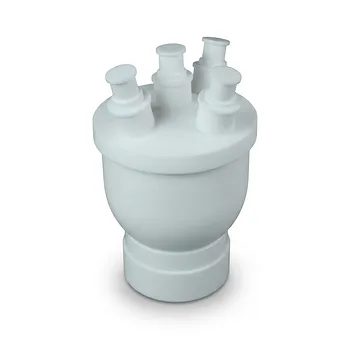
Selecting the appropriate vessel for reacting dicopper alkyl complexes with CO2 requires prioritizing hermetic sealing, high pressure resistance, and rigorous chemical inertness. These criteria are essential to ensure that the stoichiometry of the reaction remains constant, particularly when the system is subjected to heat to facilitate the insertion of small molecules into the copper-alkyl bonds.
The central requirement for these reaction vessels is the ability to maintain a closed, pressurized environment that prevents gas leakage. By utilizing corrosion-resistant components like PTFE, researchers can ensure that any observed chemical changes are a direct result of the dicopper-alkyl reactivity rather than environmental contamination or loss of reagents.
Structural Integrity and Gas Retention
Maintaining Constant Stoichiometry
The primary goal in these reactions is to achieve an objective assessment of how dicopper-alkyl bonds interact with gaseous reagents.
Any loss of CO2 or volatile alkyl species through poor sealing will skew the experimental results and prevent accurate measurement of reaction activity.
The vessel must be engineered to keep the internal atmosphere stable, ensuring that the ratio of dicopper complex to gaseous reagent remains unchanged throughout the process.
Pressure Resistance Under Heat
Dicopper alkyl reactions often require thermal activation, typically reaching temperatures such as 60 degrees Celsius.
As the temperature rises, the internal pressure of the gaseous reagent increases, requiring a vessel that can withstand these stresses without mechanical failure.
The selection of the container must account for the specific pressure rating required for the amount of CO2 being introduced to avoid safety hazards or vessel deformation.
Chemical Compatibility and Sealing Mechanisms
The Role of PTFE Components
Polytetrafluoroethylene (PTFE) is a critical material choice for the liners and gaskets used in these reaction systems.
PTFE offers excellent chemical compatibility, preventing the highly reactive dicopper alkyl complexes from reacting with the vessel walls themselves.
These liners serve as a secondary barrier that protects the outer shell of the pressure vessel from corrosion while providing a compliant seal that prevents gas escape.
Ensuring Leak-Proof Performance
Excellent sealing is non-negotiable when dealing with gaseous reagents that can easily permeate through standard O-rings.
The vessel must be equipped with specialized gaskets that maintain their integrity even as the system expands and contracts during heating and cooling cycles.
A failure in the seal at peak temperature would result in the immediate loss of the gaseous reagent, effectively quenching the insertion reaction prematurely.
Understanding the Trade-offs
Visibility versus Durability
Glass containers allow for the visual monitoring of color changes or precipitate formation, which is invaluable when studying dicopper complexes.
However, glass has significantly lower pressure thresholds than stainless steel or alloy pressure vessels, increasing the risk of explosive failure.
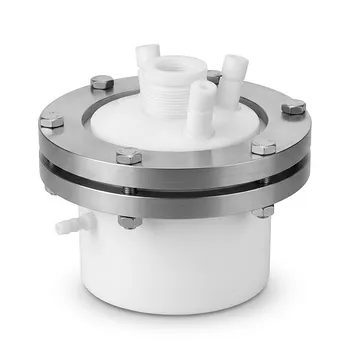
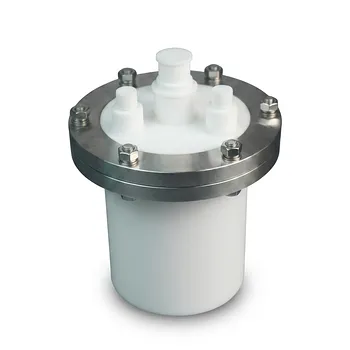
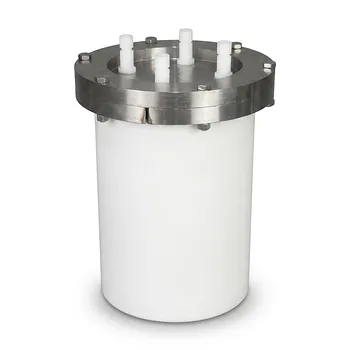
While metal vessels offer superior safety and higher pressure limits, they require internal PTFE liners to prevent the metal surface from interfering with the organometallic chemistry.
How to Apply This to Your Research
When choosing between a glass pressure bottle and a lined metal autoclave, evaluate your specific experimental parameters.
- If your primary focus is visual observation of kinetics: Utilize a high-quality, heavy-walled glass pressure vessel rated for at least twice your intended operating pressure.
- If your primary focus is high-pressure stoichiometry: Opt for a stainless steel pressure vessel equipped with a full PTFE liner and high-performance gaskets to ensure a leak-proof environment.
- If your primary focus is thermal stability at 60°C or higher: Prioritize metal vessels with PTFE seals, as they provide the most reliable mechanical strength under consistent heat.
By strictly adhering to these selection criteria, you ensure the integrity of your dicopper alkyl complexes and the accuracy of your gaseous insertion data.
Summary Table:
| Criterion | Requirement | Impact on Research |
|---|---|---|
| Sealing | Hermetic/Leak-proof | Prevents gas loss and maintains stoichiometry |
| Resistance | High Pressure Rating | Safely handles CO2 expansion during heating (60°C+) |
| Inertness | PTFE/PFA Liners | Eliminates contamination from metal vessel walls |
| Monitoring | Visibility vs. Strength | Balancing visual kinetics with mechanical durability |
At KINTEK, we specialize in high-performance fluoropolymer solutions tailored for sensitive organometallic research. From everyday basic labware like PFA beakers, reagent bottles, and centrifuge tubes to advanced reaction apparatus such as PTFE-lined pressure vessels, microwave digestion vessels, and custom electrochemical cells, we provide the chemical inertness your dicopper alkyl research demands. Our expertise extends to end-to-end custom CNC fabrication of non-standard machined parts and bespoke laboratory setups, ensuring your gaseous reagent reactions remain leak-proof and precise. Whether you require high-volume consumables like O-rings and seal tapes or complex reaction vessels, KINTEK is your partner for absolute material purity and performance. Contact us today to discuss your custom laboratory requirements!
References
- Micah S. Ziegler, T. Don Tilley. Dicopper Alkyl Complexes: Synthesis, Structure, and Unexpected Persistence. DOI: 10.1021/acs.organomet.8b00443
This article is also based on technical information from Kintek Knowledge Base .
Related Products
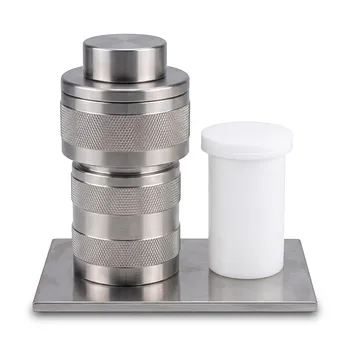
- PTFE Lined High Pressure Digestion Vessel 50ml High Temperature Hydrothermal Synthesis Tank
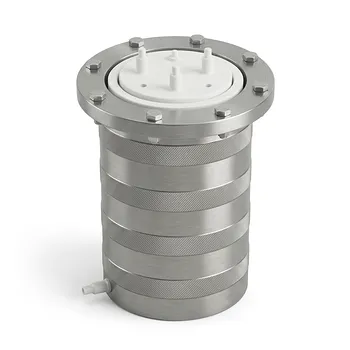
- Custom TFM Reaction Vessel with Stainless Steel Jacket and PTFE Inner Cup for High Corrosion Resistance
- High Pressure Custom TFM Reactor Stainless Steel Outer Vessel PTFE Inner Cup for Corrosive Synthesis
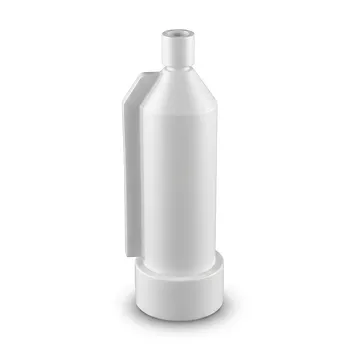
- High Purity PTFE Corrosion Resistant Reaction Vessel with Luer Fittings and Caps for Trace Analysis
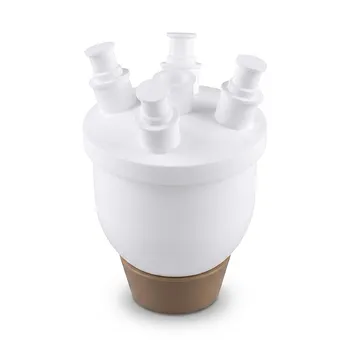
- High Performance Customizable PTFE Reaction Vessel and Corrosion Resistant Polytetrafluoroethylene Flask for Chemical Laboratory Use
People Also Ask
- What are the benefits of using a PTFE-lined vessel for carbon-sulfur cathode treatment? Maximize Purity & Performance
- Why are PTFE-lined pressure digestion vessels required for the preparation of Ag/CeO2 catalysts? Purity & Performance
- What safety features are typically incorporated into high-pressure PTFE digestion vessel designs? Ensure Lab Safety
- What is the function of high-pressure PTFE digestion vessels in mineral analysis? Optimize Sample Mineralization
- What is the function of PTFE lined high-pressure vessels in g-C3N4 synthesis? Achieve High-Purity Material Growth