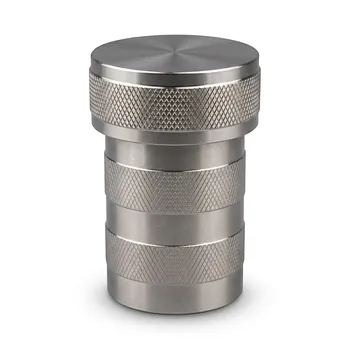
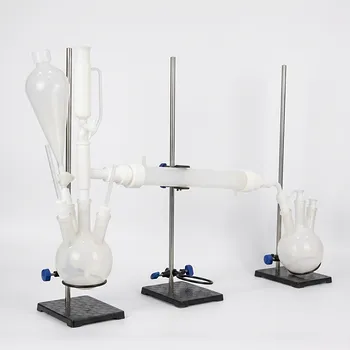
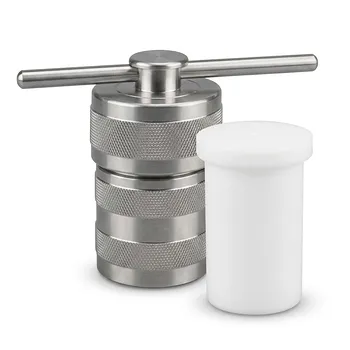
The high-pressure reactor, or autoclave, acts as the fundamental driver for the transformation of amorphous aluminosilicate gel into the organized crystalline structure of ZSM-5. By creating a sealed, hydrothermal environment, the reactor allows for the precise combination of high temperature and autogenous pressure required to simulate natural geological processes. This controlled setting facilitates the dehydration condensation and molecular rearrangement necessary to form the zeolite's characteristic three-dimensional channel system.
The core role of the autoclave is to provide a stable, high-energy hydrothermal environment that enables the dissolution of precursors and the subsequent nucleation of the ZSM-5 framework. It maintains the necessary supersaturation and temperature (typically 170°C to 180°C) to ensure the amorphous gel reorganizes into a high-crystallinity MFI structure.
The Mechanics of Hydrothermal Synthesis
Simulating Geological Conditions
The autoclave functions by mimicking the intense heat and pressure found deep within the earth's crust where natural zeolites form. In this sealed vessel, water is heated well above its boiling point, creating autogenous pressure that keeps the solvent in a liquid state. This high-energy environment is the only way to force the stable rearrangement of silicon and aluminum atoms into a complex molecular sieve.
Facilitating Dehydration Condensation
Inside the reactor, aluminosilicate units undergo dehydration condensation, a process where water molecules are removed as chemical bonds form between the precursors. The pressure generated within the autoclave accelerates this reaction, allowing the silicon and aluminum sources to bridge together. This process is essential for building the rigid, three-dimensional framework that defines the ZSM-5 structure.
Template-Guided Nucleation
The high-pressure environment is critical for the interaction between the inorganic precursors and organic template agents, such as TPAOH. Under these conditions, the template molecules act as a "mold" around which the silicate units assemble. The autoclave ensures that these components remain in intimate contact for the 24 to 48 hours required for the MFI-type framework to fully crystallize.
Driving Physical and Chemical Equilibrium
Dissolution and Re-precipitation
The autoclave maintains the reaction system in a state of supersaturation, which is the primary driver for crystal growth. The high temperature increases the solubility of the amorphous precursors, causing them to dissolve into the liquid phase. As these precursors reach a critical concentration, they re-precipitate onto the growing crystal nuclei in an ordered, repeating pattern.
Precision Kinetic Regulation
By acting as a closed system, the autoclave allows for the precise regulation of crystal nucleation and growth kinetics. This control is vital for achieving a specific Silicon-to-Aluminum (Si/Al) ratio and ensuring high crystallinity. Much like in the synthesis of specialized nanoparticles, the reactor's environment determines which crystal facets grow, resulting in a predictable and uniform pore structure.
Understanding the Trade-offs
The Risk of High-Pressure Operations
Operating at temperatures between 170°C and 180°C creates significant internal pressure, which demands rigorous safety protocols and robust equipment maintenance. Any failure in the seal or the pressure vessel can lead to hydrothermal leaks, which immediately halt the crystallization process and pose a safety hazard to personnel.
Sensitivity to Thermal Gradients
Achieving uniformity in a large-scale autoclave can be challenging because temperature gradients within the vessel may lead to inconsistent crystallization. If the heat is not distributed evenly, one part of the batch may result in high-quality ZSM-5, while another remains partially amorphous or develops undesired crystal phases.
Time and Energy Intensiveness
The synthesis of ZSM-5 is a slow process, often requiring 24 to 48 hours of continuous heating. This creates a high energy footprint and limits the throughput of the production process. While faster synthesis is possible by increasing temperature, doing so increases the risk of producing competing zeolite structures or degrading the organic template.
How to Apply This to Your Project
Making the Right Choice for Your Goal
- If your primary focus is high crystallinity: Ensure the autoclave maintains a stable temperature of 170°C–180°C for at least 48 hours to allow for complete framework reorganization.
- If your primary focus is specific Si/Al ratios: Use the autoclave to carefully control the dissolution rate of your aluminum source, ensuring it integrates evenly into the silicate framework during the nucleation phase.
- If your primary focus is precise pore structure: Utilize organic template agents like TPAOH within the sealed environment to guide the formation of the MFI-type channels.
- If your primary focus is facet engineering: Adjust the pressure and temperature kinetics within the autoclave to favor the growth of specific crystal planes for specialized catalytic applications.
The high-pressure reactor is the indispensable tool that bridges the gap between raw chemical precursors and the highly functional, porous architecture of ZSM-5 zeolites.
Summary Table:
| Feature | Role in ZSM-5 Crystallization | Typical Conditions |
|---|---|---|
| Hydrothermal Environment | Simulates geological heat/pressure to dissolve precursors | 170°C – 180°C |
| Autogenous Pressure | Maintains liquid phase & accelerates dehydration condensation | Self-generated in sealed vessel |
| Nucleation Control | Facilitates template (TPAOH) interaction for MFI framework | 24 – 48 Hours |
| Kinetic Regulation | Drives supersaturation for ordered crystal growth | Precision temperature stability |
| Structural Integrity | Ensures high crystallinity and specific Si/Al ratios | Controlled closed-system |
Elevate Your Zeolite Synthesis with KINTEK Precision
To achieve high-crystallinity ZSM-5, your laboratory requires equipment that withstands the rigors of hydrothermal synthesis. KINTEK specializes in high-performance fluoropolymer solutions and advanced reaction apparatus designed for the most demanding chemical environments.
From everyday basic labware like PFA beakers, crucibles, and reagent bottles to critical components for complex setups—including hydrothermal synthesis liners, microwave digestion vessels, and custom-machined PFA reactors—we provide the tools necessary for precise molecular engineering. Our expertise extends to comprehensive fluid transfer components (tubing, fittings, valves) and specialized tools like high-purity trace analysis instruments and electrochemical cells.
Whether you need standard high-volume consumables or bespoke CNC-fabricated parts tailored to your specific Si/Al ratio research, KINTEK ensures an absolute focus on material purity and thermal stability.
Ready to optimize your ZSM-5 crystallization process?
Contact KINTEK today to discuss your custom laboratory needs.
References
- Yonas Desta Bizualem, Noureddine Elboughdiri. HYDROTHERMAL SYNTHESIS AND CHARACTERIZATION OF ZSM-5 ZEOLITE FROM ANORTHOSITE: IMPACTS OF REACTION TIME AND TEMPERATURE. DOI: 10.17222/mit.2024.1283
This article is also based on technical information from Kintek Knowledge Base .
Related Products
- High Pressure Custom TFM Reactor Stainless Steel Outer Vessel PTFE Inner Cup for Corrosive Synthesis
- High Temperature Corrosion Resistant Hydrothermal Synthesis Reactor with TFM Inner Liner and Straight Cylinder Design
- High Purity PFA Constant Pressure Condensation Reaction System Acid Resistant High Temperature Customizable Teflon Labware
- 5ml High Pressure PTFE Digestion Vessel for Geological Mineral Analysis Corrosion Resistant Polytetrafluoroethylene TFM Digestion Inner Liner
- Custom TFM Reaction Vessel with Stainless Steel Jacket and PTFE Inner Cup for High Corrosion Resistance
People Also Ask
- Why is a PTFE-lined reactor required for Mn2O3 synthesis? Achieve High Purity & Corrosion Resistance
- What is the technical value of 180 bar pressure for MgO nanostructures? Unlock Superior Crystallinity and Morphology
- What are the technical advantages of using high-pressure PTFE reaction vessels during metal digestion? Expert Insights.
- How does the regulation of initial pressure within a high-pressure reaction system affect the production of MIL-100(Fe)?
- Why is a high-pressure reactor necessary for the esterification reaction between oleic acid and methanol at 150°C? Guide