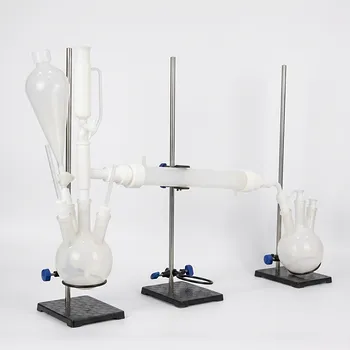
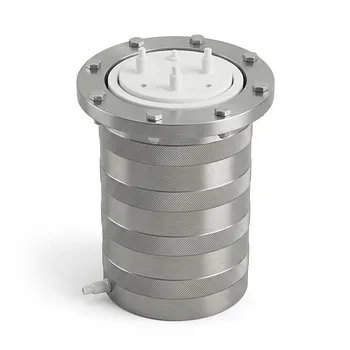
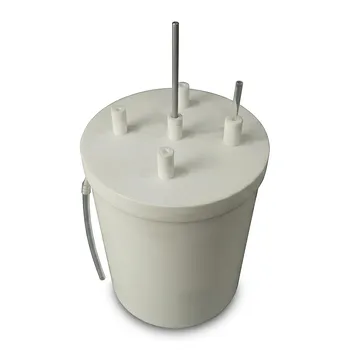
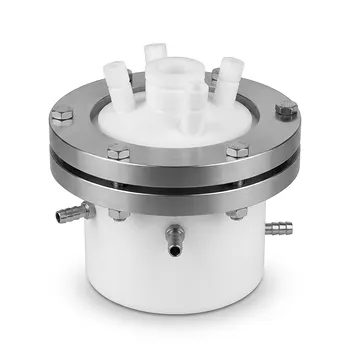
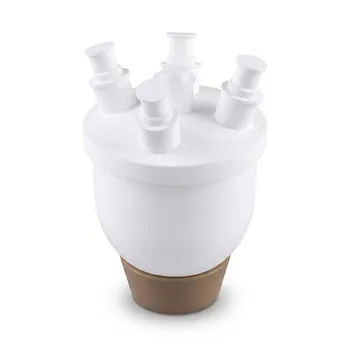
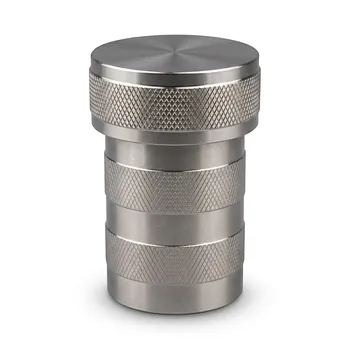
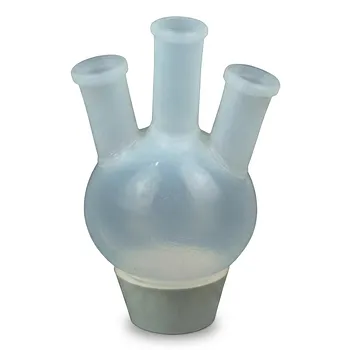
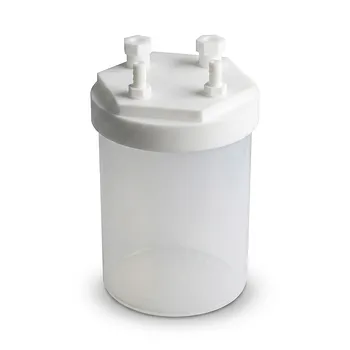
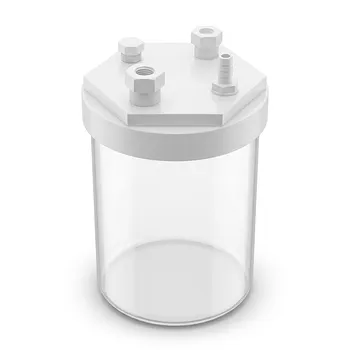
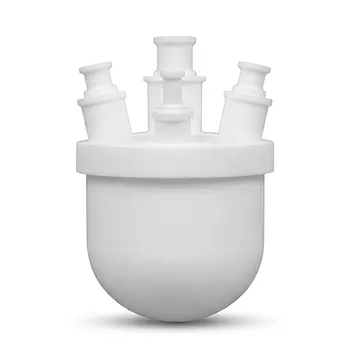
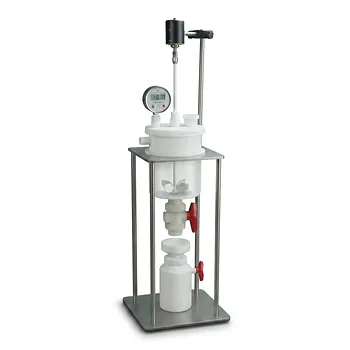
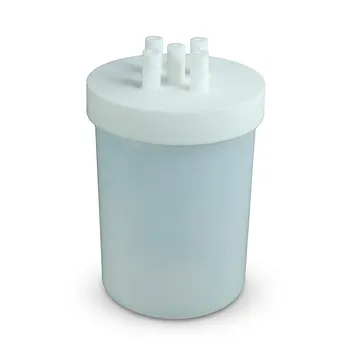
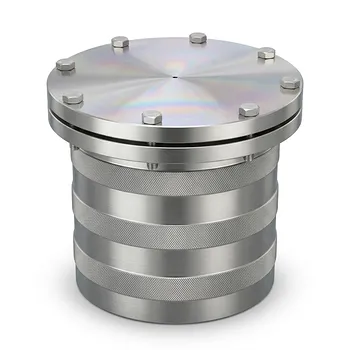
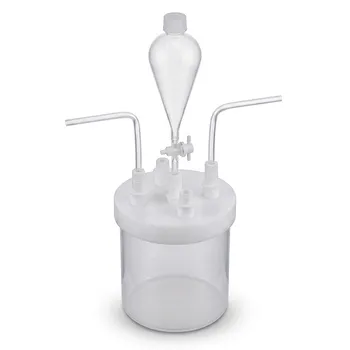
The synthesis of magnesium-doped $\alpha$-Ga₂O₃ relies on a laboratory pressure reactor to provide a high-temperature, high-pressure hydrothermal environment. Specifically, the reactor maintains a sealed chamber reaching temperatures around 180°C, which generates saturated vapor pressure to transition solvents into a near-critical or supercritical state. This environment facilitates the rapid diffusion and reactivity required for the formation and growth of rhombohedral nanorod arrays on conductive substrates.
A laboratory pressure reactor acts as a hydrothermal autoclave that creates a supercritical solvent environment to lower the energy barrier for crystal growth. By precisely controlling temperature and pressure, it enables the kinetic conditions necessary for precursor molecules to assemble into organized $\alpha$-Ga₂O₃ nanostructures.
The Role of Supercritical Solvents in Nanostructure Growth
Achieving Near-Critical States
A laboratory pressure reactor, or hydrothermal synthesis autoclave, functions by heating a solvent within a sealed, fixed volume.
As temperatures reach levels such as 180°C, the liquid solvent generates significant saturated vapor pressure, preventing it from boiling off.
This process pushes the solvent into a near-critical or supercritical state, where the distinction between liquid and gas phases becomes blurred.
Enhancing Molecular Diffusion and Reactivity
In this supercritical state, the solvent's density remains high like a liquid, while its viscosity drops and diffusion rates increase like a gas.
These physical properties significantly enhance the diffusion capacity of the magnesium and gallium precursor molecules within the solution.
The increased kinetic energy and mobility allow these molecules to react more efficiently, overcoming the energy barriers required for magnesium doping and phase formation.
Kinetic Control over Crystal Nucleation
Driving Rhombohedral Nanorod Formation
The high-pressure environment provides the specific kinetic conditions necessary for $\alpha$-Ga₂O₃ crystal nuclei to precipitate from the solution.
Under these controlled conditions, the crystals do not grow randomly but are guided into specific rhombohedral nanorod arrays.
This structural morphology is a direct result of the reactor’s ability to maintain steady hydrothermal pressure, which stabilizes the growth face of the crystal.
Substrate Interaction and Orientation
The pressure reactor ensures that precursors are delivered uniformly to the FTO (Fluorine-doped Tin Oxide) substrate.
This uniform delivery is critical for the "bottom-up" growth of nanorods, ensuring they adhere firmly and grow in an organized vertical orientation.
Without the pressurized environment, the precursor molecules would lack the energy to form the dense, high-quality arrays required for electronic applications.
Understanding the Trade-offs and Limitations
Safety Risks of High-Pressure Systems
Operating at temperatures like 180°C in a sealed vessel creates extreme internal forces that require strict adherence to safety protocols.
Structural failure of the autoclave or the internal lining (often Teflon) can lead to hazardous pressure releases or chemical leaks.
Sensitivity to Temperature Fluctuations
The synthesis is highly sensitive to the temperature-pressure relationship; even minor deviations can alter the crystal phase or morphology.
If the temperature is too low, the solvent fails to reach the necessary supercritical state, resulting in incomplete nucleation or poor magnesium integration.
How to Apply This to Your Synthesis Project
When utilizing a pressure reactor for $\alpha$-Ga₂O₃ synthesis, your operational focus should shift based on your specific material requirements.
- If your primary focus is crystal purity: Maintain a constant, stable temperature to ensure the saturated vapor pressure remains consistent throughout the growth cycle.
- If your primary focus is nanorod density: Optimize the filling ratio of the reactor to influence the pressure levels and the concentration of precursors reaching the substrate.
- If your primary focus is safety and repeatability: Regularly inspect the autoclave seals and use a reactor with integrated pressure relief to prevent catastrophic failure during high-temperature runs.
By mastering the hydrothermal conditions of the pressure reactor, you can precisely dictate the structural and electronic properties of magnesium-doped $\alpha$-Ga₂O₃.
Summary Table:
| Physical Parameter | Hydrothermal Role in α-Ga₂O₃ Synthesis |
|---|---|
| Temperature (~180°C) | Supplies kinetic energy to overcome energy barriers for magnesium doping. |
| Saturated Vapor Pressure | Maintains solvents in a near-critical or supercritical state without boiling. |
| Solvent Diffusion | Decreased viscosity in the supercritical state allows rapid molecular mobility. |
| Kinetic Control | Stabilizes crystal growth faces to form organized rhombohedral nanorod arrays. |
| Substrate Interaction | Ensures uniform delivery of precursors for vertical growth on FTO substrates. |
Elevate Your Synthesis Precision with KINTEK Fluoropolymer Solutions
Are you ready to achieve superior results in your hydrothermal synthesis projects? At KINTEK, we specialize in the high-performance fluoropolymer materials required to withstand the extreme temperatures and pressures of magnesium-doped $\alpha$-Ga₂O₃ production.
From everyday basic labware like beakers, crucibles, and reagent bottles to specialized hydrothermal synthesis liners and microwave digestion vessels, we manufacture virtually all imaginable laboratory supplies crafted from high-purity PTFE and PFA. Our expertise extends to comprehensive fluid transfer components (tubing, valves, and fittings) and advanced reaction apparatus, including custom electrochemical cells and battery testing fixtures.
Backed by end-to-end custom CNC fabrication, KINTEK is equipped to deliver everything from complex non-standard machined parts to high-volume orders with an exclusive focus on durability and chemical inertness. Don't compromise on your research—Contact us today to discuss your custom laboratory needs and source the industry's finest fluoropolymer components!
References
- Xin Zhou, Heping Zeng. Mg‐doped α‐Ga<sub>2</sub>O<sub>3</sub> Nanorods for the Construction of Photoelectrochemical‐Type Self‐Powered Solar Blind UV Photodetectors and Underwater Imaging Application. DOI: 10.1002/advs.202413074
This article is also based on technical information from Kintek Knowledge Base .
Related Products
- High Purity PFA Constant Pressure Condensation Reaction System Acid Resistant High Temperature Customizable Teflon Labware
- High Pressure Custom TFM Reactor Stainless Steel Outer Vessel PTFE Inner Cup for Corrosive Synthesis
- PTFE 10L Reaction Vessel with Stirring Paddle Customizable Corrosion Resistant High Temperature Reactor for Biopharmaceutical and Chemical Processing
- Custom PTFE Reaction System with Hose Barb Fittings Corrosion Resistant High Sealing 2L 4L Lab Reactor with Separatory Funnel
- High Performance Customizable PTFE Reaction Vessel and Corrosion Resistant Polytetrafluoroethylene Flask for Chemical Laboratory Use
People Also Ask
- Why is high-purity PFA labware preferred when preparing mixed solutions? Prevent Trace-Metal Leaching & Contamination
- What are the core advantages of high-purity PFA labware? Achieve Unmatched Precision in Trace Analysis
- Why Is High-Purity PFA Preferred for Trace Analysis and Synthesis? Achieve Unmatched Analytical Precision
- Why use PFA labware for LiFePO4 precursor preparation? Ensure Trace Metal Purity & Superior Battery Performance.
- What technical advantages does high-purity PFA labware provide in trace fluorescence detection? Ensure Peak Sensitivity