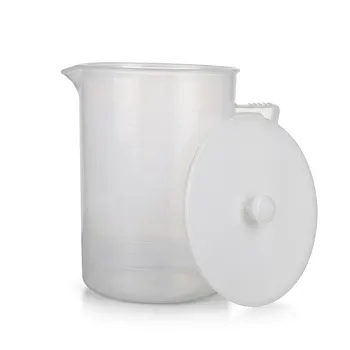
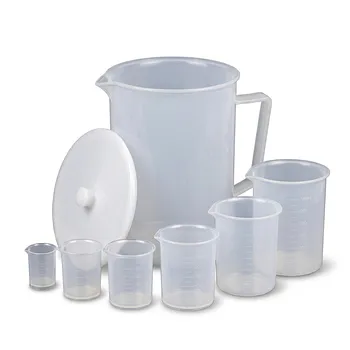
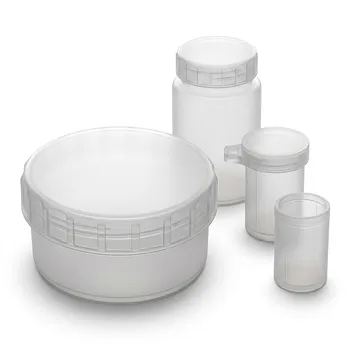
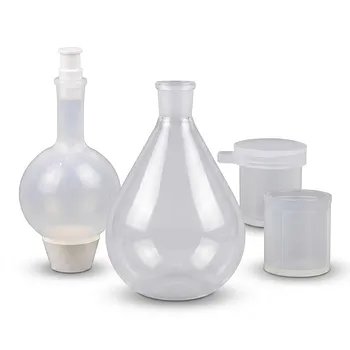
Perfluoroalkoxy alkane (PFA) labware is a high-performance, melt-processable fluoropolymer engineered for environments requiring extreme chemical inertness and ultra-high purity. It is characterized by a fully fluorinated carbon backbone that eliminates reactive sites, offering a continuous service temperature range of -270°C to 260°C. These properties make it the definitive choice for ultra-trace element analysis (ICP-MS), semiconductor manufacturing, and pharmaceutical research where sample integrity is paramount.
PFA labware serves as the gold standard for critical analytical processes because it combines the extreme chemical resistance of PTFE with the superior surface smoothness and purity made possible by melt-processing. Its ability to withstand aggressive reagents while contributing near-zero leachable metals makes it indispensable for high-stakes laboratory and industrial applications.
Technical Characteristics of PFA
Molecular Stability and Chemical Inertness
PFA is a copolymer of tetrafluoroethylene and perfluoroalkyl vinyl ethers, resulting in a fully fluorinated structure. This molecular configuration eliminates reactive sites, providing near-complete resistance to even the most aggressive reagents and solvents.
Unlike standard plastics, PFA does not react with strong acids like hydrofluoric acid (HF) or volatile organic compounds. This inertness ensures that the container never interferes with the chemical composition of the stored sample.
Thermal Resilience and Stability
PFA maintains its structural integrity across a vast temperature spectrum, from cryogenic levels (-270°C) up to 260°C (500°F). This allows for repeated sterilization and high-temperature reactions without the risk of the material becoming brittle or deforming.
It is particularly valued for its resistance to thermal cycling. The material can undergo repeated heating and cooling phases without cracking, a common failure point for lower-grade fluoropolymers or glass.
Superior Purity and Surface Morphology
As a melt-processable polymer, PFA can be manufactured with extremely smooth, non-porous surfaces. This reduces the surface area available for contaminant "trapping" and facilitates easier, more effective cleaning protocols.
In comparison to PTFE or glass, PFA exhibits extremely low levels of extractables and leachable metals. This ultra-high purity is essential for laboratories performing analysis at the parts-per-trillion (ppt) level.
Primary Industrial Applications
Ultra-Trace Elemental Analysis (ICP-MS)
In analytical chemistry, PFA is the material of choice for ICP-MS (Inductively Coupled Plasma Mass Spectrometry). Its lack of metal ion leaching ensures that background noise is minimized, allowing for the detection of trace elements with high precision.
Semiconductor Manufacturing
PFA's non-shedding surfaces and resistance to ultra-pure etchants meet stringent SEMI standards. It is used extensively for handling photoresist strippers and acids, where particulate contamination could ruin advanced wafer yields.
Pharmaceutical and Chromatography Research
The material's optical translucency allows researchers to visually monitor fluid levels and reactions. Its low friction and non-stick properties also make it ideal for chromatography components, ensuring fluid moves through the system without adhesion or cross-contamination.
Understanding the Trade-offs and Limitations
Surface Vulnerability and Abrasion
While PFA is mechanically tough and flexible, it has lower scratch resistance than PTFE. Users must avoid abrasive cleaning tools, as surface scratches can create microscopic sites for contaminant adsorption and biofilm growth.
Thermal and Gas Permeability Limits
Exposing PFA to temperatures exceeding 300°C for prolonged periods can lead to slow chain scission and the release of trace fluorocarbons. Additionally, PFA can exhibit permeability to certain gases at high temperatures, which may be a concern for highly sensitive anaerobic reactions.
Economic and Practical Considerations
The initial cost of PFA labware is significantly higher than that of polypropylene or borosilicate glass. However, its extended service life and the reduced risk of losing expensive samples to contamination often result in a much lower total cost of ownership.
How to Apply PFA to Your Project
Making the Right Choice for Your Goal
To maximize the utility of PFA labware, consider your specific environmental stressors and purity requirements.
- If your primary focus is ultra-trace analysis (ppt levels): Utilize PFA exclusively for digestion vessels and storage to eliminate the risk of metallic ion leaching common in glass.
- If your primary focus is semiconductor processing: Choose PFA for handling hydrofluoric acid and other aggressive etchants to ensure compliance with high-purity standards.
- If your primary focus is high-temperature cycling: Leverage PFA’s creep resistance and thermal stability up to 260°C to ensure long-term dimensional stability of your equipment.
By understanding the unique molecular and mechanical strengths of PFA, you can ensure the highest levels of accuracy and durability in the most demanding technical environments.
Summary Table:
| Feature | Technical Characteristic | Laboratory Benefit |
|---|---|---|
| Temperature Range | -270°C to +260°C | Cryogenic storage to high-temp reactions |
| Chemical Inertness | Fully fluorinated backbone | Resistance to HF and aggressive reagents |
| Purity Grade | Melt-processable fluoropolymer | Near-zero leachable metals (ppt level) |
| Surface Quality | Non-porous & ultra-smooth | Reduced contamination and easy cleaning |
| Transparency | Optically translucent | Clear visual monitoring of fluid levels |
Elevate Your Laboratory Precision with KINTEK
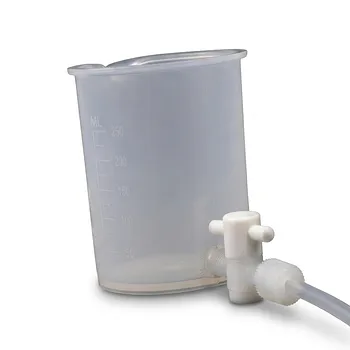
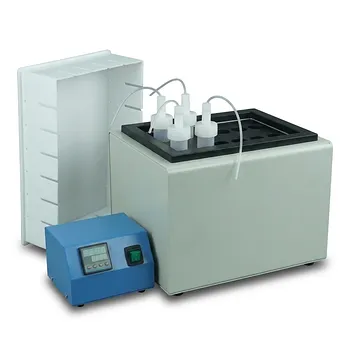
Ensure absolute integrity for your most sensitive applications with KINTEK’s high-performance fluoropolymer solutions. From everyday basic labware like beakers, measuring cylinders, crucibles, and centrifuge tubes to high-purity trace analysis instruments and cleaning tanks, we provide the tools necessary for excellence.
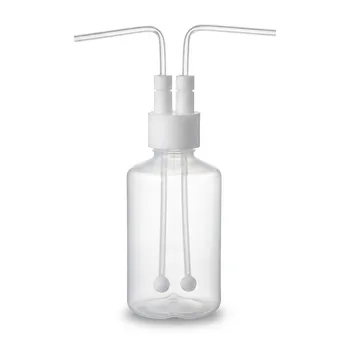
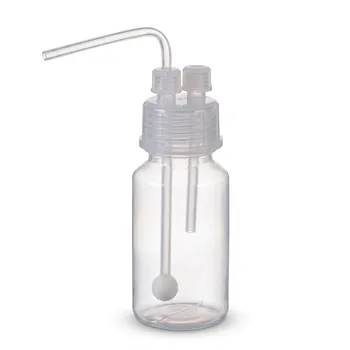
Our expertise extends to comprehensive fluid transfer components (tubing, valves), filtration tools, and general consumables, reaching all the way to advanced reaction apparatus such as custom electrochemical cells, hydrothermal synthesis liners, and microwave digestion vessels.
Why choose KINTEK?
- End-to-End Customization: Our custom CNC fabrication delivers everything from complex non-standard machined parts to high-volume bespoke setups.
- Material Focus: An exclusive and absolute focus on high-performance PTFE and PFA materials.
- Unmatched Purity: Engineered specifically for the demands of ICP-MS, semiconductor, and pharmaceutical research.
Ready to upgrade your lab? Contact us today to discuss your specific requirements and see how KINTEK’s fluoropolymer expertise can streamline your workflow.
Related Products
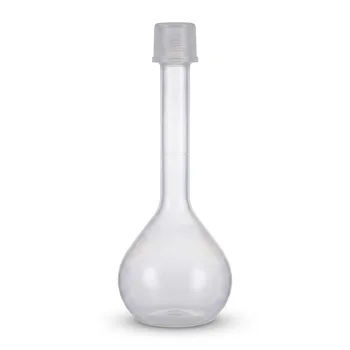
- High Purity PFA Volumetric Flask 1000ml 2000ml Constant Volume Bottle Acid Resistant Trace Analysis Custom Laboratory Labware
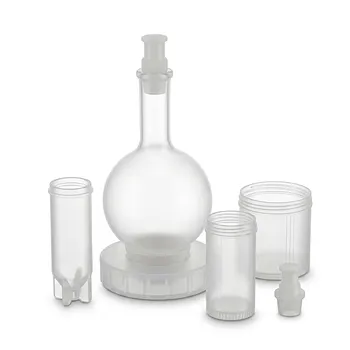
- Custom PFA Pear Shaped Flask High Purity Corrosion Resistant Labware Custom Molded Fluoropolymer Flask Glass Replacement Solution
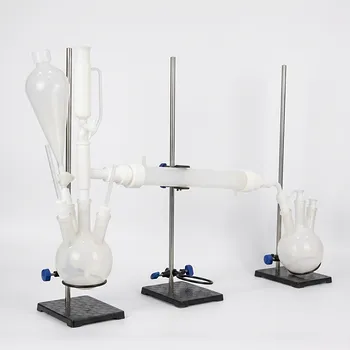
- High Purity PFA Constant Pressure Condensation Reaction System Acid Resistant High Temperature Customizable Teflon Labware
- High Purity PFA Crucible and Corrosion Resistant PTFE Beaker for Trace Analysis and Custom Laboratory Applications
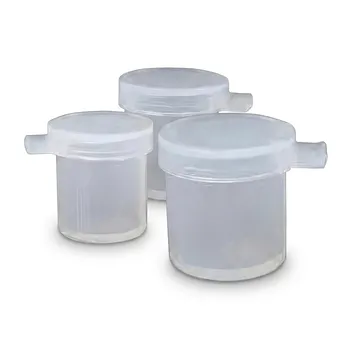
- High Purity PFA Sample Dissolution Cups Acid Resistant Chemical Digestion Vessels with Lids Trace Analysis Labware
People Also Ask
- Why use high-purity PFA bottles for Carbon Quantum Dots? Ensure Ink Stability and Prevent Fluorescence Quenching
- Why is high-purity PFA trace analysis labware used for MXene? Ensure Superior Material Integrity in Research
- Why is high-purity PFA trace analysis labware used for sample processing when preparing Mo2CTx@MoS2? Ensure Material Purity
- Why is high-purity PFA labware necessary for Znx@LS-2 zeolite ICP-OES analysis? Ensure Trace-Level Precision
- Why is high-purity PFA laboratory labware essential for high-sensitivity trace analysis? Maximize data accuracy.