Knowledge PTFE(Teflon) Labware What continuous service temperatures and thermal limits should be maintained when using PTFE and PFA fluoropolymer apparatus in high-temperature reactions? Keep operating below 260°C for safety.
Author avatar

Tech Team · Kintek

Updated 3 months ago

What continuous service temperatures and thermal limits should be maintained when using PTFE and PFA fluoropolymer apparatus in high-temperature reactions? Keep operating below 260°C for safety.


Keep continuous operating temperatures at or below 260°C for both PTFE and PFA apparatus, with a margin below that limit whenever possible. PTFE melts at approximately 340–342°C, while PFA has a melting range of roughly 265–310°C; these melting points are processing data, not safe operating temperatures. High-temperature reaction vessels, microwave digestion systems, tubing, and fittings should remain within the applicable manufacturer-rated service range to prevent deformation, seal failure, loss of dimensional stability, and thermal decomposition.

The practical limit is the continuous service rating, not the melting point. Treat 260°C as the absolute upper boundary for many PTFE and PFA products, and use a lower limit where the specific PFA grade, pressure, mechanical load, exposure time, or component design requires it.

Why Continuous Service Temperature Matters

Service temperature is different from melting temperature

A polymer can lose mechanical strength, creep, or deform long before it visibly melts. The continuous service rating therefore indicates the temperature range in which the component can maintain useful structural and dimensional performance over sustained exposure.

PTFE’s melting point is about 342°C for virgin material. PFA melts over a broader range, commonly about 265–310°C, depending on grade and formulation.

Use 260°C as an upper boundary

PTFE and PFA are commonly specified for continuous service up to approximately 260°C. Some PFA products are rated more conservatively, around 225–260°C, so the product-specific rating must take precedence over a general material value.

For reaction vessels and other load-bearing components, operating below the maximum rating provides additional protection against creep, distortion, and premature seal failure.

Do not confuse processing temperature with operating temperature

PTFE may be processed at temperatures around 380°C, and PFA may require processing temperatures in the 360–380°C range. Those temperatures apply to controlled manufacturing operations, not to normal laboratory use.

Processing equipment must be designed for those conditions, including suitable temperature control, ventilation, and corrosion-resistant construction.

Thermal Limits in High-Temperature Reactions

Reaction vessels and digestion apparatus

Microwave digestion vessels and heated reaction vessels should remain comfortably below the applicable 260°C maximum continuous-use limit. Temperature control should account for internal pressure, hot spots, ramp rates, and the possibility that the vessel wall experiences a different temperature from the surrounding heating medium.

The pressure rating can decline as temperature rises, even when the polymer remains below its nominal service limit.

Tubing, fittings, and seals

PTFE and PFA tubing can tolerate high temperatures, but fittings and seals may have lower ratings because they depend on dimensional accuracy and mechanical compression. Exceeding the temperature limit can cause leakage, loss of seal integrity, or permanent deformation.

The rating of the complete assembly is governed by its lowest-rated component, not simply by the resin’s maximum temperature.

Mechanical load and exposure time

Continuous service ratings assume defined conditions. Pressure, tensile or compressive load, repeated thermal cycling, and long dwell times can reduce the safe operating range through creep and fatigue.

A component exposed briefly to a higher temperature is not automatically equivalent to one held there continuously, but short excursions should still be evaluated against the manufacturer’s limits.

What Happens Above the Service Limit

Dimensional stability declines first

Above the rated continuous-use temperature, components may soften, creep, warp, or lose their designed tolerances before melting occurs. This is especially important for machined vessels, threaded parts, valve seats, and sealing surfaces.

A part that appears intact may no longer provide reliable pressure containment or chemical isolation.

Thermal degradation can begin before melting

Thermal degradation may begin above approximately 300°C under some conditions, while more pronounced PTFE degradation in air is associated with temperatures above about 400°C. The exact onset depends on resin grade, atmosphere, dwell time, contamination, and heating history.

The melting point is therefore not a usable safety threshold. It describes a phase transition, not a permissible reaction temperature.

Severe overheating creates hazardous fumes

At sufficiently high temperatures, especially in the presence of oxygen, fluoropolymers can decompose into hazardous products. Around 450°C, reported products include carbonyl fluoride and fluoropolymer fumes; carbonyl fluoride can hydrolyze to hydrofluoric acid and carbon dioxide.

Any equipment capable of thermal processing must provide effective local exhaust and use materials, such as corrosion-resistant alloys, that can withstand potential off-gassing and corrosive decomposition products.

Understanding the Trade-offs

A higher limit does not eliminate the need for a temperature margin

Operating exactly at 260°C leaves little allowance for sensor error, temperature overshoot, hot spots, or calibration drift. A lower working setpoint is generally more defensible when the reaction allows it.

The appropriate margin depends on the vessel design, thermal uniformity, pressure, and the specific resin grade.

PFA and PTFE are not interchangeable in every design

Both materials offer excellent high-temperature and chemical resistance, but their melting behavior, mechanical properties, fabrication methods, and product ratings differ. PFA’s lower melting range makes its processing and upper-temperature behavior particularly dependent on grade and component design.

Select the rating for the actual product rather than applying a generic fluoropolymer value.

Chemical resistance does not guarantee thermal-mechanical reliability

PTFE and PFA resist many organic and inorganic chemicals, but chemical compatibility alone does not confirm safe operation. Temperature, pressure, mechanical stress, and duration determine whether a vessel or fitting will remain functional.

A chemically compatible liner can still deform or fail if it is operated beyond its mechanical temperature rating.

Avoid uncontrolled thermal excursions

Hot plates, ovens, microwave systems, and cleaning equipment can produce localized temperatures above the programmed setpoint. Direct contact with heating elements, poor agitation, exothermic reactions, or empty-vessel heating can create damaging hot spots.

Use calibrated controls, independent over-temperature protection, and procedures that prevent dry heating or uncontrolled reaction escalation.

How to Apply This to Your Project

Use the complete apparatus rating and the most conservative applicable limit when setting operating conditions.

  • If your primary focus is continuous high-temperature operation: Keep PTFE and PFA apparatus at or below 260°C, preferably with a practical margin below that value.
  • If your primary focus is PFA vessel selection: Confirm the exact grade’s continuous-use range, because some PFA products are rated closer to 225°C than 260°C.
  • If your primary focus is pressure reactions: Verify the vessel, liner, fittings, and seals at the intended temperature and pressure together; the resin’s temperature rating alone is insufficient.
  • If your primary focus is fabrication or thermal processing: Use the resin’s processing range only in purpose-built equipment with controlled heating, corrosion-resistant materials, and effective exhaust ventilation.
  • If your primary focus is overheating prevention: Treat temperatures above 300°C as a potential degradation region and prevent exposure to severe overheating conditions, particularly in oxygen-rich environments.

Reliable high-temperature fluoropolymer operation comes from staying below the continuous service limit, validating the complete assembly, and controlling both temperature and pressure.

Summary Table:

Material Continuous Service Temp Melting Point Key Considerations
PTFE Up to 260°C ~340-342°C Degrades above ~300°C; avoid high temps.
PFA 225-260°C (grade dependent) ~265-310°C Melting range lower; check specific rating.
Assemblies Governed by lowest-rated component N/A Seals/fittings may have lower limits.

Ensure your high-temperature reactions run safely and efficiently with KINTEK's precision PTFE/PFA apparatus. Our labware is rated for reliable service up to 260°C, and our custom machining expertise ensures your assemblies meet exact specs. Contact us today to discuss your application and get the right fluoropolymer solution for your lab — Get in touch now!

Related Products

People Also Ask

Related Products

PTFE PFA Vacuum Filtration System Corrosion Resistant Customizable Shatterproof Laboratory Device

PTFE PFA Vacuum Filtration System Corrosion Resistant Customizable Shatterproof Laboratory Device

High-performance PTFE and PFA vacuum filtration systems designed for extreme chemical resistance. This customizable, shatterproof unit ensures trace-level purity and exceptional thermal stability for demanding laboratory processes and hazardous fluid transfers in industrial and research applications.

High Purity PFA Crucible and Corrosion Resistant PTFE Beaker for Trace Analysis and Custom Laboratory Applications

High Purity PFA Crucible and Corrosion Resistant PTFE Beaker for Trace Analysis and Custom Laboratory Applications

Discover high-purity PFA crucibles and PTFE beakers engineered for extreme chemical resistance and ultra-low background noise. These customizable fluoropolymer solutions ensure precision in trace analysis, semiconductor processing, and demanding industrial laboratory environments worldwide. Contact us for bespoke engineering quotes.

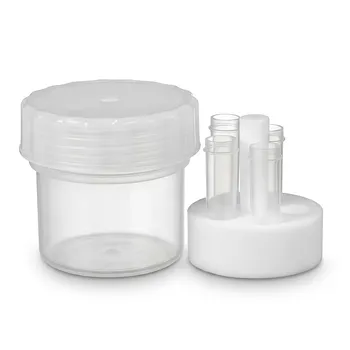
Custom PFA Microcolumn Racks and PTFE Machined Low Background Corrosion Resistant Laboratory Fixtures

Custom PFA Microcolumn Racks and PTFE Machined Low Background Corrosion Resistant Laboratory Fixtures

Optimize trace analysis with our custom PFA microcolumn racks and PTFE machined fixtures. These corrosion-resistant, low-background laboratory solutions offer exceptional durability and high-purity performance for demanding chemical processing and high-end research applications across diverse industrial environments today.

Custom PFA Micro Column Rack and PTFE Machined Storage Solutions for Trace Analysis

Custom PFA Micro Column Rack and PTFE Machined Storage Solutions for Trace Analysis

Engineered for high-purity laboratory environments, this custom PFA micro column rack and PTFE machined solution provides unmatched corrosion resistance and ultra-low metal background levels for critical trace analysis, sample preparation, and aggressive chemical storage applications.

Custom PFA Separatory Funnel Rack PTFE Machined Laboratory Support Stand Corrosion Resistant Low Background Fluoropolymer Fixture

Custom PFA Separatory Funnel Rack PTFE Machined Laboratory Support Stand Corrosion Resistant Low Background Fluoropolymer Fixture

Custom-engineered PFA and PTFE separatory funnel racks provide absolute chemical resistance and ultra-low background levels for high-purity analytical laboratories. Precision-machined for durability, these fluoropolymer supports eliminate contamination risks in demanding semiconductor, pharmaceutical, and trace metal analysis industrial workflows.

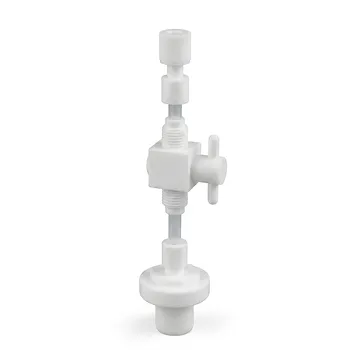
High Purity PFA PTFE Flare Stop Valves Customizable 2-Way 3-Way Reducing Fluoropolymer Fluid Control Solutions

High Purity PFA PTFE Flare Stop Valves Customizable 2-Way 3-Way Reducing Fluoropolymer Fluid Control Solutions

Engineered for semiconductor and chemical processing, these customizable PFA flare stop valves offer zero-leakage performance and high-purity fluid handling. Available in 2-way and 3-way configurations, they ensure zero heavy metal leaching for critical laboratory and industrial processes.

Corrosion Resistant PTFE Support with PFA Transparent Reaction Tank and High Purity PFA Sampling Tube for Trace Analysis

Corrosion Resistant PTFE Support with PFA Transparent Reaction Tank and High Purity PFA Sampling Tube for Trace Analysis

Optimized for trace analysis and corrosive chemical processing this high purity PTFE support and transparent PFA reaction system ensures zero heavy metal contamination custom engineered for laboratories demanding superior chemical resistance and precision fluid transfer in sensitive industrial applications

PTFE Distillation Condensation Apparatus High Temperature Hydrofluoric Acid Resistant Fluorination Reaction Flask

PTFE Distillation Condensation Apparatus High Temperature Hydrofluoric Acid Resistant Fluorination Reaction Flask

Premium PTFE distillation condensation apparatus engineered for extreme chemical resistance and high-temperature fluorination processes. Fully customizable configurations ensure superior performance in hydrofluoric acid environments and ultra-pure trace analysis applications for industrial and laboratory procurement.

High Purity PFA Coiled Tubing Custom PTFE Machining PFA Welding and Precision Bending Solutions

High Purity PFA Coiled Tubing Custom PTFE Machining PFA Welding and Precision Bending Solutions

Premium PFA coiled tubing and custom fluoropolymer fabrication solutions for semiconductor and chemical processing. Expert CNC machining, precision welding, and tailored bending services ensure high-purity fluid transfer and zero-leakage performance in corrosive environments. Contact us for bespoke industrial specifications today.

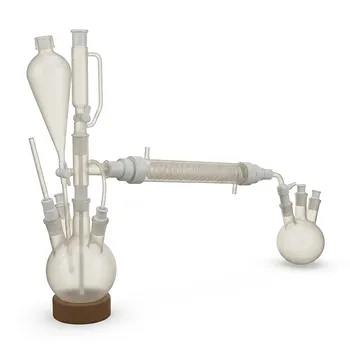
Corrosion Resistant Hydrogen Fluoride Reflux Apparatus PTFE Flask Condenser Separatory Funnel Collection Bottle High Temperature Laboratory System

Corrosion Resistant Hydrogen Fluoride Reflux Apparatus PTFE Flask Condenser Separatory Funnel Collection Bottle High Temperature Laboratory System

Engineered for extreme chemical environments, this high-performance fluoropolymer reflux apparatus offers unmatched resistance to hydrogen fluoride and corrosive acids. Our customizable PTFE systems ensure maximum safety and purity for demanding laboratory-scale chemical synthesis and high-purity trace analysis applications.

Custom PTFE Dissolution Bottle 50ml with PFA Ultra Fine Tubing Corrosion Resistant No Leaching

Custom PTFE Dissolution Bottle 50ml with PFA Ultra Fine Tubing Corrosion Resistant No Leaching

Engineered for high-purity trace analysis, this custom PTFE dissolution bottle with PFA ultra-fine tubing provides superior chemical resistance and zero metal leaching, ensuring sample integrity and precise results in demanding laboratory environments across diverse global industrial sectors.

Custom PTFE Filtration System Acid Resistant Chemical Semiconductor Fluoropolymer Filter Assembly

Custom PTFE Filtration System Acid Resistant Chemical Semiconductor Fluoropolymer Filter Assembly

Custom-engineered PTFE filtration systems designed for extreme chemical resistance in semiconductor and heavy chemical industries. These bespoke fluoropolymer units offer universal acid compatibility, zero-contamination performance, and exceptional durability for high-purity fluid processing and corrosive media handling at scale.

Custom PFA Reaction Bottles High Purity PTFE Reaction Vessels Corrosion Resistant Petrochemical Containers

Custom PFA Reaction Bottles High Purity PTFE Reaction Vessels Corrosion Resistant Petrochemical Containers

Professional custom PFA reaction bottles and PTFE vessels for petrochemical analysis offer superior corrosion resistance and zero metal ion leaching. Engineered for low-pressure applications, these high-purity containers ensure absolute sample integrity in critical laboratory synthesis environments.

High Purity PFA Chromatography Column with Collection Bottle Corrosion Resistant Fluoropolymer Filtration System for Trace Analysis

High Purity PFA Chromatography Column with Collection Bottle Corrosion Resistant Fluoropolymer Filtration System for Trace Analysis

High-performance PFA chromatography column and collection bottle system offers exceptional chemical resistance and ultra-low metal ion leaching for trace analysis. Durable corrosion-resistant fluoropolymer construction serves as a premium glass alternative for demanding laboratory filtration and high-purity purification.

High Purity 4L PFA Reaction Tank for Proton Exchange Membrane Electrolysis Water Oxygen Separation Systems

High Purity 4L PFA Reaction Tank for Proton Exchange Membrane Electrolysis Water Oxygen Separation Systems

High purity 4L PFA reaction tank designed for proton exchange membrane electrolysis. This customizable water oxygen separation vessel ensures trace metal inertness and extreme chemical resistance for critical laboratory research and industrial hydrogen production testing.

PTFE Corrosion Resistant Filter with PFA Valve Connections and Integrated Sieve Plate

PTFE Corrosion Resistant Filter with PFA Valve Connections and Integrated Sieve Plate

High-performance PTFE filtration system featuring PFA valve connections and customizable sieve plates for extreme chemical resistance. Ideal for pharmaceutical and semiconductor processes requiring absolute purity, durability, and bespoke engineering solutions for aggressive fluid handling.

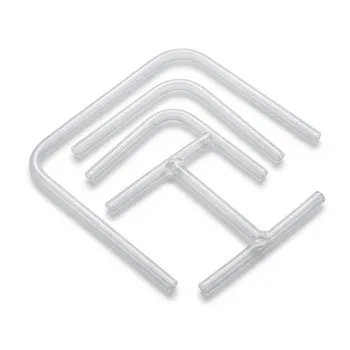
Corrosion Resistant High Purity PFA Valve and Weldable Transparent Tubing for Semiconductor Fluid Transfer

Corrosion Resistant High Purity PFA Valve and Weldable Transparent Tubing for Semiconductor Fluid Transfer

Ensure ultra-pure fluid transfer with our corrosion-resistant PFA valves and weldable transparent tubing. Engineered for semiconductor and sensor manufacturing, these non-leaching components offer universal chemical resistance and exceptional thermal stability for the most demanding high-purity industrial applications.

High Temperature Resistant PTFE Thermal Insulation Board Corrosion Resistant Metal Free Fluoropolymer Stand for Ultra Clean Laboratories

High Temperature Resistant PTFE Thermal Insulation Board Corrosion Resistant Metal Free Fluoropolymer Stand for Ultra Clean Laboratories

Advanced custom PTFE thermal insulation boards and metal-free stands designed for ultra-clean laboratory environments. These high-purity fluoropolymer solutions offer exceptional corrosion resistance and thermal stability for demanding trace analysis and semiconductor manufacturing processes.

Custom PTFE Condenser Tube 100ml Serpentine and Straight Fluoropolymer Laboratory Heat Exchanger with Flask Adapters

Custom PTFE Condenser Tube 100ml Serpentine and Straight Fluoropolymer Laboratory Heat Exchanger with Flask Adapters

Engineered for extreme chemical resistance, this custom 100ml PTFE condenser tube features straight or serpentine designs with integrated adapters for laboratory flasks. Ideal for high-purity trace analysis and corrosive solvent recovery in demanding industrial research environments worldwide.

Custom PTFE Reaction System with Hose Barb Fittings Corrosion Resistant High Sealing 2L 4L Lab Reactor with Separatory Funnel

Custom PTFE Reaction System with Hose Barb Fittings Corrosion Resistant High Sealing 2L 4L Lab Reactor with Separatory Funnel

Enhance laboratory efficiency with our custom PTFE reaction system featuring superior corrosion resistance, high-integrity sealing, and integrated separatory funnels. Designed for demanding chemical synthesis, this modular fluoropolymer apparatus ensures high purity and reliable fluid transfer in extreme environments.


Leave Your Message