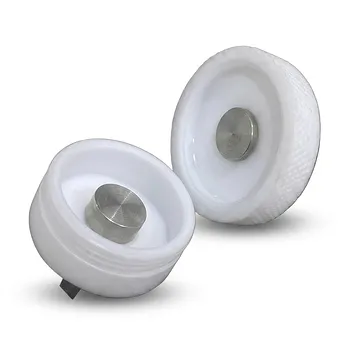
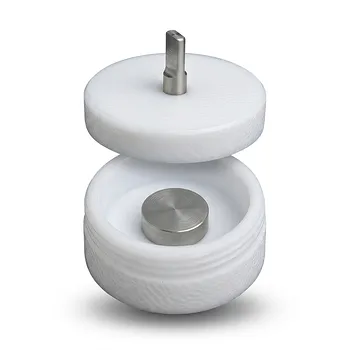
PTFE battery clamps are engineered for extreme thermal stability, maintaining mechanical integrity from cryogenic levels as low as -270°C up to a continuous operating limit of 260°C. While the material does not reach its melting point until 327°C, laboratory testing protocols typically cap continuous exposure at 260°C to prevent material creep and ensure consistent clamping pressure.
Core Takeaway: For reliable laboratory results, PTFE clamps should be operated within a window of -200°C to 260°C; exceeding this range leads to mechanical softening (creep) rather than immediate chemical failure, which can compromise the electrical contact during sensitive battery tests.
Defining the Thermal Boundaries for Laboratory Testing
The Continuous Service Threshold
In a controlled laboratory environment, the standard upper limit for continuous use is 260°C (500°F). At this temperature, PTFE remains chemically inert and does not experience appreciable decomposition or outgassing, making it safe for sensitive electronic measurements.
Peak and Short-Term Exposure Limits
PTFE can withstand short-term temperature excursions up to 290°C without immediate degradation. This "buffer zone" is often utilized in thermal runaway studies where the clamp must maintain its grip during brief, high-intensity heat spikes before the test concludes.
The Cryogenic Floor
The material is equally robust at the opposite end of the spectrum, remaining functional at temperatures as low as -270°C. Unlike many plastics that become brittle and shatter in extreme cold, PTFE maintains sufficient ductility for battery testing in liquid nitrogen or other cryogenic environments.
The Physics of PTFE Stability in Battery Research
Resistance to Material Creep
The primary reason for the 260°C limit is not chemical breakdown, but material creep. While PTFE won't melt until 327°C, it begins to soften at high temperatures, which can cause the clamp to lose its "bite" or tension on the battery terminal under sustained load.
Carbon-Fluorine Bond Strength
The exceptional heat resistance of PTFE is a direct result of its strong carbon-fluorine bonds. These bonds require significant energy to break, preventing the material from degrading or releasing toxic fumes until it nears approximately 400°C.
Performance in Thermal Runaway Studies
Because PTFE can handle temperatures approaching its 327°C melting point for short durations, it is the preferred material for destructive battery testing. It provides a stable mounting platform that will not interfere with the chemical analysis of the battery's failure gases.
Understanding the Trade-offs
Mechanical Softening vs. Melting
The most critical trade-off to understand is that mechanical failure precedes chemical failure. You may find the clamp still "looks" intact at 300°C, but the internal spring tension or the grip strength of the PTFE body will be significantly reduced compared to its performance at room temperature.
Reusability After High-Heat Cycles
If a PTFE clamp is exposed to temperatures near its melting point (327°C), it should be inspected for permanent deformation. Once the material has undergone significant creep at these elevated temperatures, it may no longer provide the uniform contact resistance required for high-precision laboratory data.
Applying These Limits to Your Testing Protocol
How to Select the Right Operating Temperature
The following recommendations are based on maintaining the accuracy and repeatability of your battery data across various testing scenarios.
- If your primary focus is long-term accelerated aging: Maintain your testing environment at or below 260°C to ensure the clamp maintains constant pressure on the terminals throughout the duration of the test.
- If your primary focus is thermal runaway or destructive testing: You can safely push the clamps to 290°C or even 320°C for short durations, acknowledging that the clamps may become sacrificial components if deformation occurs.
- If your primary focus is cryogenic performance or cold-start simulation: You can operate with total confidence down to -200°C, as PTFE retains its mechanical properties better than almost any other polymer in deep-freeze conditions.
By respecting the 260°C continuous limit, you ensure that your PTFE hardware remains a reliable, non-contributing variable in your battery performance data.
Summary Table:
| Temperature Metric | Range/Limit | Material Behavior & Performance |
|---|---|---|
| Continuous Operating Limit | -200°C to 260°C | Maintains mechanical integrity and chemical inertness. |
| Short-Term Peak Exposure | Up to 290°C | Buffer zone for brief heat spikes; potential for minor creep. |
| Melting Point | 327°C (621°F) | Transition from solid to gel; loss of all clamping tension. |
| Cryogenic Floor | Down to -270°C | Remains ductile; ideal for liquid nitrogen environment tests. |
| Decomposition Point | ~400°C | Breakdown of carbon-fluorine bonds; release of fumes. |
Elevate Your Electrochemical Research with KINTEK Precision
Don't let equipment failure compromise your sensitive battery data. KINTEK specializes in high-performance fluoropolymer solutions designed for extreme laboratory environments. From specialized battery testing fixtures and electrochemical cells to hydrothermal synthesis liners and microchannel reactors, we provide the thermal stability your research demands.
Our expertise covers the entire spectrum of lab needs:
- Advanced Apparatus: Custom battery fixtures, electrode accessories, and microwave digestion vessels.
- Essential Labware: High-purity PFA/PTFE beakers, reagent bottles, and digestion tubes.
- Fluid & Sample Prep: Tubing, valves, filtration tools, and precision tweezers.
Whether you require high-volume consumables or bespoke, non-standard machined parts via our end-to-end custom CNC fabrication, KINTEK delivers absolute reliability in high-performance materials.
Contact KINTEK today for a custom quote on your fluoropolymer laboratory supplies!
Related Products
- Corrosion Resistant PTFE Coin Cell Battery Testing Clamps and Acid Proof Custom Fluoropolymer Battery Fixtures
- Acid Resistant PTFE Button Cell Battery Test Fixture Customizable Machining High Purity Electrochemical Testing Clamp
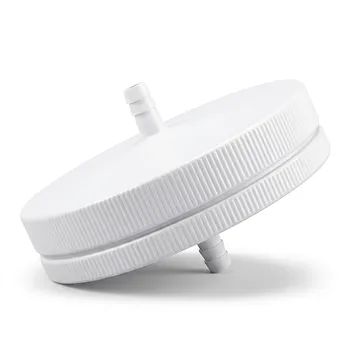
- PTFE Filter Membrane Holder for Hydrogen Chloride and Water Filtration 90mm Environmental Sampling Clamp Customizable
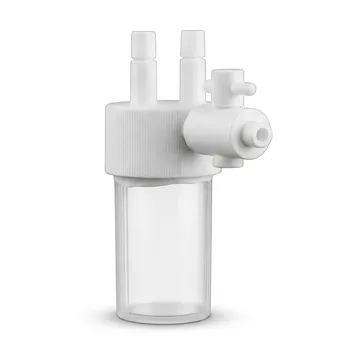
- Custom PTFE Reaction Lid with Integrated Valve and Fitting Corrosion Resistant No Leaching PFA FEP Bottle Cap System
- White PTFE Electrolytic Cell with Movable Slider and Insulated Lid for Fluorine Corrosion Resistance
People Also Ask
- What is the thermal operating range for PTFE battery clamps in electrochemical research? Stability from -200°C to +260°C
- What are the primary functions and material compositions of PTFE battery clamps? Ensure Precision & Chemical Resistance
- How do coin cell testing fixtures evaluate ZIF-derived LCO cycling stability? Ensure Battery Research Precision
- What are the electrical insulation and signal integrity advantages of using PTFE battery clamps? Ensure Data Accuracy
- How does the chemical inertness of PTFE benefit laboratory-scale battery testing? Ensure high-purity research results.