PTFE capillary tubing is defined by its exceptional thermal range and chemical inertness, yet it is constrained by significant mechanical vulnerabilities. For industrial applications, the material is rated for continuous use from -200°C to +260°C, but it suffers from cold-flow (creep) under sustained loads and possesses low tensile strength. These limitations often necessitate structural reinforcement or protective braiding when the tubing is subjected to high-pressure environments or temperatures exceeding 100°C.
Core Takeaway: While PTFE provides a "gold standard" for chemical resistance and thermal stability, its inherent lack of structural rigidity and susceptibility to permanent deformation (creep) make it unsuitable for high-pressure mechanical loads without external support.
Thermal Boundaries and Stability
Operating Temperature Extremes
PTFE maintains its mechanical integrity across a vast range, functioning reliably from cryogenic levels (-200°C) up to a continuous service limit of 260°C. Unlike many other polymers, it does not become brittle at extremely low temperatures, nor does it lose its primary properties at high heat.
Melting and Decomposition Points
The material has a melting point of 326°C, but the onset of decomposition begins at approximately 350°C. It is critical to note that when exposed to temperatures exceeding the 260°C threshold, PTFE can release toxic fumes, posing a safety hazard in poorly ventilated industrial spaces.
Thermal Expansion and Heat Transfer
PTFE exhibits a high coefficient of thermal expansion, meaning its dimensions can change significantly as temperatures fluctuate. This characteristic must be accounted for in precision assemblies where tight tolerances are required across a range of temperatures.
Mechanical Weaknesses and Structural Behavior
The Challenge of Cold Flow (Creep)
A primary limitation of PTFE is creep, or the tendency of the material to slowly and permanently deform under a sustained mechanical load. This phenomenon is particularly aggressive at temperatures above 100°C, often leading to leaks or loss of seal integrity in capillary connections.
Low Pressure-Bearing Capacity
Compared to stiffer polymers like Nylon or metallic tubing, PTFE has a relatively low burst pressure rating. In industrial high-pressure service, the tubing wall thickness must be carefully selected, or the tube must be reinforced with braiding to maintain its shape and prevent failure.
Tensile Strength and Rigidity
PTFE possesses low mechanical strength and rigidity, making it susceptible to abrasion and physical damage. It is also a difficult material to join or install because it cannot be welded or cemented using traditional solvent-based methods.
Understanding the Trade-offs
Radiation and Chemical Vulnerability
While famous for its chemical "invincibility," PTFE is vulnerable to molten alkali metals and certain extreme fluorinating agents. Additionally, it has low resistance to high-energy radiation, which causes the molecular structure to break down and the material to become brittle.
Cost and Manufacturability
PTFE is significantly more expensive than many other CNC or extruded polymers and is notoriously difficult to mass-produce. Engineers must weigh the high material cost against the long-term benefits of its chemical and thermal resistance.
Dimensional Sensitivity
Due to its high specific density and sensitivity to pressure, PTFE components can change shape simply from improper handling or over-tightening of fittings. This requires a high degree of care during the installation of capillary systems to ensure long-term dimensional stability.
How to Apply This to Your Project
Recommendations for Engineering Success
To ensure the reliability of PTFE capillary tubing in your specific application, consider the following strategic guidelines:
- If your primary focus is high-pressure delivery: You must utilize stainless steel braided PTFE or increase the wall thickness significantly to counteract the material's low burst pressure.
- If your primary focus is elevated temperature (above 100°C): Implement mechanical supports or "dead-ends" to prevent cold-flow from compromising the connection points over time.
- If your primary focus is radiation-heavy environments: Avoid PTFE entirely and seek alternative fluoropolymers or metallic solutions, as radiation will cause rapid molecular degradation.
- If your primary focus is chemical purity: Leverage PTFE's hydrophobic and oleophobic properties, but ensure the system is shielded from physical abrasion which can shed particles into the fluid stream.
By respecting the narrow mechanical window of PTFE while leveraging its vast thermal range, you can design systems that are both resilient and high-performing.
Summary Table:
| Feature | Performance Specifications | Industrial Limitations |
|---|---|---|
| Temperature Range | -200°C to +260°C | Starts decomposing at 350°C (toxic fumes) |
| Mechanical Load | Low tensile strength | Susceptible to creep/cold flow above 100°C |
| Pressure Capacity | Low burst pressure rating | Requires reinforcement (braiding) for high-pressure |
| Dimensional Stability | High thermal expansion | Shape changes easily under load or over-tightening |
| Chemical/Radiation | Highly inert to most chemicals | Vulnerable to molten alkali and high-energy radiation |
Precision Fluoropolymer Solutions for Your Toughest Applications
Navigating the trade-offs between chemical inertness and mechanical stability requires expert-grade materials. KINTEK provides a comprehensive range of laboratory supplies and industrial components crafted exclusively from high-performance PTFE and PFA.
From essential fluid transfer components like capillary tubing, fittings, and valves to high-purity trace analysis instruments and cleaning tanks, we ensure your systems maintain integrity under pressure. Our expertise extends from everyday basic labware (beakers, crucibles, and reagent bottles) to advanced apparatus such as custom electrochemical cells, microwave digestion vessels, and microchannel reactors.
Why choose KINTEK?
- Custom Fabrication: End-to-end custom CNC machining for non-standard parts and bespoke setups.
- Full Spectrum: Everything from sample prep tools (filters, pipettes, tweezers) to complex reaction devices.
- Material Focus: Absolute specialization in high-performance fluoropolymers to prevent failures like creep and deformation.
Ensure your industrial projects are built to last. Contact KINTEK today to discuss your custom requirements and secure high-volume orders tailored to your precision needs.
Related Products
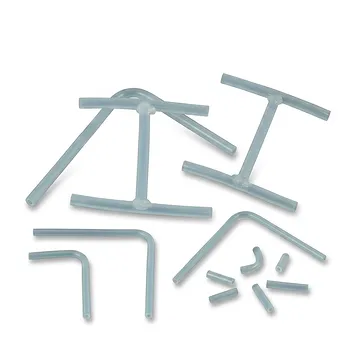
- High Performance PFA Coiled Spring Tubing and Custom PTFE Fabrication Services with Welded Fittings and Precision Bent Components
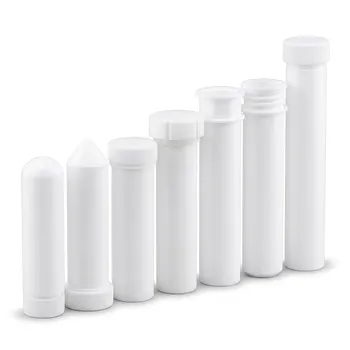
- Custom High Purity PTFE Digestion Tubes and Centrifuge Tubes for Trace Metal Analysis
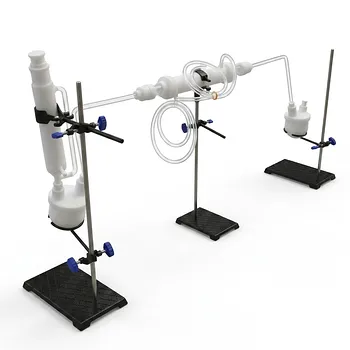
- Custom PTFE Condenser Tube Hydrofluoric Acid Resistant Reflux Device Constant Pressure Separatory Funnel
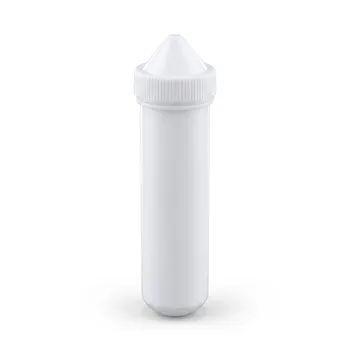
- High Purity PTFE Digestion Tubes and Custom Centrifuge Tubes 100ml for Trace Analysis and Chemical Digestion
- Custom PTFE Condenser Tube Reflux Reaction Condensation Purification Device Semiconductor Chemical Lab Equipment
People Also Ask
- What are the technical advantages of high-precision PFA tubing in MXene production? Maximize Purity and Yield.
- What technical advantages do PFA tubing and fittings offer? Master Precision Fluid Transfer and Flow Chemistry
- What are the technical advantages of high-quality PFA tubing? Achieve Ultimate Purity and Precision in Fluid Handling
- What are the key benefits of PTFE in custom fabrication? Unlock Performance in Extreme Conditions
- What fabrication services are available for PTFE? Shearing, Stamping, Laser Cutting, Molding & Machining