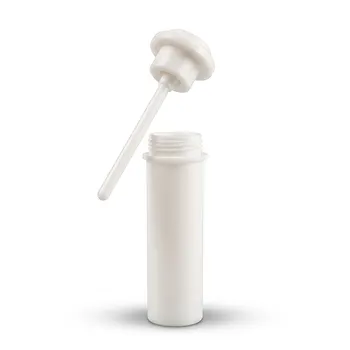
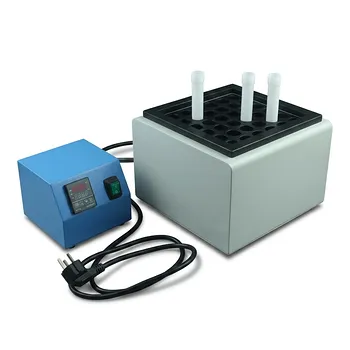
Microwave hydrothermal reactors represent a fundamental shift in energy transfer for carbon synthesis. By utilizing electromagnetic radiation to interact directly with the reaction medium, these systems achieve "inside-out" heating that bypasses the limitations of thermal conduction. This results in significantly faster reaction kinetics, improved structural uniformity of tannin-derived carbon (TAC), and a degree of morphological control that traditional hydrothermal methods cannot match.
Core Takeaway: Microwave hydrothermal reactors provide volumetric, uniform heating that accelerates nucleation and enables precise control over the morphology of tannin-derived porous carbon. This technology transforms the pre-carbonization process from a slow, gradient-driven reaction into a rapid, highly efficient synthesis of regular carbon microspheres.
The Physics of Volumetric Heating
Internal vs. External Heat Transfer
Traditional hydrothermal equipment relies on conduction, where heat travels from an external source through the vessel wall to the precursors. This creates significant thermal gradients, where the edges are hotter than the core, leading to inconsistent reaction rates.
Microwave reactors utilize molecular coupling to generate heat directly within the reaction medium. This "inside-out" approach ensures that the entire volume reaches the target temperature simultaneously, eliminating the cold spots common in conventional autoclaves.
Rapid Nucleation and Kinetic Acceleration
The direct energy transfer in a microwave system triggers the reduction of ions and nucleation of carbon precursors in a fraction of the time. While traditional methods may take several hours or days, microwave-assisted synthesis can often complete the pre-carbonization of tannins in as little as one hour.
This acceleration is not merely about speed; it is about kinetic control. Rapid, uniform heating allows the system to cross the energy barrier for nucleation simultaneously throughout the vessel, resulting in a burst of nuclei that grow at the same rate.
Impact on TAC Morphology and Structure
Uniformity of Carbon Microspheres
The primary advantage for tannin-derived carbon is the formation of highly regular and structured carbon microspheres. Because the heating is uniform, the polymerization and carbonization of tannin molecules occur consistently across the batch.
This uniformity prevents the formation of polydisperse particles or irregular aggregates. Instead, the process yields microspheres with a narrow size distribution, which is critical for the performance of porous carbons in energy storage or filtration applications.
Precision in Porosity and Crystallinity
Microwave systems allow for precise regulation of temperature and pressure, often within very tight margins. This level of control enables researchers to tune the crystallinity and porosity of the TAC by accurately managing the growth phase of the crystals.
By maintaining stable conditions between 150 °C and 210 °C, the reactor facilitates the development of specific pore architectures. This precision ensures that the resulting TAC meets the exact surface area requirements of the intended application.
Understanding the Trade-offs and Technical Constraints
Dielectric Property Dependency
Microwave heating efficiency is strictly dependent on the dielectric properties of the reaction medium and precursors. If the tannin solution or the solvent does not couple well with microwave radiation, the heating advantage may be lost, requiring the addition of microwave-absorbing agents.
Penetration Depth and Scalability
Microwaves have a limited penetration depth into materials, which can pose challenges when scaling from laboratory batches to industrial production. Ensuring uniform field distribution in larger vessels requires sophisticated engineering to avoid "hot spots" caused by standing waves.
Initial Capital Investment
The sophisticated control systems and specialized pressure vessels required for microwave hydrothermal synthesis involve a higher initial cost than simple convection-based autoclaves. However, this is often offset by reduced energy consumption and significantly higher throughput due to shortened reaction times.
Applying Microwave Technology to Your Project
Recommendations for Implementation
- If your primary focus is morphological precision: Utilize microwave reactors to achieve a narrow particle size distribution and highly spherical TAC structures that are difficult to replicate with traditional heating.
- If your primary focus is high throughput: Implement microwave-assisted synthesis to reduce reaction times from several hours to under 60 minutes, effectively increasing your daily production capacity.
- If your primary focus is energy efficiency: Choose microwave systems to minimize "waste" heat lost to the environment, as the energy is focused exclusively on the reactant volume.
The transition to microwave hydrothermal synthesis empowers researchers to move beyond the limitations of thermal gradients, unlocking a new level of structural consistency in tannin-derived porous carbons.
Summary Table:
| Feature | Microwave Hydrothermal | Traditional Hydrothermal |
|---|---|---|
| Heating Mechanism | Volumetric (Internal Molecular Coupling) | Conduction (External Wall-to-Core) |
| Reaction Time | Rapid (Often < 60 minutes) | Slow (Hours to Multiple Days) |
| Particle Uniformity | High (Narrow Size Distribution) | Variable (Polydisperse Aggregates) |
| Thermal Gradients | Minimal (Uniform Temperature) | High (Significant Edge-to-Core Gap) |
| Energy Efficiency | High (Focused Energy Transfer) | Low (Heat Lost to Environment) |
Elevate Your Carbon Synthesis with KINTEK’s High-Performance Solutions
At KINTEK, we understand that precision in pre-carbonization requires equipment that can withstand extreme conditions. We manufacture virtually all imaginable laboratory supplies crafted from PTFE and PFA, specifically designed for high-purity trace analysis and chemical synthesis.
Whether you need hydrothermal synthesis liners, microwave digestion vessels, or everyday basics like beakers, digestion tubes, and reagent bottles, our products ensure zero contamination and superior thermal stability. Backed by end-to-end custom CNC fabrication, we deliver everything from complex non-standard machined parts to high-volume orders of centrifuge tubes, fittings, and valves.
Ready to optimize your TAC production with high-performance fluoropolymer materials? Contact us today to discover how KINTEK’s bespoke laboratory setups and advanced reaction apparatus can transform your research efficiency.
References
- Weigang Zhao, Zhanhui Yuan. Rational synthesis of sea urchin-like NiCo-LDH/tannin carbon microsphere composites using microwave hydrothermal technique for high-performance asymmetric supercapacitor. DOI: 10.1007/s42114-025-01220-5
This article is also based on technical information from Kintek Knowledge Base .
Related Products
- High Temperature Corrosion Resistant Hydrothermal Synthesis Reactor with TFM Inner Liner and Straight Cylinder Design
- High Purity TFM Microwave Digestion Vessels PTFE Acid Evaporation Liners Domestic GT-400 Equivalent Laboratory Reaction Containers
- High Pressure Custom TFM Reactor Stainless Steel Outer Vessel PTFE Inner Cup for Corrosive Synthesis
- Custom TFM Reaction Vessel with Stainless Steel Jacket and PTFE Inner Cup for High Corrosion Resistance
- High Temperature Resistant TFM Microwave Digestion Vessel Lids for Trace Analysis and Acid Evaporation Systems
People Also Ask
- What is the role of a corrosion-resistant reactor in the synthesis of lignin-based carbon dots? Ensure Maximum Purity
- What are the technical advantages of using hydrothermal synthesis reactors for advanced electronic & optical nanomaterials?
- How does a hydrothermal synthesis reactor facilitate the production of crystalline materials with tailored morphologies? Precision Crystal Growth
- Why is the sealing reliability of a hydrothermal synthesis reactor critical for 24-hour cycles? Ensure Nano-Precision
- What role do hydrothermal synthesis reactors play in CQD preparation? Achieve High-Purity Nanomaterial Synthesis