In the hydrothermal synthesis of Ni(OH)₂ nano-arrays, the Teflon-lined stainless steel autoclave serves as a specialized reaction vessel that simultaneously manages extreme physical pressure and chemical corrosivity. This equipment creates a sealed, high-pressure environment that allows precursor solutions to reach temperatures above their boiling points, facilitating the controlled crystallization of nickel hydroxide. The dual-component design ensures that the reaction proceeds with high purity, protecting the synthesis from metal contamination while preventing the caustic alkaline solution from damaging the vessel.
Core Takeaway: The autoclave functions as a two-part system: the external stainless steel shell provides the mechanical strength to withstand autogenous pressure, while the internal Teflon (PTFE) liner ensures chemical inertness and ultra-high purity for the growth of Ni(OH)₂ nanostructures.
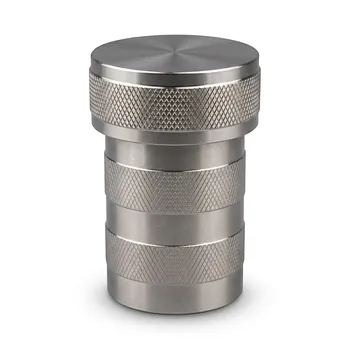
The Mechanical Function of the Stainless Steel Shell
Withstanding Autogenous Pressure
The external stainless steel casing is engineered to provide the mechanical strength necessary to contain high internal pressures. As the precursor solution is heated within the sealed vessel, it generates autogenous pressure that far exceeds atmospheric levels.
Thermal Stability and Safety
Stainless steel maintains its structural integrity at the elevated temperatures (often between 100°C and 180°C) required for hydrothermal synthesis. This prevents the vessel from deforming or failing under the combined stress of heat and pressure.
Heat Transfer Regulation
The metallic shell acts as the primary medium for heat conduction from the laboratory oven to the internal reaction solution. Its thermal properties allow for a controlled increase in temperature, which is vital for uniform nucleation on the nickel foam.
The Chemical Function of the Teflon (PTFE) Liner
Preventing Alkaline Corrosion
The synthesis of Ni(OH)₂ typically involves highly alkaline environments or polar precursor solutions that would aggressively corrode standard metals. The Polytetrafluoroethylene (PTFE) liner is used because it is chemically inert and resists even the most corrosive reaction liquids.
Ensuring Ultra-High Purity
By acting as a barrier, the Teflon liner prevents the reaction solution from leaching metal ions (such as iron or chromium) from the stainless steel shell. This ensures that the Ni(OH)₂ nano-arrays grow in an impurity-free environment, which is critical for maintaining their electrocatalytic performance.
Minimizing Surface Adhesion
Teflon’s "non-stick" properties reduce the likelihood of the active material adhering to the liner walls. This encourages the nickel hydroxide to grow preferentially on the provided nickel foam substrate rather than on the reaction vessel itself.
Facilitating Nanostructure Morphology
Accelerating Reaction Kinetics
The high-pressure environment created by the autoclave accelerates the chemical reaction between precursors, such as nickel chloride and hexamethylenetetramine (HMTA). This acceleration is necessary to achieve the deep reactions required for complex two-dimensional nanostructures.
Controlling Crystalline Growth
The sealed environment allows for precise control over the crystallization process, ensuring the Ni(OH)₂ grows with specific crystal facets. This leads to the formation of nano-arrays with a high specific surface area, which is a "deep need" for high-performance battery and supercapacitor applications.
Uniformity of the Nano-Array
The stable hydrothermal conditions within the autoclave ensure that the active material grows uniformly across the 3D structure of the nickel foam. This in-situ growth results in better mechanical adhesion and electrical contact between the nano-array and the substrate.
Understanding the Trade-offs and Limitations
Temperature Constraints
While the stainless steel shell can handle extreme heat, the internal Teflon liner has a strict thermal ceiling (typically around 200°C–250°C). Exceeding these temperatures can cause the liner to soften or release toxic fumes, compromising the experiment.
Thermal Lag and Cooling Rates
The thickness of the dual-shell system introduces thermal inertia, meaning the internal solution heats up and cools down slower than the oven environment. If not accounted for, this lag can lead to variations in the size and thickness of the Ni(OH)₂ nanosheets.
Pressure Safety Limits
Users must carefully calculate the filling ratio (usually 60%–80%) of the autoclave. Overfilling the vessel can lead to an exponential rise in pressure during heating, potentially leading to a mechanical failure of the stainless steel shell.
Applying This Equipment to Your Synthesis Goals
To achieve the best results when synthesizing Ni(OH)₂ on nickel foam, align your autoclave usage with your specific technical objectives:
- If your primary focus is Maximum Purity: Ensure the Teflon liner is thoroughly "pre-aged" or acid-washed to remove any trace manufacturing residues before the synthesis.
- If your primary focus is Morphology Control: Prioritize precise temperature stability and consistent filling ratios to maintain repeatable autogenous pressure levels across different batches.
- If your primary focus is Substrate Adhesion: Focus on the "in-situ" growth capabilities of the autoclave by ensuring the nickel foam is positioned to allow unobstructed flow of the pressurized precursor solution.
The Teflon-lined autoclave is the indispensable tool that transforms simple chemical precursors into high-performance, structured nanomaterials through the precise management of physical and chemical environments.
Summary Table:
| Component | Primary Function | Key Benefit for Ni(OH)₂ Synthesis |
|---|---|---|
| Stainless Steel Shell | Mechanical Strength | Withstands high autogenous pressure; ensures thermal stability and safety. |
| Teflon (PTFE) Liner | Chemical Inertness | Prevents alkaline corrosion and metal leaching; ensures ultra-high purity. |
| Combined System | Morphology Control | Facilitates uniform nucleation and controlled growth of 2D nanostructures. |
| Non-Stick Surface | Preferential Growth | Minimizes wall adhesion, encouraging growth on the nickel foam substrate. |
Elevate Your Synthesis with KINTEK’s High-Performance Fluoropolymers
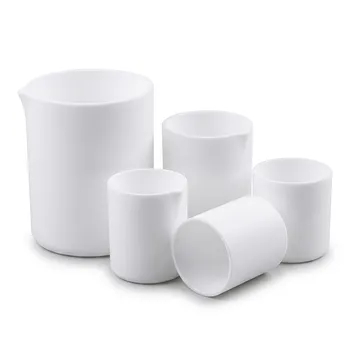
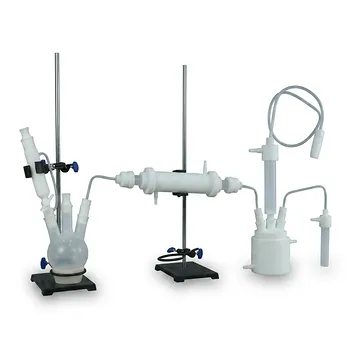
Achieve uncompromising purity and precision in your hydrothermal research with KINTEK. As specialists in high-performance fluoropolymer materials, we provide everything from everyday basic labware—including PTFE and PFA beakers, digestion tubes, and reagent bottles—to advanced reaction apparatus like hydrothermal synthesis liners, microwave digestion vessels, and custom electrochemical cells.
Whether you need standard consumables such as O-rings, gaskets, and stirring bars, or complex bespoke laboratory setups tailored to your specific nano-array synthesis, KINTEK’s end-to-end custom CNC fabrication delivers exactly what your lab requires. We maintain an absolute focus on delivering high-volume orders and non-standard machined parts that resist the most aggressive chemical environments.
Ready to optimize your laboratory performance? Contact KINTEK today for high-purity solutions crafted to your exact specifications!
References
- Chenbao Lu, Tianfu Wang. Heteroarchitectural Gas Diffusion Layer Promotes CO<sub>2</sub> Reduction Coupled with Biomass Oxidation at Ampere‐Level Current Density. DOI: 10.1002/ange.202423263
This article is also based on technical information from Kintek Knowledge Base .
Related Products
- Custom TFM Reaction Vessel with Stainless Steel Jacket and PTFE Inner Cup for High Corrosion Resistance
- High Purity Corrosion Resistant Teflon Crucible Low Background Laboratory PTFE Vessel for Trace Analysis and Acid Digestion
- High Temperature Corrosion Resistant Hydrothermal Synthesis Reactor with TFM Inner Liner and Straight Cylinder Design
- High Purity PTFE Microwave Digestion Vessel Replacement Liner for Acid Sample Preparation and Trace Analysis
- PTFE Lined High Pressure Digestion Vessel 50ml High Temperature Hydrothermal Synthesis Tank
People Also Ask
- Why are high-performance pressure-resistant reaction vessels required for oxygen-assisted hydrothermal conversion at 150 °C?
- Why are PTFE-lined reaction vessels necessary for forced degradation studies? Ensure high-purity results and accuracy.
- Why are high-quality fluoropolymer-lined reaction vessels required for alk-Ti3C2Tx MXene? Ensure Purity & HF Resistance
- How do magnetic stirring and reaction vessels impact MOF-derived carbon quality? Optimize Your Composite Performance
- Why is a high-purity PTFE lined reaction vessel required for the acidic etching of MXenes? Ensure Material Purity.