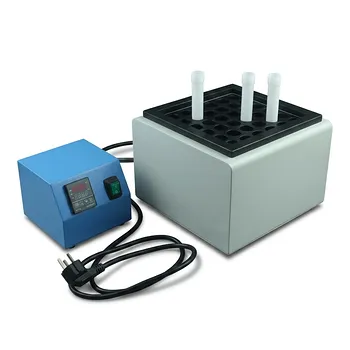
High-precision microwave synthesis equipment revolutionizes MFI-type zeolite production by replacing slow, external heating with rapid, internal electromagnetic coupling. This method provides unparalleled thermal uniformity and volumetric heating, which drastically reduces crystallization time from days to hours. Most importantly, it allows researchers to decouple the nucleation and growth stages through precise temperature modulation, ensuring highly uniform particle sizes and superior crystal quality.
High-precision microwave synthesis offers a leap in efficiency by providing direct, volumetric heating that ensures uniform thermal distribution throughout the reaction vessel. This precision enables the strict separation of nucleation and growth phases, resulting in superior control over zeolite crystallinity, morphology, and purity compared to traditional hydrothermal methods.
Accelerating Reaction Kinetics and Efficiency
Rapid Volumetric Heating
Unlike traditional ovens that rely on slow conduction, microwave equipment utilizes electromagnetic waves to act directly on the reaction liquid. This results in extremely fast heating rates as energy is transferred directly to polar molecules within the solution.
Shortened Crystallization Cycles
Traditional hydrothermal synthesis of MFI-type zeolites often requires 24 to 48 hours to ensure thorough crystallization. Microwave-assisted methods significantly shorten these reaction cycles, often reaching equilibrium in a fraction of the time required by conventional solvothermal methods.
Enhanced Production Throughput
By reducing the time required for each batch, microwave synthesis increases overall production efficiency. The rapid heating mechanism also reduces energy consumption, making the process more sustainable for generating high-surface-area composite structures.
Precise Control Over Crystal Evolution
Decoupling Nucleation and Growth
High-precision control allows researchers to establish a strict distinction between the nucleation and growth phases. By modulating temperature with extreme accuracy, the system can trigger a burst of nucleation followed by controlled crystal growth, leading to a highly uniform particle size distribution.
Real-Time Kinetic Monitoring
The design of modern microwave reactors enables precise sampling at specific time intervals during the reaction. This allows for the effective monitoring of evolution kinetics, helping researchers understand exactly how particle size and morphology change over time.
Regulation of Nanostructure Morphology
Precise PID temperature control prevents the overgrowth and agglomeration of nanoparticles. This is critical for MFI zeolites, where maintaining specific pore structures and high crystallinity is essential for their performance as catalysts or molecular sieves.
Safety and Purity in High-Pressure Environments
Chemical Inertness and Purity
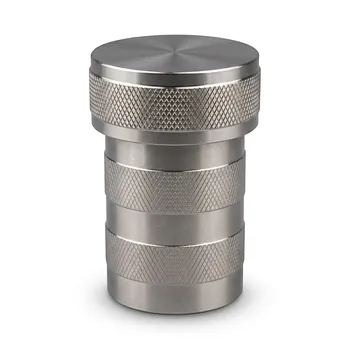
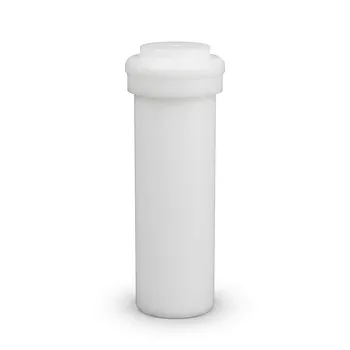
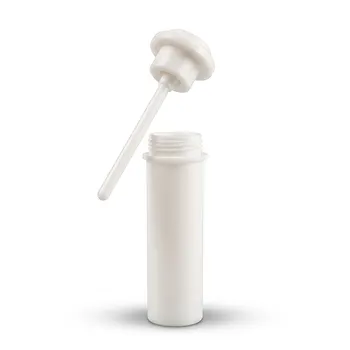
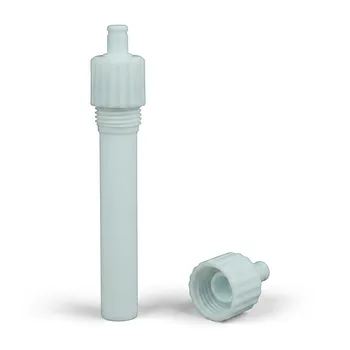
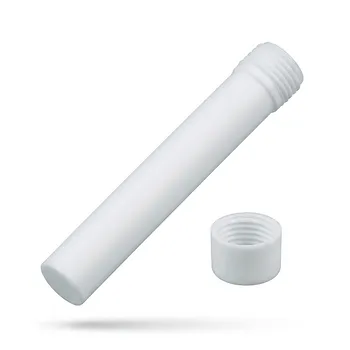
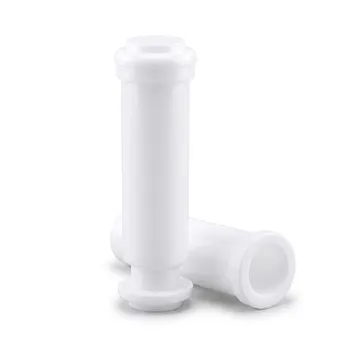
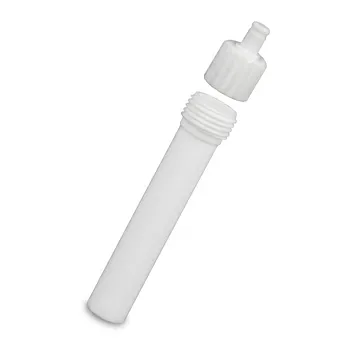
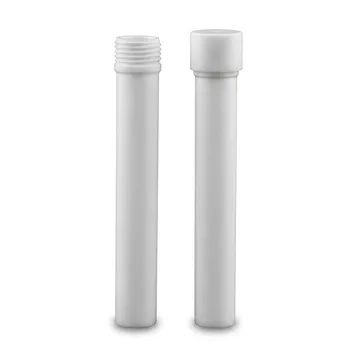
The use of high-pressure fluoropolymer liners ensures the purity of the synthesized zeolite. These liners are microwavable-transparent, allowing energy to pass through without loss, and their chemical inertness prevents material leaching even in the strong alkaline environments typical of zeolite synthesis.
Advanced Pressure Management
High-precision systems utilize real-time pressure sensing and explosion-proof technology to safely conduct reactions above the solvent's boiling point. This ensures that the high-temperature, high-pressure environment required for HZSM-5 or S-1 zeolite synthesis remains stable and repeatable.
Understanding the Trade-offs
Equipment and Scale-up Constraints
While microwave synthesis is highly efficient at the laboratory scale, scaling the process for industrial mass production can be capital-intensive. The initial cost of high-precision microwave hardware is significantly higher than traditional hydrothermal autoclaves and ovens.
Penetration Depth Limitations
Microwaves have a limited penetration depth into the reaction medium. In very large-scale reactors, achieving the same level of thermal uniformity seen in smaller lab units requires complex engineering to ensure the electromagnetic field remains consistent throughout the entire volume.
Applying Microwave Synthesis to Your Project
Recommendations for Implementation
- If your primary focus is uniform particle size: Utilize the equipment's ability to decouple nucleation and growth by programmed temperature stepping to ensure a monodisperse product.
- If your primary focus is rapid prototyping: Leverage the volumetric heating to compress crystallization times, allowing for multiple experimental iterations within a single workday.
- If your primary focus is material purity: Ensure the use of high-quality fluoropolymer liners to prevent contamination from the reaction vessel in strong alkaline conditions.
By mastering the precise thermal control of microwave synthesis, researchers can achieve a level of structural and morphological tailoring that is simply unattainable through traditional heating methods.
Summary Table:
| Feature | Microwave-Assisted Synthesis | Traditional Hydrothermal |
|---|---|---|
| Heating Mechanism | Internal Volumetric (Electromagnetic) | External Conduction/Convection |
| Crystallization Time | Minutes to Hours | 24 to 48 Hours |
| Particle Control | Decouples Nucleation & Growth | Overlapping Phases |
| Thermal Uniformity | High (Direct Polar Interaction) | Low (Thermal Gradients) |
| Purity Management | High-Pressure Fluoropolymer Liners | Metal Autoclaves/Glass Vessels |
| Energy Efficiency | High (Direct Energy Transfer) | Low (Waste Heat Loss) |
Elevate Your Synthesis Precision with KINTEK
Maximize the performance of your MFI-type zeolite production with KINTEK’s specialized laboratory solutions. We understand that high-precision microwave synthesis requires more than just hardware—it demands high-performance materials that can withstand extreme conditions without compromising purity.
From high-pressure microwave digestion vessels and hydrothermal synthesis liners to essential PTFE and PFA labware (beakers, reagent bottles, and centrifuge tubes), KINTEK manufactures virtually every fluoropolymer component your lab requires. Our end-to-end custom CNC fabrication ensures you receive bespoke reaction apparatus, including advanced fluid transfer components (tubing, fittings, valves) and sample prep tools, tailored to your exact specifications.
Ready to optimize your research? Contact KINTEK today to discuss how our high-purity fluoropolymer expertise can enhance your laboratory's efficiency and material quality.
References
- Jiayu Yu, Yi Tang. Distinguishing and unraveling classical and non-classical pathways in MFI zeolite crystallization: insights into their contributions and impact on the final product. DOI: 10.1039/d5qi00224a
This article is also based on technical information from Kintek Knowledge Base .
Related Products
- High Temperature Corrosion Resistant Hydrothermal Synthesis Reactor with TFM Inner Liner and Straight Cylinder Design
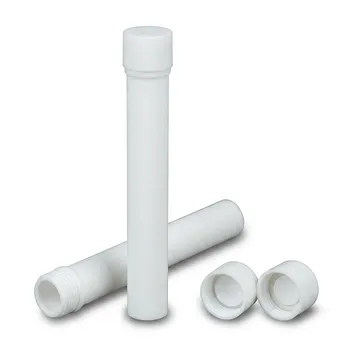
- High Purity TFM Microwave Digestion Vessels for Trace Analysis and Custom Sample Preparation Systems
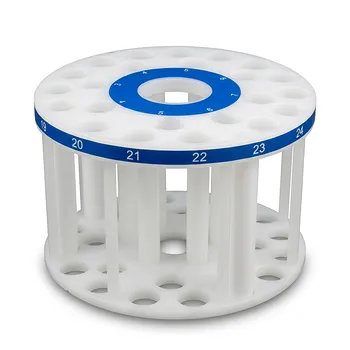
- High Performance TFM Microwave Digestion Vessel Rack 15 Position Customizable Sample Preparation Support
- High Purity PTFE Microwave Digestion Vessel for Soil and Food Analysis Acid Resistant Fluoropolymer Sample Preparation Liners
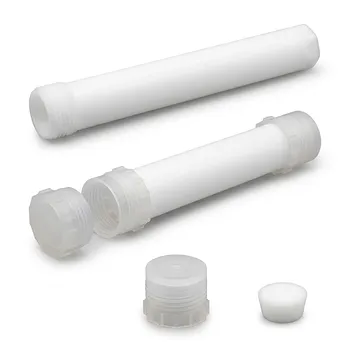
- Custom TFM Microwave Digestion Vessels for ICP-OES Analysis High Purity Fluoropolymer Sample Preparation Labware
People Also Ask
- What is the role of a corrosion-resistant reactor in the synthesis of lignin-based carbon dots? Ensure Maximum Purity
- What are the technical advantages of using hydrothermal synthesis reactors for advanced electronic & optical nanomaterials?
- How does a hydrothermal synthesis reactor facilitate the production of crystalline materials with tailored morphologies? Precision Crystal Growth
- Why is the sealing reliability of a hydrothermal synthesis reactor critical for 24-hour cycles? Ensure Nano-Precision
- What role do hydrothermal synthesis reactors play in CQD preparation? Achieve High-Purity Nanomaterial Synthesis