Hydrothermal synthesis represents a significant leap in the production of high-performance nanomaterials. By utilizing sealed pressure vessels, this method provides a uniform and controllable thermal environment that far surpasses traditional atmospheric solution reduction. This precise control results in copper nanowires with superior crystallinity, narrower size distribution, and significantly enhanced resistance to oxidation.
Core Takeaway: Transitioning to pressure vessels for copper nanowire synthesis replaces volatile, toxic chemical environments with a stable, pressurized system. This shift allows for the creation of more durable and uniform nanomaterials while improving production safety and scalability.
Precision Control Over the Reaction Environment
The Advantage of a Closed, Pressurized System
A sealed pressure vessel creates a constant-volume environment that allows solvents to remain in a liquid phase even when heated well above their atmospheric boiling points. This pressurized state is critical for maintaining the stability of the precursor solution throughout the reaction.
Uniform Thermal and Pressure Distribution
Unlike traditional open-beaker methods, hydrothermal synthesis ensures a more uniform distribution of heat and pressure. This uniformity prevents localized temperature spikes, leading to a much narrower particle size distribution across the entire batch.
Enhanced Material Durability
Copper nanowires produced via this method exhibit higher crystallinity and stronger antioxidant capabilities. This makes the resulting wires more stable in atmospheric conditions, solving a primary drawback of traditional copper nanostructures which tend to degrade quickly.
Manipulating Crystal Growth and Morphology
Promoting Anisotropic Growth
The pressurized environment facilitates the controlled reduction of copper precursors in the presence of specific templates like glycine and octadecylamine. These conditions force the copper to undergo anisotropic growth, elongating the structure along specific crystalline axes to form high-aspect-ratio nanowires.
Regulating Chemical Intermediates
Pressure vessels allow for the precise regulation of the transformation from copper hydroxide intermediates to complex structures like copper oxide nanosheets. By managing the synergistic effect of temperature and pressure, manufacturers can create flake-like morphologies with high specific surface areas.
Boosting Catalytic Activity
Because the hydrothermal process allows for the formation of specific crystalline orientations, the resulting nanowires often possess enhanced catalytic properties. This makes them more effective for industrial applications compared to wires grown under standard atmospheric pressure.
Sustainability and Industrial Scalability
Eliminating High-Toxicity Reagents
Traditional solution reduction often relies on highly toxic reducing agents such as hydrazine, which pose significant safety and environmental risks. Hydrothermal synthesis is inherently more environmentally friendly because it utilizes physical pressure and temperature to drive reactions, reducing the need for hazardous chemicals.
Streamlining Large-Scale Production
The closed nature of the pressure vessel is naturally more suitable for large-scale production than open-air chemical baths. The ability to replicate consistent conditions within a high-capacity autoclave allows for higher throughput and better quality control in industrial settings.
Understanding the Trade-offs
Equipment Costs and Safety Protocols
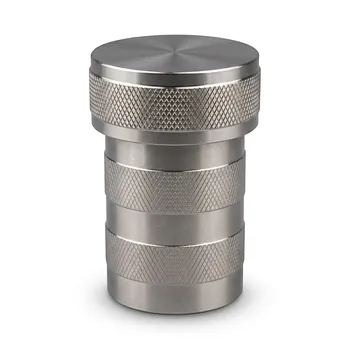
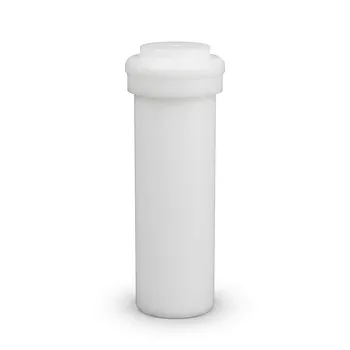
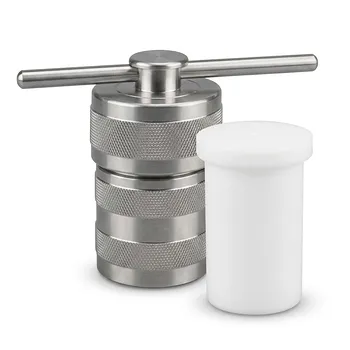
While process-efficient, hydrothermal synthesis requires specialized hardware, such as threaded-cap pressure vessels or autoclaves, which represent a higher initial capital investment than standard glassware. Furthermore, working with high-pressure systems necessitates strict safety protocols to prevent vessel failure.
The "Black Box" Monitoring Challenge
One significant hurdle is that reactions within a sealed metal vessel are difficult to monitor in real-time. Unlike open-beaker methods where color changes or precipitation are visible, hydrothermal processes require precise pre-calculation and timing since the internal state cannot be easily observed during the reaction.
How to Apply This to Your Project
Recommendations for Material Development
- If your primary focus is material longevity: Utilize hydrothermal synthesis specifically to leverage the higher crystallinity and superior antioxidant properties of the resulting wires.
- If your primary focus is environmental compliance: Shift to pressure-based reduction to eliminate the use of hydrazine and other hazardous liquid reducers from your workflow.
- If your primary focus is catalytic performance: Use the pressurized environment to fine-tune the transformation of intermediates into high-surface-area nanosheets.
By mastering the pressurized hydrothermal environment, you move beyond the limitations of traditional chemistry to produce copper nanowires that are both higher in quality and more sustainable to manufacture.
Summary Table:
| Feature | Hydrothermal (Pressure Vessel) | Traditional Solution Reduction |
|---|---|---|
| Thermal Control | Uniform, constant-volume environment | Prone to localized temperature spikes |
| Material Quality | High crystallinity & narrow distribution | Variable size & lower stability |
| Oxidation Resistance | Significantly enhanced durability | Prone to rapid atmospheric degradation |
| Reagent Safety | Uses physical pressure (Eco-friendly) | Often requires toxic hydrazine |
| Scalability | High; ideal for industrial autoclaves | Limited; difficult to replicate in open baths |
Elevate Your Nanomaterial Synthesis with KINTEK
Precision in hydrothermal synthesis starts with the right equipment. KINTEK specializes in manufacturing high-performance laboratory supplies crafted from PTFE and PFA, ensuring your reactions remain contaminant-free and thermally stable. Whether you are producing high-aspect-ratio copper nanowires or advanced catalysts, our range covers everything from hydrothermal synthesis liners and microwave digestion vessels to everyday essentials like beakers, crucibles, and high-purity tubing.
Benefit from our end-to-end custom CNC fabrication, delivering bespoke laboratory setups and complex non-standard machined parts tailored to your specific research needs. From high-volume consumables to advanced reaction apparatus like electrochemical cells and battery testing fixtures, KINTEK is your absolute partner for fluoropolymer excellence.
Ready to optimize your lab's performance? Contact us today to discuss your custom requirements and discover how our high-performance materials can drive your innovation forward!
References
- J Gopu, Krishna C. Etika. Hydrothermal synthesis of conductive copper nanowires: effect of oleylamine and dextrose concentrations. DOI: 10.1039/d5ra07427d
This article is also based on technical information from Kintek Knowledge Base .
Related Products
- PTFE Lined High Pressure Digestion Vessel 50ml High Temperature Hydrothermal Synthesis Tank
- High Pressure Custom TFM Reactor Stainless Steel Outer Vessel PTFE Inner Cup for Corrosive Synthesis
- High Temperature Corrosion Resistant Hydrothermal Synthesis Reactor with TFM Inner Liner and Straight Cylinder Design
- High Purity PFA Reaction Vessel for Biopharmaceutical Synthesis and Corrosive Chemical Fluid Handling with Customizable Tube Fittings
- High Temperature PTFE Reaction Flask 1000ml Single Neck Round and Flat Bottom Laboratory Bottle
People Also Ask
- What are the benefits of using a PTFE-lined vessel for carbon-sulfur cathode treatment? Maximize Purity & Performance
- Why are PTFE-lined pressure digestion vessels required for the preparation of Ag/CeO2 catalysts? Purity & Performance
- What safety features are typically incorporated into high-pressure PTFE digestion vessel designs? Ensure Lab Safety
- What is the function of PTFE lined high-pressure vessels in g-C3N4 synthesis? Achieve High-Purity Material Growth
- Role of High-Pressure Digestion Tanks in Perovskite Synthesis: Achieve Superior Stability and Latent Heat