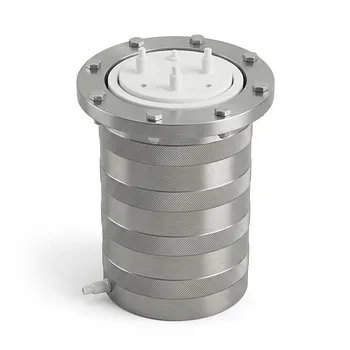
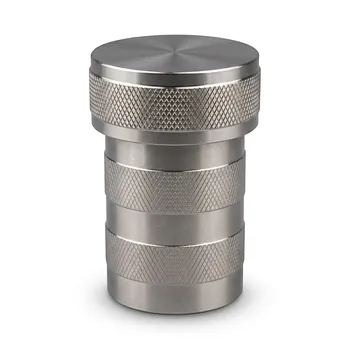
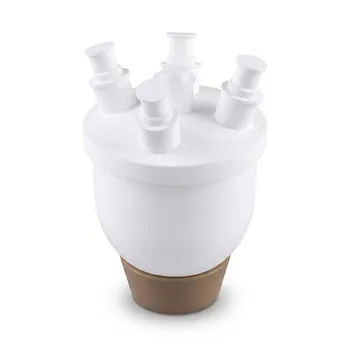
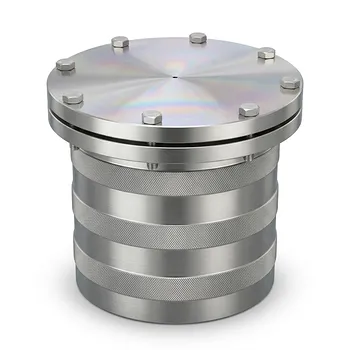
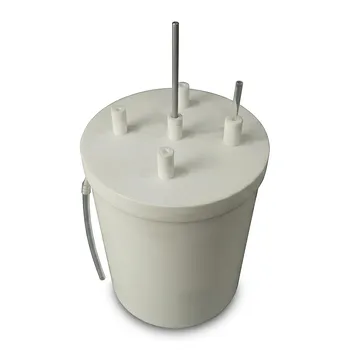
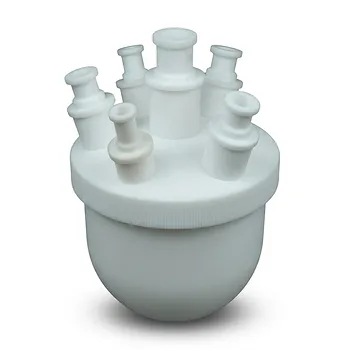
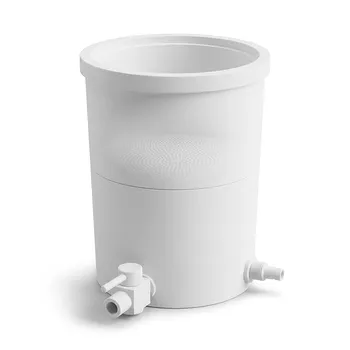
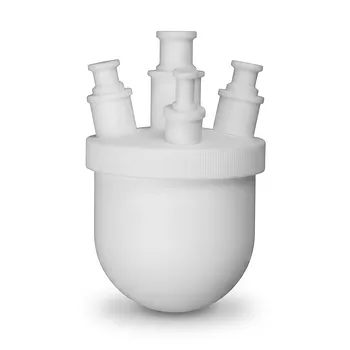
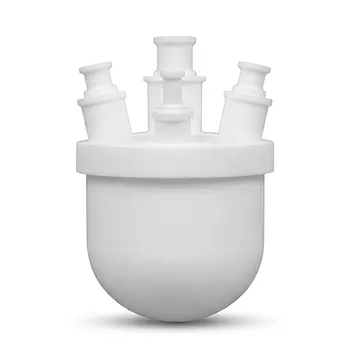
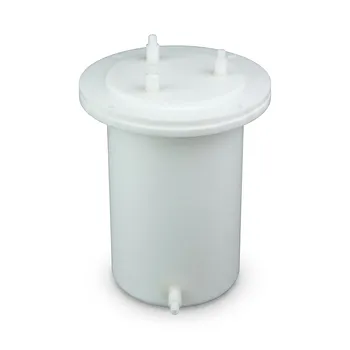
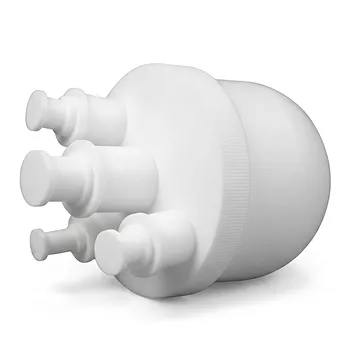
The primary functions of PTFE and PPL liners in hydrothermal synthesis reactors are to provide chemical isolation and structural protection. These liners act as an inert barrier that prevents corrosive reaction media from attacking the metal reactor shell while ensuring that the synthesized materials remain free from metallic impurities.
Core Takeaway: Liners are the "biological heart" of a hydrothermal autoclave, transforming a standard pressure vessel into a sterile, corrosion-resistant environment capable of producing high-purity nanomaterials and crystals.
Protecting the Reactor's Structural Integrity
Prevention of Chemical Corrosion
The most immediate function of a liner is to shield the stainless steel or alloy reactor body from aggressive chemical environments. Hydrothermal reactions often involve strong acids, bases, or organic solvents that would rapidly erode the metal outer shell.
Extension of Equipment Service Life
By serving as a sacrificial or replaceable barrier, the liner prevents pitting and stress corrosion cracking in the high-pressure vessel. This protection is vital for maintaining the safety and longevity of the autoclave under repeated thermal cycles.
Isolation from the Reaction Medium
The liner ensures that the reaction liquid never makes direct contact with the metal walls. This isolation is particularly critical when working with strong alkaline precursor solutions (pH 8-9 or higher), which are known to react with many common lab alloys.
Ensuring High-Purity Material Synthesis
Elimination of Metal Ion Contamination
Without a liner, the high-temperature and high-pressure environment would cause metal ions to leach from the reactor walls into the sample. High-purity PTFE (Polytetrafluoroethylene) or PPL (Para-polyphenylene) liners stop this migration, ensuring the chemical purity of the resulting crystals or hydrochar.
Preservation of Surface Functional Groups
For researchers focused on the surface chemistry of materials, liners are essential for maintaining the integrity of functional groups. By preventing impurity interference, the liner allows for the precise, controlled growth of nanomaterials with specific morphologies.
Low Impurity Leaching Rates
High-quality fluoropolymer materials are chosen specifically for their extremely low leaching rates. This characteristic is what makes them the standard for preparing high-performance new materials where even trace contamination could alter the material's properties.
Facilitating Efficient Laboratory Operations
Non-Stick Surface for Product Recovery
PTFE liners possess excellent non-stick properties that simplify the recovery of synthesized micro- and nano-powders. This ensures that the yield is maximized and that delicate structures are not damaged during the extraction process.
Ease of Cleaning and Maintenance
The hydrophobic and chemically resistant nature of the liner surface makes it exceptionally easy to clean. This reduces the risk of cross-contamination between different experimental batches, which is a common failure point in material science research.
Physical Stability Under Pressure
While the metal shell provides the mechanical strength to withstand pressure, the liner provides the internal sealed space. It maintains its physical stability and shape even at temperatures up to 220°C (for PTFE) or higher (for PPL), ensuring a consistent reaction volume.
Understanding the Trade-offs
Temperature Limitations
While liners provide protection, they also impose thermal limits on the synthesis. Standard PTFE liners are typically limited to 220°C, whereas PPL liners are required for higher-temperature applications (up to 250°C-280°C). Exceeding these limits can lead to liner deformation or "creeping."
Thermal Lag Considerations
The liner acts as an insulator between the heating source and the reaction medium. Researchers must account for the time it takes for the internal temperature to stabilize, as the thick walls of the PTFE or PPL liner can cause a delay in thermal equilibrium compared to the reactor's external temperature reading.
Pressure Sensitivity
Liners are not designed to hold pressure independently; they rely on the support of the metal autoclave. If a liner is improperly sized or if there is a gap between the liner and the reactor wall, the high internal pressure can cause the liner to rupture or deform permanently.
How to Select the Right Liner for Your Research
To achieve the best results in hydrothermal synthesis, your choice of liner material should be dictated by your specific experimental parameters.
- If your primary focus is standard synthesis below 220°C: Use a high-purity PTFE liner for its excellent non-stick properties and universal chemical resistance.
- If your primary focus is high-temperature reactions (up to 280°C): Opt for a PPL liner, as it offers superior thermal stability and maintains its structural integrity at temperatures where PTFE begins to soften.
- If your primary focus is trace element analysis or high-purity nanomaterials: Ensure you are using ultra-high-purity, virgin liners to minimize any risk of background leaching or impurity interference.
Choosing the correct liner ensures both the safety of your laboratory equipment and the uncompromising purity of your synthesized materials.
Summary Table:
| Feature | PTFE (Polytetrafluoroethylene) | PPL (Para-polyphenylene) |
|---|---|---|
| Max Temperature | Up to 220°C | Up to 280°C |
| Chemical Resistance | Excellent (Universal) | Excellent |
| Primary Function | Acid/Base protection & Purity | High-temp stability & Purity |
| Surface Property | Superior Non-stick | Non-stick |
| Best For | Standard Nanomaterial Synthesis | High-Temperature Reactions |
Elevate Your Research with High-Performance Fluoropolymers
Maximize your laboratory's efficiency and ensure uncompromising material purity with KINTEK. We specialize in high-performance fluoropolymer materials, manufacturing virtually all imaginable laboratory supplies crafted from PTFE and PFA.
From everyday basic labware (beakers, crucibles, and reagent bottles) and sample prep tools (filters, pipettes, and tweezers) to advanced apparatus like hydrothermal synthesis liners, microwave digestion vessels, and custom electrochemical cells, KINTEK is your one-stop partner. Backed by end-to-end custom CNC fabrication, we deliver everything from high-volume orders to complex, non-standard bespoke setups tailored to your specific research needs.
Ready to protect your equipment and improve your synthesis results?
Contact KINTEK Today for a Custom Quote
References
- Xinbo Zhang, Qi Li. Characterization and sulfonamide antibiotics adsorption capacity of spent coffee grounds based biochar and hydrochar. DOI: 10.1016/j.scitotenv.2020.137015
This article is also based on technical information from Kintek Knowledge Base .
Related Products
- PTFE Lined High Pressure Digestion Vessel 50ml High Temperature Hydrothermal Synthesis Tank
- High Pressure Custom TFM Reactor Stainless Steel Outer Vessel PTFE Inner Cup for Corrosive Synthesis
- High Temperature Corrosion Resistant Hydrothermal Synthesis Reactor with TFM Inner Liner and Straight Cylinder Design
- High Performance Customizable PTFE Reaction Vessel and Corrosion Resistant Polytetrafluoroethylene Flask for Chemical Laboratory Use
- Custom TFM Reaction Vessel with Stainless Steel Jacket and PTFE Inner Cup for High Corrosion Resistance
People Also Ask
- What are the benefits of using a PTFE-lined vessel for carbon-sulfur cathode treatment? Maximize Purity & Performance
- Why are PTFE-lined pressure digestion vessels required for the preparation of Ag/CeO2 catalysts? Purity & Performance
- What safety features are typically incorporated into high-pressure PTFE digestion vessel designs? Ensure Lab Safety
- What is the function of PTFE lined high-pressure vessels in g-C3N4 synthesis? Achieve High-Purity Material Growth
- Role of High-Pressure Digestion Tanks in Perovskite Synthesis: Achieve Superior Stability and Latent Heat