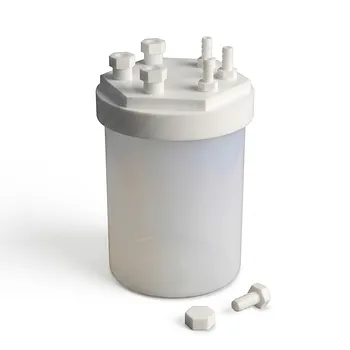
PTFE and PFA liners serve as the critical protective barrier and reaction vessel during the hydrothermal synthesis of Bismuth Ferrite (BFO).
These liners provide essential chemical inertness, resisting the highly corrosive alkaline mineralizers like Potassium Hydroxide (KOH) required to catalyze the reaction. By isolating the reaction chemistry from the metal reactor walls, they prevent heavy metal contamination and enable the high-pressure environment necessary for direct BFO crystallization without the need for post-synthesis calcination.
Core Takeaway: The primary function of PTFE/PFA liners is to create a high-purity, corrosion-resistant "micro-environment" that allows BFO to nucleate and grow directly from the liquid phase while protecting both the product and the hardware.
Preserving Chemical Purity and Product Integrity
Prevention of Metal Ion Contamination
Bismuth Ferrite is highly sensitive to its chemical environment, and any introduction of iron, chromium, or nickel from the stainless steel reactor walls would degrade its multiferroic properties. PTFE and PFA liners effectively isolate the reaction media, ensuring that the synthesized BFO nanoparticles remain free from metallic impurities.
Resistance to Aggressive Mineralizers
The synthesis of BFO typically requires strong alkaline mineralizers, such as KOH or NaOH, to facilitate the reaction. These bases are highly corrosive to metal at elevated temperatures; the liner’s chemical resistance ensures the vessel does not dissolve into the solution.
Low Leaching Rates
High-purity liners have extremely low leaching rates, meaning they do not release organic or inorganic contaminants into the aqueous phase. This stability is vital for achieving the high crystallinity and controlled morphologies (such as nanorods or hollow spheres) required for high-performance materials.
Facilitating the Hydrothermal Reaction Environment
Enabling High-Temperature and High-Pressure Conditions
Hydrothermal synthesis occurs at temperatures ranging from 150 to 240 °C, well above the boiling point of the solvent. The liner, supported by the metal reactor shell, creates a sealed environment that maintains the high pressures necessary for liquid-phase nucleation.
Elimination of Post-Synthesis Calcination
Because the liner allows the reaction to occur in a pressurized, subcritical water environment, BFO can reach its crystalline phase directly in the liquid. This eliminates the need for high-temperature calcination (common in sol-gel methods), which often leads to unwanted particle agglomeration.
Non-Stick Surface for Product Recovery
The naturally low surface energy of PTFE and PFA prevents the synthesized BFO powders from adhering to the walls. This non-stick property facilitates the efficient recovery of the final product and simplifies the cleaning process between experimental runs.
Understanding the Trade-offs and Limitations
Temperature Constraints
While PTFE is highly resilient, it has a physical limit, typically around 220°C to 240°C. Exceeding these temperatures can cause the liner to soften, deform, or "creep," which may lead to seal failure or safety risks.
Pressure Sensitivity and Deformation
Under extreme pressure, liners can undergo mechanical stress that alters their shape over time. It is critical to ensure the liner is properly seated within the stainless steel jacket to prevent the polymer from expanding into the threads or seals of the reactor.
Heat Transfer Lags
Polymers like PTFE are thermal insulators compared to the metal shell of the reactor. This creates a slight delay in heat transfer, meaning the internal temperature of the reaction solution may lag behind the temperature set on the external heating mantle.
How to Apply This to Your Project
Recommendations for Material Selection
- If your primary focus is maximum chemical resistance at standard temperatures: Use a high-quality PTFE liner, as it is the industry standard for resistance to strong bases like KOH.
- If your primary focus is purity and visual monitoring: Consider PFA liners, which offer similar chemical resistance to PTFE but are often more translucent and have smoother surface finishes for even easier cleaning.
- If your primary focus is operating at the absolute thermal limit (above 240°C): You may need to transition away from PTFE/PFA toward specialized materials like Para-polyphenylene (PPL) or metallic alloys, though these lack the same non-stick and inertness profiles.
By correctly utilizing these liners, you ensure the synthesis of high-purity Bismuth Ferrite while significantly extending the operational lifespan of your high-pressure reactor hardware.
Summary Table:
| Feature | PTFE/PFA Performance | Benefit for BFO Synthesis |
|---|---|---|
| Chemical Resistance | Extreme resistance to KOH/NaOH | Prevents vessel corrosion & metal leaching |
| Surface Energy | Naturally low (Non-stick) | Facilitates product recovery & easy cleaning |
| Material Purity | High-purity, low leaching | Preserves multiferroic material properties |
| Thermal Range | Stable up to 220°C - 240°C | Enables liquid-phase nucleation/growth |
| Pressure Support | High-pressure sealing capability | Eliminates the need for post-calcination |
Elevate Your Research with KINTEK’s Precision Fluoropolymer Engineering
Achieving superior Bismuth Ferrite crystallinity requires a reaction environment free from metallic interference. KINTEK specializes in high-performance fluoropolymer solutions designed specifically for demanding hydrothermal environments.
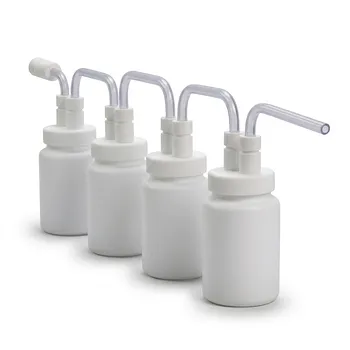
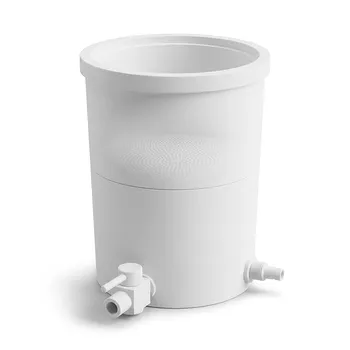
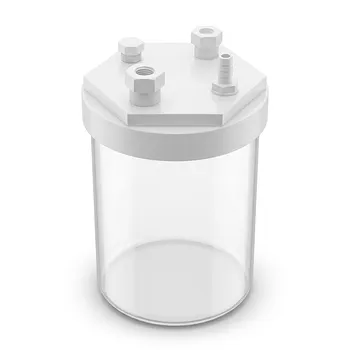
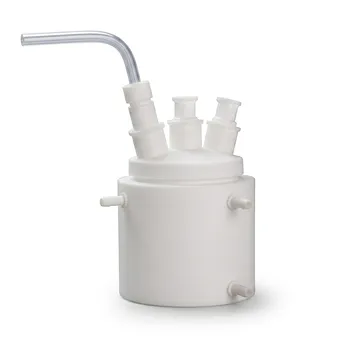
From everyday basic labware (beakers, crucibles, and reagent bottles) to advanced hydrothermal synthesis liners and microwave digestion vessels, we provide the critical components your lab needs. Our expertise extends to comprehensive fluid transfer systems—including tubing, fittings, and valves—as well as custom CNC-fabricated reactor parts tailored to your unique specifications.
Why partner with KINTEK?
- End-to-End Customization: We deliver everything from high-volume consumables to complex, non-standard machined parts.
- Absolute Material Focus: Exclusive use of high-performance PTFE and PFA ensures zero contamination for trace analysis and material synthesis.
- Unmatched Versatility: Our range covers sample prep tools, electrochemical cells, and specialized battery testing fixtures.
Don’t let hardware limitations compromise your material science breakthroughs. Contact KINTEK today to source the high-purity liners and custom laboratory setups your project demands!
References
- Kisan, Unni, Rizvi, Syed Asghar Husain. Comparative Study of Sol-Gel and Hydrothermal Synthesis Methods for Bismuth Ferrite Nanoparticles. DOI: 10.5281/zenodo.17803553
This article is also based on technical information from Kintek Knowledge Base .
Related Products
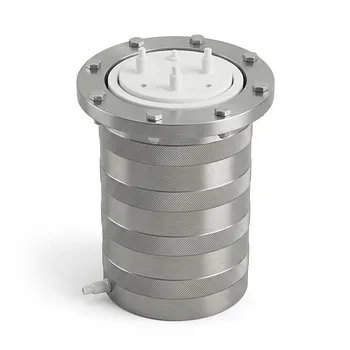
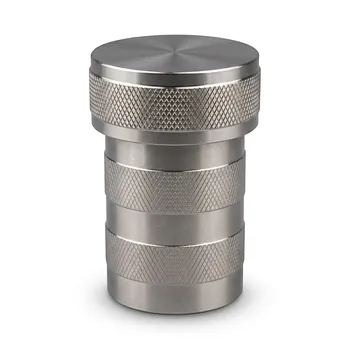
- PTFE Lined High Pressure Digestion Vessel 50ml High Temperature Hydrothermal Synthesis Tank
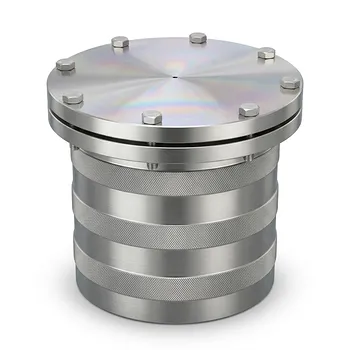
- High Pressure Custom TFM Reactor Stainless Steel Outer Vessel PTFE Inner Cup for Corrosive Synthesis
- High Temperature Corrosion Resistant Hydrothermal Synthesis Reactor with TFM Inner Liner and Straight Cylinder Design
- Custom TFM Reaction Vessel with Stainless Steel Jacket and PTFE Inner Cup for High Corrosion Resistance
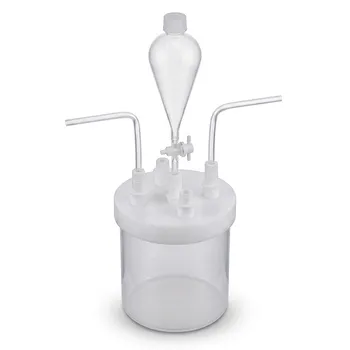
- High Purity PFA Reaction Vessel for Biopharmaceutical Synthesis and Corrosive Chemical Fluid Handling with Customizable Tube Fittings
People Also Ask
- What are the benefits of using a PTFE-lined vessel for carbon-sulfur cathode treatment? Maximize Purity & Performance
- Why are PTFE-lined pressure digestion vessels required for the preparation of Ag/CeO2 catalysts? Purity & Performance
- What is the function of high-pressure PTFE digestion vessels in mineral analysis? Optimize Sample Mineralization
- What safety features are typically incorporated into high-pressure PTFE digestion vessel designs? Ensure Lab Safety
- What is the function of PTFE lined high-pressure vessels in g-C3N4 synthesis? Achieve High-Purity Material Growth