In aggressive chemical containment, solid PTFE and PFA generally outperform amine-cured epoxy in chemical resistance, while epoxy performs better as an adherent structural coating. Amine-cured epoxy binders form hard, densely cross-linked networks with strong adhesion and useful heat resistance, typically up to about 300°F continuously and 500°F intermittently depending on formulation. PTFE and PFA provide substantially broader resistance to aggressive acids, strong bases, and many organic solvents, with lower risk of extractables or ionic contamination.
The practical distinction is containment versus protection: use solid PTFE or PFA where the polymer directly contacts highly corrosive or ultra-pure chemicals; use epoxy where adhesion, hardness, and external mechanical protection are more important than maximum chemical inertness.
Chemical Resistance Determines the Primary Use
Why Solid PTFE and PFA Resist Aggressive Chemicals
PTFE and PFA have highly fluorinated polymer backbones that are exceptionally difficult for most chemical reagents to attack. They therefore retain their properties across chemical environments that can soften, swell, embrittle, or chemically degrade many organic coatings.
Their performance is especially valuable with strong acids, strong bases, oxidizing chemicals, and organic solvents. The exact resistance still depends on temperature, concentration, exposure time, mechanical stress, and the specific chemical combination.
Where Amine-Cured Epoxy Is More Vulnerable
Amine-cured epoxy forms a rigid thermoset network, but its organic chemistry is not universally inert. Aggressive reagents can cause swelling, plasticization, loss of adhesion, softening, cracking, or gradual chemical attack.
Epoxy performance is highly formulation-dependent. Resin type, curing agent, cure quality, pigment or filler package, film thickness, and operating temperature can all change the result, so a general epoxy rating should not replace compatibility testing for a critical containment service.
Why Ultra-Pure Service Favors Fluoropolymers
Solid PTFE and PFA are preferred for direct contact with ultra-pure reagents because they have very low chemical reactivity and generally low extractable content when properly manufactured and cleaned. This helps reduce the risk that the containment material will add ions or organic contaminants to the process stream.
Epoxy coatings can contain residual reactants, curing-agent species, additives, pigments, or filler interfaces that may contribute extractables. They are consequently less suitable when trace contamination is unacceptable, even if the coating appears visually intact.
Mechanical and Thermal Performance Differ
Epoxy Provides Adhesion and Hardness
The main mechanical advantage of epoxy is its ability to bond strongly to prepared substrates. Once cured, it creates a hard, continuous protective layer that can reinforce or shield concrete, steel, and other structural surfaces.
That adhesion makes epoxy valuable for external protective coatings, secondary containment surfaces, and systems where the coating must remain attached while the underlying structure carries the load.
PTFE and PFA Provide Chemical Protection, Not Structural Bonding
Solid fluoropolymer linings are chemically robust, but they generally do not bond to substrates with the same inherent strength as a cured epoxy system. A PTFE or PFA liner may therefore require mechanical retention, a backing structure, careful joint design, or a composite construction.
This distinction matters in containment design: the fluoropolymer may provide the chemical barrier, while another material provides load-bearing capacity, dimensional stability, and attachment.
Heat Resistance Requires a System-Level Comparison
The primary reference’s epoxy temperature values are reasonable as representative values for some amine-cured systems, but they are not universal specifications. Continuous service around 300°F and intermittent exposure around 500°F depend on the resin, curing agent, cure schedule, thermal cycling, and load.
PTFE and PFA also have high temperature capability, but their dimensional stability, creep behavior, pressure rating, and joint performance must be assessed at the actual operating temperature. Chemical compatibility alone does not establish a safe containment temperature or pressure limit.
Containment Performance Depends on More Than Chemical Attack
Permeation Can Matter Even When the Material Is Not Degraded
A polymer can remain chemically intact while allowing some chemicals to permeate through it over time. For hazardous, volatile, or highly mobile chemicals, engineers must evaluate permeation, liner thickness, temperature, exposure duration, and the consequences of breakthrough.
PTFE and PFA are strong choices for chemical resistance, but “chemically resistant” should not be interpreted as “impermeable under every condition.”
Joints and Defects Often Control Reliability
In a real containment system, failures frequently occur at seams, welds, penetrations, terminations, scratches, pinholes, or poorly prepared substrate areas rather than through uniform polymer attack. PFA can be thermoplastically processed and welded in ways that support continuous lining systems, while PTFE installations may require different fabrication and retention methods.
Epoxy produces a continuous bonded film when correctly applied, but substrate moisture, surface contamination, inadequate mixing, incomplete cure, and thermal movement can compromise the barrier.
Mechanical Damage Changes the Chemical-Risk Profile
A hard epoxy surface can resist abrasion and impact effectively in many services, but once it cracks or loses adhesion, aggressive chemicals may reach the substrate and spread beneath the coating. Fluoropolymer liners can protect against chemical attack but may be vulnerable to puncture, creep, abrasion, or damage if not mechanically supported.
The best design therefore combines the chemical barrier with an appropriate structural and damage-tolerance strategy.
Understanding the Trade-offs
Epoxy’s Main Limitation Is Broad Chemical Exposure
Epoxy is not a universal substitute for a fluoropolymer liner. Strong acids, strong bases, solvents, elevated temperatures, and long-term immersion can expose weaknesses that are not apparent during short-term testing.
Its suitability should be established for the exact chemical, concentration, temperature, exposure pattern, and substrate rather than inferred from the word “epoxy.”
Fluoropolymers Have Mechanical and Economic Constraints
PTFE and PFA typically cost more and may require specialized fabrication, installation, inspection, and support details. They also may have lower stiffness, greater creep, and more demanding attachment requirements than a cured epoxy coating.
PFA is often attractive when a weldable, melt-processable fluoropolymer lining is needed. PTFE offers exceptional chemical resistance but can impose different processing and mechanical-design constraints because it is not conventionally melt-processable.
“Inert” Does Not Eliminate Qualification Requirements
Neither material should be selected from a generic resistance chart alone. Chemical mixtures, impurities, temperature excursions, pressure, cycling, mechanical stress, and cleaning procedures can produce behavior different from isolated laboratory data.
For critical containment, qualification should include supplier data, immersion or exposure testing where practical, permeation review, inspection criteria, and a failure-consequence assessment.
Making the Right Choice for Your Goal
Select the material according to which function is most important in the actual containment system:
- If your primary focus is maximum chemical resistance: Specify solid PTFE or PFA for direct contact with aggressive acids, strong bases, solvents, or highly corrosive process chemicals, subject to service-specific qualification.
- If your primary focus is ultra-pure chemical handling: Prefer a properly manufactured and cleaned PTFE or PFA contact surface with controlled extractables and validated fabrication practices.
- If your primary focus is adhesion to a structural substrate: Use an amine-cured epoxy system where strong bonding, hardness, and external surface protection are the dominant requirements.
- If your primary focus is secondary containment or structural protection: Consider epoxy for the outer protective system, with a fluoropolymer liner or contact layer where the contained chemical demands greater inertness.
- If your primary focus is long-term reliability: Evaluate chemical compatibility, permeation, temperature, creep, abrasion, joints, penetrations, inspection, and repair as one containment system.
Epoxy is primarily a strong, adherent protective coating; PTFE and PFA are primarily high-inertness chemical barriers, making fluoropolymer contact surfaces the safer default for the most aggressive containment duties.
Summary Table:
| Property | Amine-Cured Epoxy | Solid PTFE/PFA |
|---|---|---|
| Chemical Resistance | Moderate, formulation-dependent | Excellent for acids, bases, solvents |
| Adhesion to Substrate | Strong | Weak (requires mechanical retention) |
| Extractables | Higher (may leach contaminants) | Very low (suitable for ultra-pure) |
| Temperature Range | ~300°F continuous, 500°F intermittent | High (material-specific) |
| Permeation Resistance | Depends on formulation | Generally low but varies |
| Mechanical Damage | Hard, abrasion-resistant but brittle | Can puncture or creep if unsupported |
| Typical Use | Protective coating on structures | Direct chemical containment liner |
Choose the right material for your aggressive chemical containment. At KINTEK, we specialize in high-performance PTFE and PFA labware and custom-machined components. Whether you need beakers, vessels, or complex assemblies, our fluoropolymer products deliver superior chemical resistance and purity. Contact us today to discuss your application and get expert guidance.
Related Products
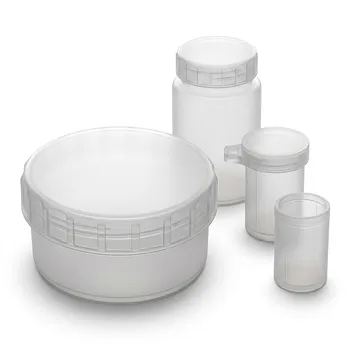
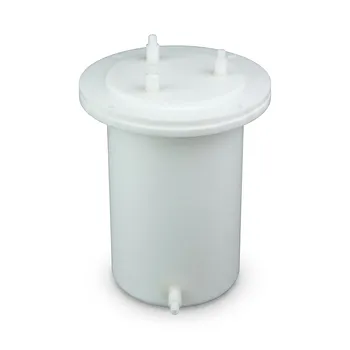
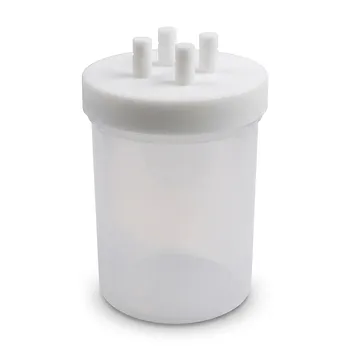
- PFA Reaction Jar Corrosion Resistant Wide Mouth PTFE Lab Bottle High Purity Chemical Vessel
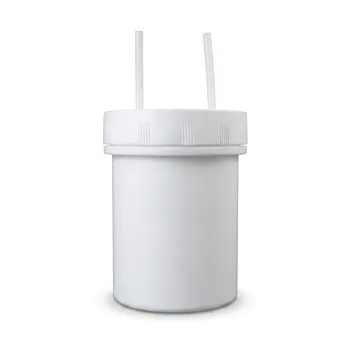
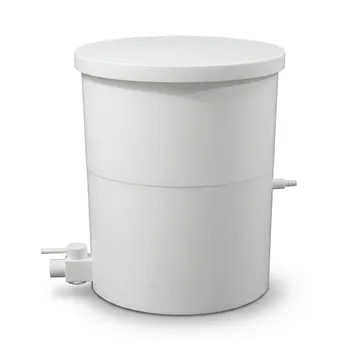
- High Purity Corrosion Resistant PTFE Raw Material Barrel 4L Screw Seal Low Background Feed Tank
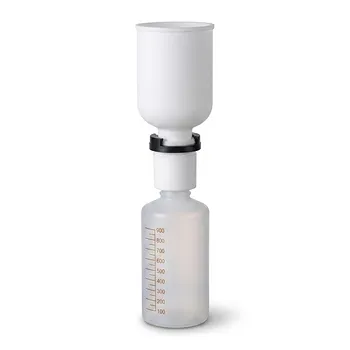
- PTFE PFA Vacuum Filtration System Corrosion Resistant Customizable Shatterproof Laboratory Device
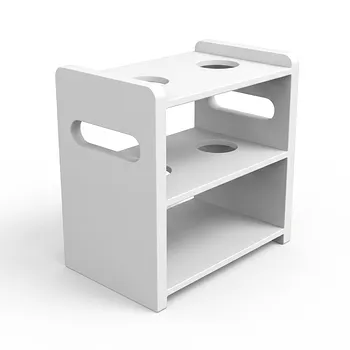
- Custom PTFE Acid Resistant Support Rack for PFA Hydrogen Absorption Systems Multi Hole Configurations
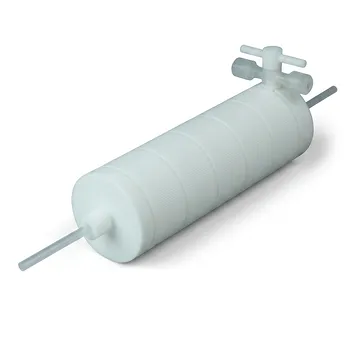
- High Purity Virgin PTFE Syringe 20ml Chemical Resistant Liquid Handling for Syringe Pumps and PFA Tubing Integration
People Also Ask
- Role of reaction vessels in alkali treatment for oil palm waste: Achieve High-Purity Cellulose with PTFE Vessels
- Why are well-sealed reaction vessels necessary for superacid-promoted Friedel-Crafts polycondensation? Optimize Synthesis
- How do specialized reaction vessels facilitate floating transfer for graphene? Achieve Uniform 4-SBD Functionalization
- How do the material choice and sealing integrity of the reaction vessel affect the growth of NiFe-LDH? Optimize Synthesis
- How is volume solids used to calculate substrate coverage? Master coating calculations for PFA/PTFE vessels