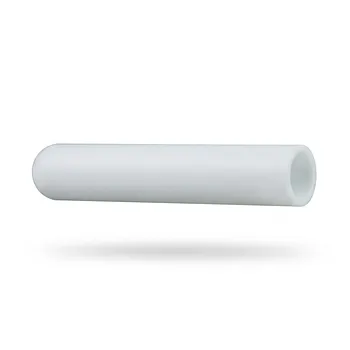
PTFE capillary tubing is primarily limited by its susceptibility to creep (cold flow), relatively low burst pressure, and lack of structural rigidity. While it excels in chemical inertness and thermal stability, engineers must account for its tendency to deform under sustained mechanical loads and its significant loss of strength at elevated temperatures.
Core Takeaway: Selecting PTFE capillary tubing requires a fundamental shift from prioritizing structural strength to managing dimensional stability. Successful application depends on balancing its unmatched chemical resistance against its inherent physical softness and low mechanical thresholds.
Managing Structural Integrity and Dimensional Stability
The Challenge of Creep and Cold Flow
PTFE is a "soft" polymer that exhibits creep, also known as cold flow, where the material permanently deforms under a constant load. This process occurs even at room temperature but becomes significantly more pronounced when temperatures exceed 100 °C.
Low Rigidity and Tensile Strength
Compared to engineering plastics like nylon or PEEK, PTFE has very low mechanical strength and stiffness. It is easily abraded and cannot be used as a structural component, as it lacks the tensile strength to withstand high-stress environments without deformation.
High Coefficient of Thermal Expansion
PTFE has a high specific density and a high coefficient of thermal expansion, meaning it expands and contracts significantly with temperature changes. This can lead to loose fittings or restricted flow in capillary applications if the tubing is confined within a rigid housing.
Pressure and Environmental Constraints
Burst Pressure Limitations
Because of its molecular structure, PTFE capillary tubing has a lower burst pressure rating than stiffer polymers or metallic alternatives. This typically confines its use to low- or moderate-pressure applications unless the wall thickness is significantly increased.
Temperature and Chemical Exceptions
While thermally stable up to 260 °C, PTFE can release toxic fumes if pushed beyond this limit or subjected to extreme heat. Furthermore, while it is nearly inert, it is susceptible to attack by molten alkali metals and aggressive fluorinating agents like chlorine trifluoride at high pressures.
Sensitivity to High-Energy Radiation
Engineers must avoid using PTFE in environments with high-energy radiation. Exposure can cause the polymer chains to break down, leading to a rapid loss of mechanical integrity and eventual failure of the capillary line.
Understanding the Engineering Trade-offs
Chemical Inertness vs. Joining Difficulties
The same properties that make PTFE chemically inert also make it nearly impossible to weld or cement. Joining PTFE capillary tubing to other components requires specialized mechanical fittings, as most industrial adhesives will not bond to its low-friction surface.
Flexibility vs. Kinking Risk
The flexibility of PTFE is an asset for routing, but it necessitates careful attention to bend radii. Excessive bending can cause the thin-walled capillary to kink or collapse, permanently restricting flow and compromising the tube's burst pressure.
Cost vs. Performance
PTFE is more expensive than many other polymers and is more difficult to mass-produce via traditional machining. Engineers must justify the higher material cost by the specific need for its unique thermal or chemical properties rather than using it as a general-purpose tubing.
How to Apply This to Your Project
- If your primary focus is high-pressure service: You must select a heavy wall thickness or utilize external braiding and support to maintain structural integrity and prevent the tubing from bursting.
- If your primary focus is precision flow at high temperatures: You should account for thermal expansion and cold flow by using self-adjusting fittings and avoiding sustained mechanical loads on the tubing.
- If your primary focus is chemical purity: Ensure your system is free of molten alkali metals and high-energy radiation sources that could compromise the PTFE molecular structure.
By respecting the mechanical boundaries of PTFE, you can leverage its world-class chemical and thermal properties to solve the most demanding fluid handling challenges.
Summary Table:
| Mechanical Consideration | Impact on Performance | Recommended Engineering Action |
|---|---|---|
| Creep (Cold Flow) | Permanent deformation under sustained load | Use self-adjusting fittings; minimize mechanical stress. |
| Low Burst Pressure | High risk of failure in pressurized systems | Increase wall thickness or utilize external braiding/support. |
| Thermal Expansion | Dimensional changes causing leaks or clogs | Account for high expansion rates when tubing is confined. |
| Radiation Sensitivity | Molecular breakdown and mechanical failure | Avoid exposure to high-energy radiation sources. |
| Joining Difficulties | Inability to weld or use common adhesives | Use specialized high-performance mechanical fittings. |
Optimize Your Fluid Systems with KINTEK’s Fluoropolymer Expertise
Navigating the mechanical trade-offs of PTFE requires precision engineering and high-quality materials. At KINTEK, we maintain an exclusive focus on high-performance fluoropolymers to ensure your laboratory setup succeeds where others fail.
From everyday basic labware (beakers, measuring cylinders, crucibles, reagent bottles, and centrifuge tubes) and comprehensive fluid transfer components (tubing, fittings, valves) to advanced reaction apparatus like electrochemical cells, battery testing fixtures, and microwave digestion vessels, KINTEK manufactures virtually all imaginable laboratory supplies crafted from PTFE and PFA.
Backed by end-to-end custom CNC fabrication, we deliver everything from complex non-standard machined parts to high-volume orders. Ensure your project benefits from unmatched chemical resistance and tailored engineering.
Contact KINTEK today to discuss your custom requirements and secure your high-performance supplies!
Related Products
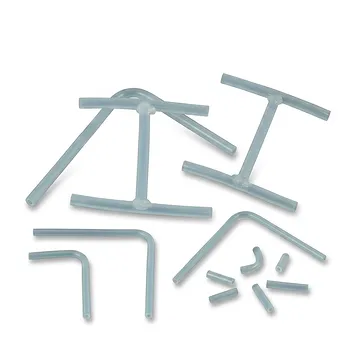
- High Performance PFA Coiled Spring Tubing and Custom PTFE Fabrication Services with Welded Fittings and Precision Bent Components
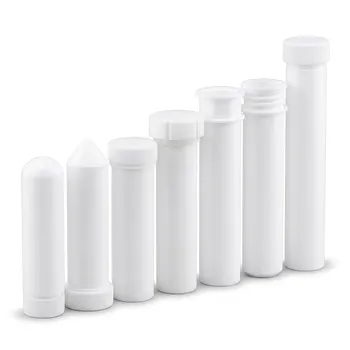
- Custom High Purity PTFE Digestion Tubes and Centrifuge Tubes for Trace Metal Analysis
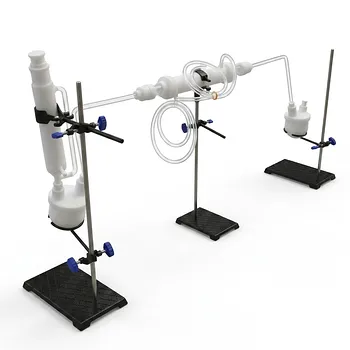
- Custom PTFE Condenser Tube Hydrofluoric Acid Resistant Reflux Device Constant Pressure Separatory Funnel
- High Purity PTFE Digestion Tubes and Custom Centrifuge Tubes 100ml for Trace Analysis and Chemical Digestion
- Custom PTFE Condenser Tube Reflux Reaction Condensation Purification Device Semiconductor Chemical Lab Equipment
People Also Ask
- What are the technical advantages of high-precision PFA tubing in MXene production? Maximize Purity and Yield.
- What technical advantages do PFA tubing and fittings offer? Master Precision Fluid Transfer and Flow Chemistry
- What are the technical advantages of high-quality PFA tubing? Achieve Ultimate Purity and Precision in Fluid Handling
- What are the key benefits of PTFE in custom fabrication? Unlock Performance in Extreme Conditions
- What fabrication services are available for PTFE? Shearing, Stamping, Laser Cutting, Molding & Machining