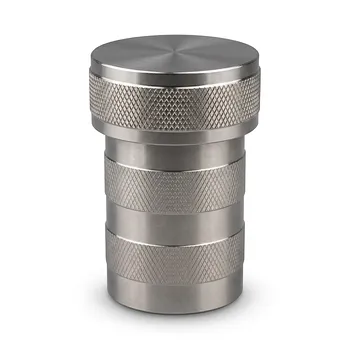
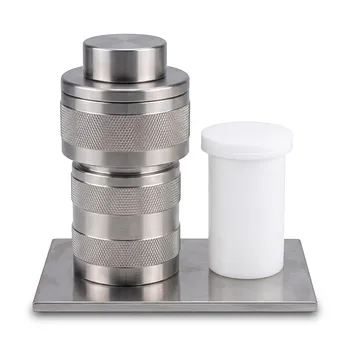
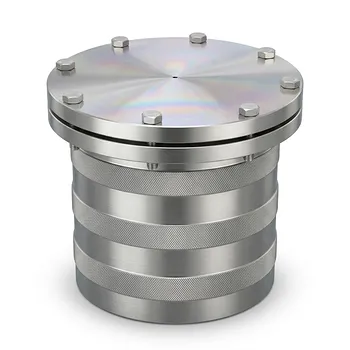
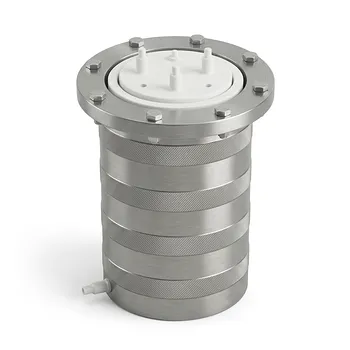
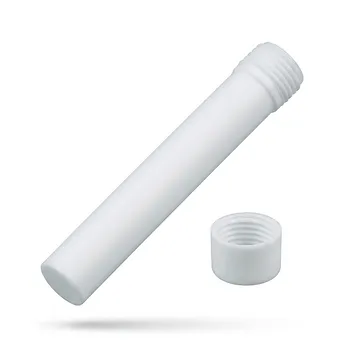
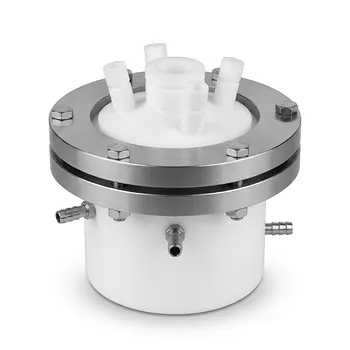
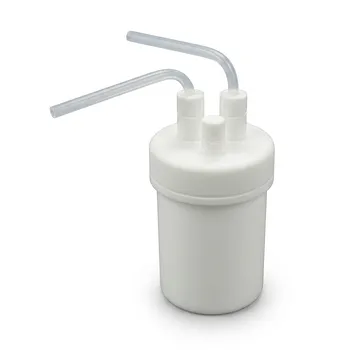
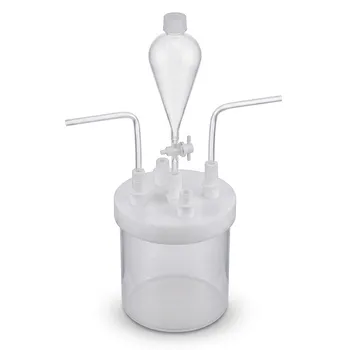
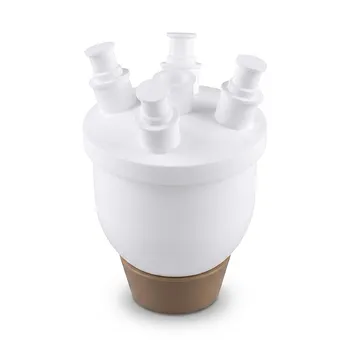
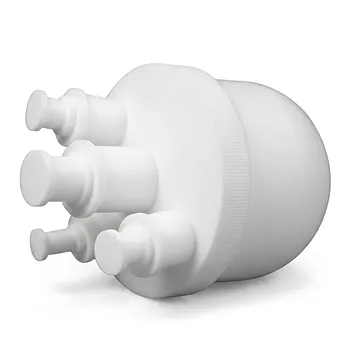
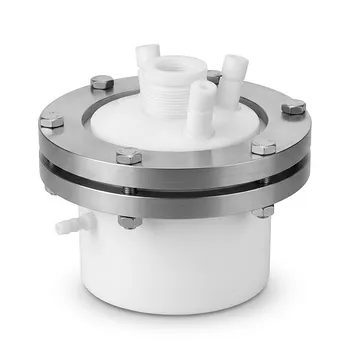
For high-temperature pretreatment involving dilute sulfuric acid and organic solvents, reactor liners must be constructed from high-purity fluoropolymers, specifically Polytetrafluoroethylene (PTFE) or Perfluoroalkoxy (PFA). These materials are required because they provide the extreme chemical inertia necessary to resist acid-induced corrosion and the thermal stability to remain structural under high-pressure solvent conditions.
Core Takeaway: To ensure experimental integrity and reactor longevity, liners must act as an absolute chemical barrier. High-purity PTFE or PFA is essential to prevent acidic media from leaching metal ions from the reactor walls and to withstand the aggressive nature of organic solvent systems.
The Role of Chemical Inertia in Acidic Environments
Resisting Sulfuric Acid Corrosion
Dilute sulfuric acid becomes significantly more aggressive at the elevated temperatures used in hydrothermal synthesis. PTFE and PFA are the primary choices because their carbon-fluorine bonds are nearly unbreakable by acidic attack.
This resistance prevents the acid from reaching the stainless steel walls of the autoclave. Without this barrier, the acid would rapidly degrade the metal shell, leading to structural failure.
Preventing Metal Ion Contamination
A critical requirement for synthesis is the elimination of unwanted catalysts or impurities. Liners must be chemically inert to ensure that no metal ions from the reactor housing migrate into the reaction mixture.
This purity is vital when synthesizing micro-nanomaterials or bimetallic catalysts. Even trace amounts of iron, nickel, or chromium from the reactor wall can fundamentally alter the morphological control and purity of the final product.
Thermal and Mechanical Requirements for Organic Solvents
Managing High Temperatures and Pressure
Organic solvents like gamma-valerolactone (GVL) require liners that maintain mechanical integrity under high-pressure, "solvent-thermal" conditions. Standard PTFE liners are generally suitable for temperatures up to 200–220 °C.
If the pretreatment requires higher temperatures, Polyphenylene Polymer (PPL) liners can extend the operating range to 240–280 °C. However, PPL must be carefully vetted for compatibility with specific organic solvent and acid concentrations.
Compressive Strength and Sealing Performance
The liner must possess high compressive strength to prevent deformation under the internal pressures generated during heating. A well-fitted liner also ensures a tight seal against the reactor lid.
This superior sealing performance is essential for maintaining a closed high-pressure environment. If the seal fails, the concentration of the sulfuric acid and organic solvents will shift, ruining the experimental parameters.
Surface Properties and Product Recovery
The Importance of Non-Stick Performance
High-quality fluoropolymer liners exhibit excellent non-stick properties. This is not merely a convenience; it is a requirement for the accurate recovery of synthesized crystals or pretreated biomass.
A non-stick surface facilitates easy cleaning and prevents "memory effects" where residues from a previous experiment contaminate the next. This ensures the uniform morphology and high crystallinity of the materials produced.
Navigating the Trade-offs of Liner Materials
Temperature Limits vs. Chemical Resistance
While PTFE offers the best overall chemical resistance, it has a lower thermal ceiling than PPL. Choosing a material involves balancing the maximum reaction temperature against the aggressiveness of the sulfuric acid.
Overheating a PTFE liner beyond its 220 °C limit can cause it to "creep" or deform. This deformation can make the liner difficult to remove from the stainless steel sleeve and may compromise the seal.
Material Fatigue and Replacement Cycles
No liner is permanent, especially when subjected to the expansion and contraction cycles of high-temperature pretreatment. Over time, liners may become porous or discolored due to solvent penetration.
Regular inspection is mandatory to ensure the liner has not developed micro-cracks. Using specialized materials like quartz glass or gold can solve extreme corrosion issues but adds significant cost and fragility to the setup.
Making the Right Choice for Your Goal
When selecting a liner for hydrothermal synthesis involving acids and organic solvents, your choice should be dictated by your peak operating temperature and purity requirements.
- If your primary focus is standard acid pretreatment (up to 220 °C): Use high-purity PTFE liners for the best balance of chemical resistance and cost-effectiveness.
- If your primary focus is high-temperature reactions (up to 280 °C): Select PPL (Polyphenylene Polymer) liners, ensuring they are compatible with your specific organic solvent.
- If your primary focus is maximum purity and visibility: Consider PFA or quartz glass inserts, though these require more careful handling than standard fluoropolymers.
- If your primary focus is preventing metal contamination in catalysts: Stick exclusively to high-purity PTFE to ensure a completely inert reaction interface.
Selecting the appropriate liner material is the single most important factor in protecting your equipment and ensuring the reproducibility of your chemical synthesis.
Summary Table:
| Material | Max Temperature | Chemical Resistance | Primary Advantage |
|---|---|---|---|
| PTFE | 200–220 °C | Excellent (Universal) | Best overall chemical inertia and non-stick performance. |
| PFA | 220–240 °C | Excellent (Universal) | Superior purity and transparency for sensitive trace analysis. |
| PPL | 240–280 °C | Good | Extended thermal ceiling for high-temperature reactions. |
| Quartz/Gold | Varies | High | Specialized for extreme purity or specific corrosive environments. |
Elevate Your Synthesis with KINTEK’s High-Performance Fluoropolymers
When your research involves aggressive acids and high-pressure organic solvents, the integrity of your reactor liner is the only thing protecting your results from contamination and failure. KINTEK specializes in high-purity fluoropolymer solutions designed for the most demanding laboratory environments.
From everyday basic labware like beakers, measuring cylinders, crucibles, and reagent bottles to precision-engineered hydrothermal synthesis liners and microwave digestion vessels, we provide the absolute chemical barrier your experiments require. Our expertise extends to comprehensive fluid transfer components (tubing, fittings, valves), sample prep tools (filters, pipettes, tweezers), and advanced electrochemical cells and battery testing fixtures.
Why Choose KINTEK?
- Unrivaled Material Focus: We maintain an exclusive focus on high-performance PTFE and PFA to ensure maximum chemical resistance.
- Custom Precision: Backed by end-to-end custom CNC fabrication, we deliver everything from standard consumables to complex, non-standard machined parts tailored to your specific reactor setup.
- Scalable Solutions: Whether you need a single bespoke liner or high-volume orders for a full laboratory rollout, we guarantee consistent quality and performance.
Ensure experimental reproducibility and protect your equipment from corrosive fatigue. Contact KINTEK today to discuss your custom liner requirements!
References
- Yawei Zhan, Zhiqiang Li. Enhancing the potential production of bioethanol with bamboo by γ-valerolactone/water pretreatment. DOI: 10.1039/d2ra02421g
This article is also based on technical information from Kintek Knowledge Base .
Related Products
- High Temperature Corrosion Resistant Hydrothermal Synthesis Reactor with TFM Inner Liner and Straight Cylinder Design
- PTFE Lined High Pressure Digestion Vessel 50ml High Temperature Hydrothermal Synthesis Tank
- Custom TFM Reaction Vessel with Stainless Steel Jacket and PTFE Inner Cup for High Corrosion Resistance
- High Pressure Custom TFM Reactor Stainless Steel Outer Vessel PTFE Inner Cup for Corrosive Synthesis
- High Purity TFM Microwave Digestion Vessels PTFE Acid Evaporation Liners Domestic GT-400 Equivalent Laboratory Reaction Containers
People Also Ask
- What is the role of a corrosion-resistant reactor in the synthesis of lignin-based carbon dots? Ensure Maximum Purity
- What are the technical advantages of using hydrothermal synthesis reactors for advanced electronic & optical nanomaterials?
- How does a hydrothermal synthesis reactor facilitate the production of crystalline materials with tailored morphologies? Precision Crystal Growth
- Why is the sealing reliability of a hydrothermal synthesis reactor critical for 24-hour cycles? Ensure Nano-Precision
- What role do hydrothermal synthesis reactors play in CQD preparation? Achieve High-Purity Nanomaterial Synthesis