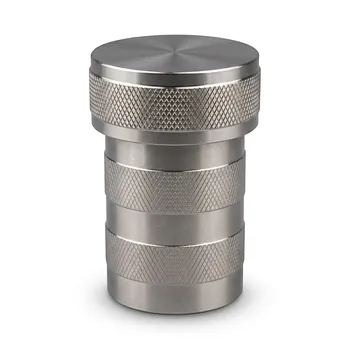
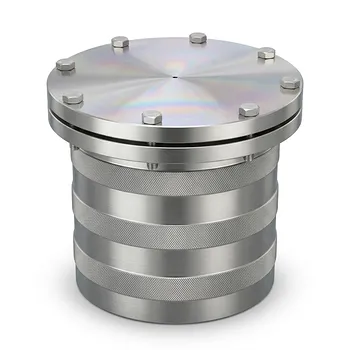
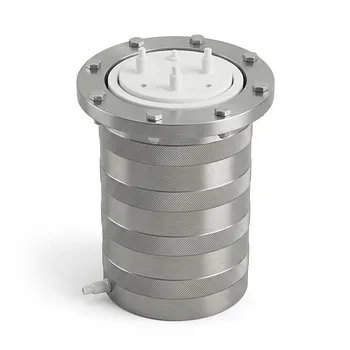
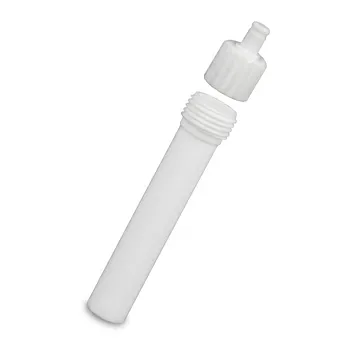
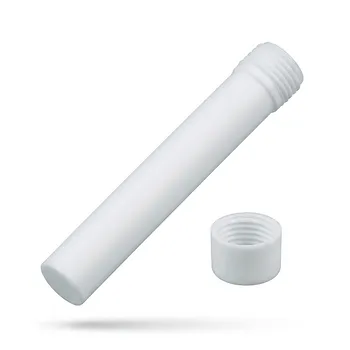
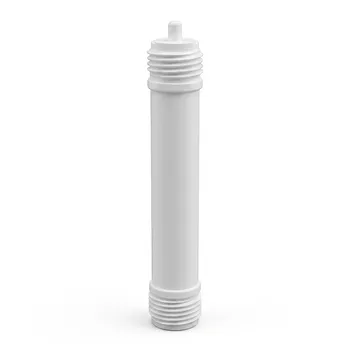
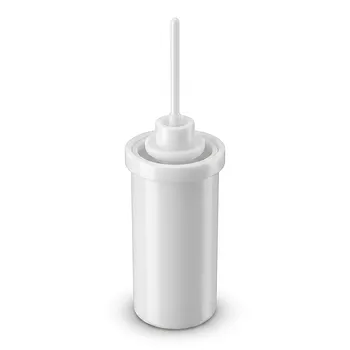
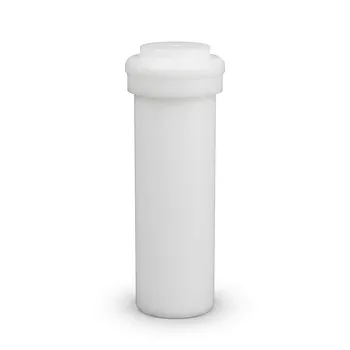
The primary material requirement for a hydrothermal synthesis reactor liner is extreme chemical inertness combined with high thermal stability. For the production of bimetallic catalysts, the liner must be constructed from high-purity Polytetrafluoroethylene (PTFE) for temperatures up to 200°C, or Polyphenylene Polymer (PPL) for high-temperature applications reaching up to 280°C. These materials ensure the reaction environment remains free from metal ion contamination, which is critical for maintaining the precise coordination environment of the catalyst.
Core Takeaway: The liner acts as a critical isolation barrier that prevents aggressive reaction media from corroding the stainless steel reactor walls. This isolation is the only way to guarantee that no unintended metal impurities compromise the purity and morphological integrity of the synthesized bimetallic catalyst.
The Imperative of Chemical Inertness
Preventing Metal Ion Contamination
In bimetallic catalyst synthesis, even trace amounts of iron, chromium, or nickel from the reactor's stainless steel shell can ruin the batch. A high-purity PTFE liner provides a total barrier, ensuring the metal atom coordination environment—such as the introduction of axial oxygen atoms in Ni-N4-O/C catalysts—remains precise and uncontaminated.
Resistance to Aggressive Media
Hydrothermal processes often involve strong acids (like sulfuric acid), strong alkalis, or complex salt solutions. Liner materials must exhibit "extreme chemical inertia," meaning they will not react with or be degraded by these solvents even under elevated pressure.
Ensuring Catalyst Purity
By isolating the reaction mixture, the liner ensures that the resulting crystals or micro-nanomaterials possess high crystallinity. Without this protection, the reaction liquid would leach elements from the autoclave, leading to unintended side reactions and impure final products.
Thermal and Structural Stability Requirements
Temperature Thresholds for PTFE and PPL
The choice of material depends strictly on the required synthesis temperature. PTFE is the standard for most reactions up to 200°C–220°C, while PPL (Polyphenylene Polymer) is required for higher-intensity solvent-thermal reactions ranging from 240°C to 280°C.
Managing High-Pressure Conditions
As the direct carrier of the reaction liquid, the liner must possess high compressive strength. It must maintain its structural shape and sealing performance while the internal pressure rises during the heating of aqueous solutions or organic solvents like gamma-valerolactone (GVL).
Non-Stick Properties for Morphology Control
The internal surface of the liner must be non-stick to facilitate the recovery of active materials after the experiment. This characteristic is vital for cleaning the vessel and ensuring that the morphology of synthesized crystals is not disrupted by surface adhesion.
Understanding the Trade-offs
Temperature vs. Material Longevity
While PTFE is highly versatile, exceeding its 200°C–220°C limit can lead to material deformation and a loss of sealing integrity. While PPL offers higher thermal resistance, it may not be necessary for standard catalyst runs and can be more expensive or less common in standard lab settings.
Specialized Material Costs
In rare cases involving extremely aggressive solutions or temperatures exceeding 280°C, liners may require materials like quartz glass, gold, or platinum. These offer unparalleled purity but introduce significant trade-offs in terms of high cost and physical fragility compared to polymers.
Sealing Risks in High-Pressure Cycles
The repeated expansion and contraction of polymer liners can eventually lead to "creeping" or minor deformations. If a liner is not replaced or inspected regularly, the superior sealing performance required for steady high-pressure conditions may fail, leading to experimental inconsistency.
How to Select the Right Liner for Your Catalyst
The specific requirements for your liner depend on the chemistry of your bimetallic precursors and the thermal energy required for the reaction.
- If your primary focus is standard bimetallic synthesis (<200°C): Use a high-purity PTFE liner to ensure cost-effective corrosion resistance and excellent non-stick product recovery.
- If your primary focus is high-temperature hydrothermal pretreatment (>240°C): Select a PPL (Polyphenylene Polymer) liner to maintain structural integrity and prevent thermal degradation during long reaction cycles.
- If your primary focus is avoiding specific metal cross-contamination: Ensure the liner is "high-purity" grade to prevent any trace additives within the polymer itself from leaching into your catalyst solution.
- If your primary focus is morphology control of micro-nanomaterials: Prioritize liners with a high-quality surface finish to prevent active materials from sticking to the walls during the cooling phase.
By strictly isolating the chemical reaction from the metal reactor body, you ensure the synthesis of a pure, high-performance bimetallic catalyst.
Summary Table:
| Material | Temperature Limit | Key Properties | Application |
|---|---|---|---|
| PTFE | Up to 200°C-220°C | Extreme chemical inertness, non-stick, high-purity | Standard bimetallic catalyst synthesis |
| PPL | Up to 240°C-280°C | High thermal stability, compressive strength | High-temperature solvent-thermal reactions |
| Quartz/Metals | > 280°C | Absolute purity, extreme heat resistance | Highly specialized, ultra-aggressive media |
Elevate Your Catalyst Synthesis with KINTEK Precision
Don't let metal contamination compromise your research. KINTEK specializes in high-performance fluoropolymer solutions, offering an exhaustive range of laboratory supplies crafted from high-purity PTFE and PFA. From standard hydrothermal synthesis liners and microwave digestion vessels to custom-engineered electrochemical cells and reaction apparatus, we ensure your experiments remain pure and your results reproducible.
Why Choose KINTEK?
- End-to-End Customization: Our advanced CNC fabrication handles everything from complex non-standard parts to high-volume orders.
- Comprehensive Range: We provide everything from basic labware (beakers, tubes, fittings) to advanced fluid transfer components and reaction vessels.
- Material Expertise: Absolute focus on high-performance fluoropolymers to prevent corrosion and leaching.
Ready to optimize your lab setup? Contact us today to discuss your custom project!
References
- A. N. Gosteva, Mayya V. Kulikova. CO2 HYDROGENATION REACTION ON BIMETALLIC CATALYSTS BASED ON DOUBLE COMPLEX SALTS. DOI: 10.37614/2949-1215.2025.16.1.024
This article is also based on technical information from Kintek Knowledge Base .
Related Products
- High Temperature Corrosion Resistant Hydrothermal Synthesis Reactor with TFM Inner Liner and Straight Cylinder Design
- PTFE Lined High Pressure Digestion Vessel 50ml High Temperature Hydrothermal Synthesis Tank
- Custom TFM Reaction Vessel with Stainless Steel Jacket and PTFE Inner Cup for High Corrosion Resistance
- High Pressure Custom TFM Reactor Stainless Steel Outer Vessel PTFE Inner Cup for Corrosive Synthesis
- High Purity PTFE Microwave Digestion Vessel Replacement Liner for Acid Sample Preparation and Trace Analysis
People Also Ask
- What is the role of a corrosion-resistant reactor in the synthesis of lignin-based carbon dots? Ensure Maximum Purity
- What are the technical advantages of using hydrothermal synthesis reactors for advanced electronic & optical nanomaterials?
- How does a hydrothermal synthesis reactor facilitate the production of crystalline materials with tailored morphologies? Precision Crystal Growth
- Why is the sealing reliability of a hydrothermal synthesis reactor critical for 24-hour cycles? Ensure Nano-Precision
- What role do hydrothermal synthesis reactors play in CQD preparation? Achieve High-Purity Nanomaterial Synthesis