The main kinetic trade-off is control versus operational simplicity: ATRP generally offers the most direct control over chain architecture and halogen end groups, NMP eliminates metal contamination but has a narrower monomer range, and RAFT provides the broadest monomer and solvent compatibility under relatively mild conditions. Reactor material also matters because surface interactions and extractable contaminants can alter reaction kinetics or introduce impurities into the polymer.
ATRP is often strongest when precise end-group and architecture control are priorities, NMP when metal-free purification is essential, and RAFT when monomer versatility is the deciding factor. In every method, inert PTFE or PFA contact surfaces help preserve polymer purity and reproducible kinetics.
How the Three Methods Control Radical Polymerization
The shared kinetic principle
Conventional free-radical polymerization allows active chains to grow and terminate without a sufficiently regulated balance between those processes. This produces limited control over molecular weight, dispersity, and chain architecture.
Controlled radical polymerization maintains a dynamic equilibrium between growing radical chains and dormant chains. By limiting the concentration and lifetime of active radicals, these methods can produce narrower molecular-weight distributions, commonly targeting dispersities below approximately 1.5 under suitable conditions.
Why the trade-offs are kinetic
The control mechanism must be fast enough to regulate chain growth but reversible enough to allow continued propagation. If activation is too rapid, termination and side reactions can increase; if deactivation or transfer is too slow, chain growth becomes less uniform.
The practical distinction among ATRP, NMP, and RAFT comes from how each method establishes this balance and what chemical compromises that mechanism creates.
ATRP: Strong Architecture Control with Catalyst-Burdened Purification
How ATRP controls chain growth
Atom transfer radical polymerization uses a reversible activation and deactivation process involving a transition-metal catalyst and an organic halide chain end. The catalyst mediates the transfer between dormant and active chain states, keeping the radical concentration low.
This mechanism gives ATRP strong control over molecular architecture and preserves useful halogen end-group functionality for subsequent chain extensions or functionalization.
Its kinetic strengths
ATRP can provide predictable chain growth and effective control over block, graft, and other advanced architectures when catalyst concentration, ligand environment, temperature, and oxygen exclusion are properly managed.
The primary reference places typical operating temperatures in the 80–120°C range. These conditions can support efficient polymerization while maintaining the reversible activation-deactivation equilibrium.
Its main limitation
The transition-metal catalyst is the central trade-off. Although modern ATRP variants can reduce catalyst loading, residual metal remains a significant purification and product-quality concern, particularly for biomedical, electronic, and other contamination-sensitive applications.
The catalyst can also complicate scale-up because removal must be consistent throughout the product, not merely adequate in a small laboratory sample.
NMP: Metal-Free Operation with a Narrower Monomer Scope
How NMP controls chain growth
Nitroxide-mediated polymerization uses a reversible bond between a growing polymer radical and a nitroxide-capped dormant chain. Thermal dissociation generates a small population of active radicals, while recombination restores the dormant species.
This reversible capping process regulates radical concentration without requiring a transition-metal catalyst.
Its kinetic strengths
The absence of metal catalysts simplifies downstream purification and reduces the risk of metallic residues. That is a major advantage when polymer purity is more important than broad synthetic flexibility.
NMP can also provide useful control for monomers that are compatible with its nitroxide chemistry and operating conditions.
Its main limitation
NMP generally supports a narrower monomer scope than RAFT. Side reactions can disrupt the reversible capping equilibrium, reducing control over molecular weight or dispersity and limiting the range of structures that can be prepared reliably.
The method therefore works best when the monomer has already been demonstrated to be compatible with the selected nitroxide system and temperature profile.
RAFT: Broadest Compatibility Through Degenerative Transfer
How RAFT controls chain growth
Reversible addition-fragmentation chain-transfer polymerization uses a thiocarbonylthio control agent, commonly represented as ZC(=S)SR. Growing radicals add to this control agent and undergo fragmentation, transferring the active radical character among chains.
Rather than relying primarily on a metal-mediated activation cycle or reversible nitroxide capping, RAFT distributes growth through a degenerative transfer mechanism.
Its kinetic strengths
RAFT accommodates a particularly wide range of functional monomers, solvents, and reaction conditions. It can operate under relatively mild conditions and is often selected when chemical versatility is the dominant requirement.
This broad compatibility is especially valuable for preparing polymers containing polar, functional, or otherwise challenging monomer units.
Its main limitation
RAFT introduces a thiocarbonylthio-derived end group that may affect polymer color, odor, stability, or downstream application requirements. Removing or transforming that end group can add processing steps.
RAFT performance also depends strongly on matching the control agent to the monomer and initiator system. An unsuitable agent can lead to poor initiation, delayed polymerization, broad dispersity, or ineffective chain transfer.
Comparing the Kinetic Trade-offs Directly
Control over architecture
ATRP is often the most attractive choice when precise halogen end groups and complex chain architectures are central objectives. RAFT can also support sophisticated architectures, but its success depends heavily on control-agent selection and transfer kinetics.
NMP provides useful control within a more restricted chemical window.
Monomer and solvent compatibility
RAFT generally offers the broadest compatibility across functional monomers and solvents. ATRP also supports many monomers, but catalyst, ligand, redox, and coordination effects can become important.
NMP has the narrowest scope of the three in the context described here because side reactions can interfere with its reversible radical-capping equilibrium.
Purification requirements
NMP has the clearest advantage when residual metal must be avoided because it does not require a metal catalyst. RAFT avoids transition-metal contamination but may leave thiocarbonylthio end groups that require consideration or removal.
ATRP can deliver excellent polymer control, but catalyst removal is an unavoidable process-design issue.
Operating conditions
ATRP commonly operates around 80–120°C. RAFT can often operate under mild conditions, depending on the monomer, initiator, and control agent.
NMP is also thermally driven, and its required temperature and nitroxide chemistry must be compatible with the target monomer and polymer.
How Reactor Materials Affect Polymer Purity
Surface chemistry can change the reaction
Reactor walls, tubing, valves, and seals are part of the chemical environment. Reactive or poorly characterized surfaces can adsorb catalysts, chain-transfer agents, initiators, or monomers, changing their effective concentrations.
Even small changes in these concentrations can affect activation, transfer, propagation, and termination rates. The result may be altered molecular weight, dispersity, conversion, or end-group fidelity.
Contamination can become a product-quality problem
A reactor can contribute particles, extractables, corrosion products, or residues from previous batches. These contaminants may be difficult to detect when present at low levels but can be unacceptable in biomedical, electronic, optical, or high-purity polymer applications.
The risk is especially consequential for ATRP, where contact with unsuitable materials can complicate control of metal-containing species and their subsequent removal.
Why PTFE and PFA are useful
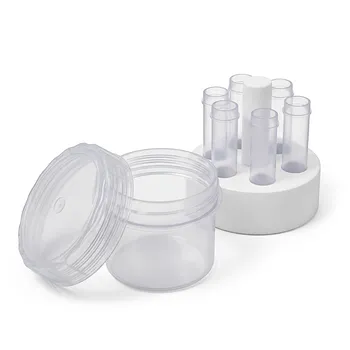
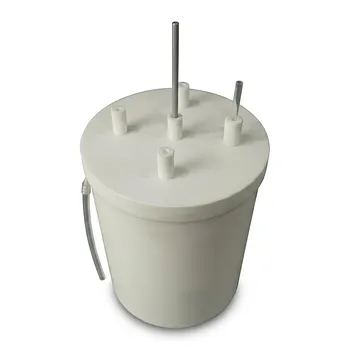
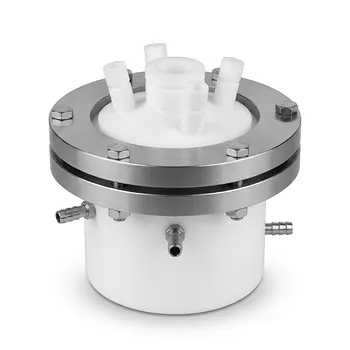
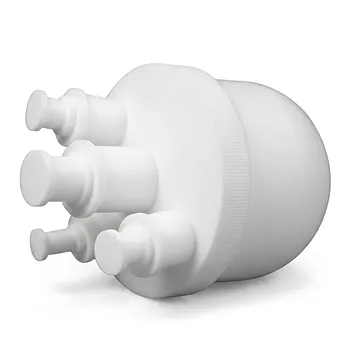
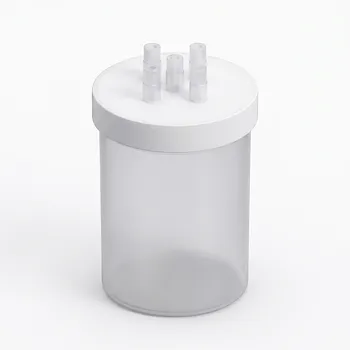
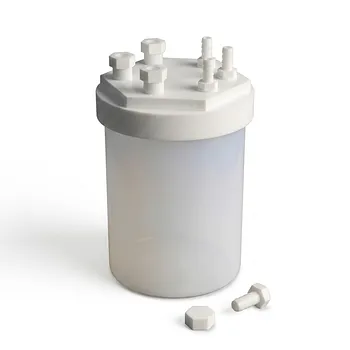
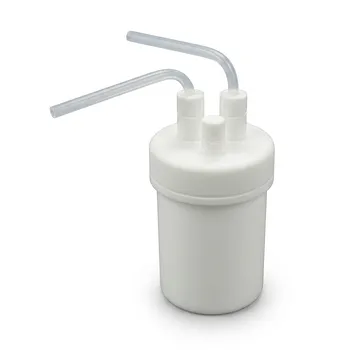
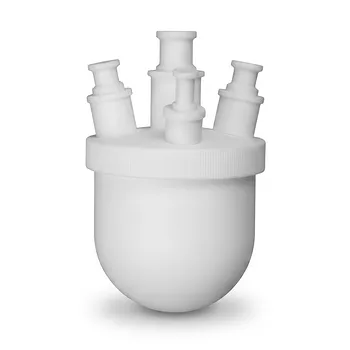
Inert PTFE and PFA vessels and fluid-transfer components are well suited to CRP workflows because they resist many aggressive organic solvents and are less likely to participate in the reaction.
They also reduce cross-contamination between batches and help maintain consistent contact conditions across the reactor, transfer lines, and associated components.
Material selection supports reproducible kinetics
Using compatible materials is not only a cleanliness decision. It helps preserve the intended concentrations of catalysts, initiators, monomers, and control agents by minimizing adsorption and unwanted surface interactions.
For scale-up, the same principle must be applied to the complete fluid path. A chemically inert reactor paired with incompatible tubing or fittings can still compromise purity and reproducibility.
Understanding the Trade-offs
Low catalyst loading does not remove ATRP purification concerns
Reducing the catalyst concentration can make ATRP purification easier, but it does not eliminate the need to measure and control residual metal. Catalyst removal remains part of the process specification.
Metal-free does not mean impurity-free
NMP avoids metal catalysts, but the process can still generate side products or leave nitroxide-derived residues. RAFT avoids the ATRP metal issue but introduces thiocarbonylthio functionality that may matter for the final application.
Purity must therefore be defined broadly: residual metals, organic residues, control-agent fragments, particles, and surface-derived contaminants may all be relevant.
Inert materials do not replace process control
PTFE and PFA reduce material-related risks, but they cannot compensate for oxygen leakage, poor mixing, incorrect reagent ratios, or inadequate cleaning. Reactor material is one part of a controlled process rather than a substitute for it.
Broad compatibility can increase optimization work
RAFT's chemical flexibility is a major strength, but it also means that control-agent selection and reaction optimization remain important. The broadest operating window in principle does not guarantee the best result for every monomer.
Choosing the Method for the Application
The best method depends on whether the priority is architecture, purity, or chemical versatility.
- If your primary focus is precise chain architecture and halogen end-group functionality: Choose ATRP, while designing catalyst removal and residual-metal testing into the process from the beginning.
- If your primary focus is minimizing metal contamination: Choose NMP when the monomer is compatible with the required nitroxide-mediated kinetics and side reactions are manageable.
- If your primary focus is broad monomer and solvent compatibility: Choose RAFT, with careful matching of the thiocarbonylthio control agent to the monomer and initiator system.
- If your primary focus is maximum polymer purity and batch-to-batch reproducibility: Use inert PTFE or PFA throughout the wetted fluid path and validate cleaning, extractables, and cross-contamination controls.
- If your primary focus is scale-up: Evaluate the complete reactor, tubing, seals, fittings, and transfer operations because any incompatible surface can affect both purity and reaction kinetics.
A sound CRP process balances the reaction mechanism with the purification strategy and the chemical compatibility of every material that contacts the polymer.
Summary Table:
| Method | Control Mechanism | Main Strength | Main Limitation | Typical Operating Temp |
|---|---|---|---|---|
| ATRP | Transition-metal catalyst | Precise architecture and end-group control | Metal contamination requiring purification | 80–120°C |
| NMP | Nitroxide-mediated reversible capping | Metal-free, simpler purification | Narrower monomer scope | Thermally driven (varies) |
| RAFT | Degenerative transfer via thiocarbonylthio | Broad monomer and solvent compatibility | Thiocarbonylthio end group may require removal | Often milder |
Ensure high-purity, reproducible CRP results with our PTFE/PFA labware and custom components. Contact KINTEK today to discuss your polymerization needs—our inert materials help preserve kinetics and purity. Contact us now!
Related Products
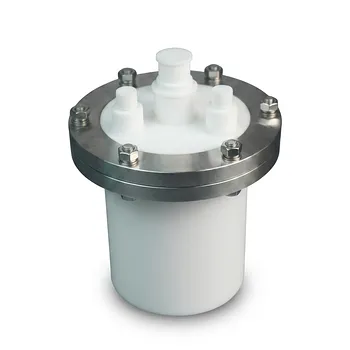
- High Purity Corrosion Resistant PFA Reaction Vessel with PTFE Holder and Integrated Sampling Tube for Trace Analysis
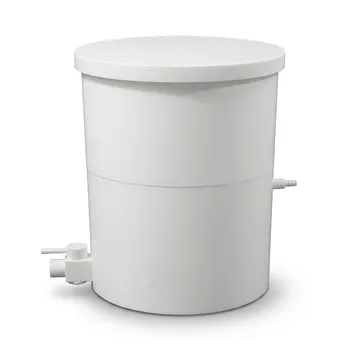
- PTFE 10L Reaction Vessel with Stirring Paddle Customizable Corrosion Resistant High Temperature Reactor for Biopharmaceutical and Chemical Processing
- Custom PFA Reaction Bottles High Purity PTFE Reaction Vessels Corrosion Resistant Petrochemical Containers
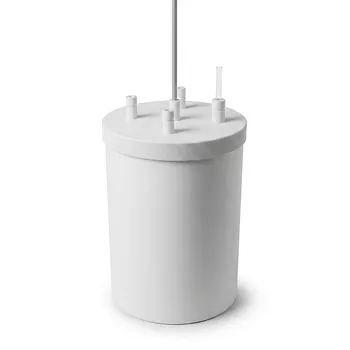
- High Performance Customizable PTFE Reaction Vessel and Corrosion Resistant Polytetrafluoroethylene Flask for Chemical Laboratory Use
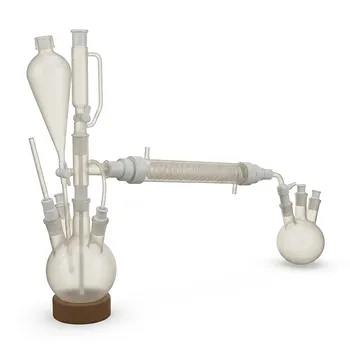
- Custom PTFE Reaction System with Hose Barb Fittings Corrosion Resistant High Sealing 2L 4L Lab Reactor with Separatory Funnel
People Also Ask
- Why is the choice of reaction vessel material critical during B-NiBDC synthesis? Optimize MOF Purity & Performance
- What is the function of corrosion-resistant reaction vessels in the acid hydrolysis process of molasses for microalgae culture media?
- How do the material choice and sealing integrity of the reaction vessel affect the growth of NiFe-LDH? Optimize Synthesis
- Why are corrosion-resistant vessels needed for alkaline cellulose extraction? Ensure Purity and Process Safety
- Why are well-sealed reaction vessels necessary for superacid-promoted Friedel-Crafts polycondensation? Optimize Synthesis