PTFE and PFA both support continuous service temperatures up to approximately 260 °C, but PFA is much easier to fabricate into complex laboratory and fluid-transfer geometries. PTFE has the higher melting point, around 327 °C, yet its extremely high melt viscosity makes it effectively non-melt-processable by conventional methods. PFA melts at approximately 305 °C and can be extruded, injection-molded, and formed into tubing, valves, fittings, bottles, and other intricate components.
The selection is usually not determined by continuous temperature capability, because both materials can reach approximately 260 °C. The decisive difference is processability: PTFE favors robust machined or pressed components, while PFA favors complex, smooth, high-purity molded and extruded parts.
What the Thermal Limits Actually Mean
Continuous service temperature
Both PTFE and PFA have an upper continuous operating temperature of approximately 260 °C. This makes either material suitable for demanding laboratory environments involving aggressive chemicals and sustained heat.
The 260 °C figure is a continuous-use guideline, not a universal design temperature for every component. Actual limits also depend on the specific grade, applied pressure, mechanical load, exposure time, thermal cycling, and chemical environment.
Melting point versus operating limit
PTFE melts at approximately 327 °C, while PFA melts at approximately 305 °C. These values describe the transition during processing; they do not mean that either polymer should be operated continuously near its melting point.
The gap between the melting point and recommended continuous-use temperature provides thermal margin, but component performance can decline before melting because polymers may soften, creep, or lose dimensional stability under load.
Performance above 200 °C
PFA can retain useful mechanical modulus and structural integrity at temperatures above 200 °C, supporting high-temperature tubing, fittings, valves, and molded vessels. PTFE also performs reliably at these temperatures, particularly where a solid, heavy-duty machined component is required.
For either material, pressure and load ratings should be checked at the actual operating temperature rather than inferred from the continuous-temperature ceiling alone.
Why PTFE Requires Specialized Fabrication
Extremely high melt viscosity
Above its melting point, PTFE does not flow like a conventional thermoplastic. Its melt viscosity is extremely high, reported in the range of approximately 10^10 to 10^12 poise at 380 °C, so standard injection molding and melt extrusion are generally impractical.
PTFE therefore undergoes powder pressing and sintering, compression molding, paste extrusion, or related specialized processes rather than ordinary melt molding.
Machining from stock shapes
Manufacturers commonly produce PTFE stock shapes and then use precision CNC machining to create the final geometry. This approach is well suited to custom reaction vessels, electrochemical cell bodies, microwave digestion components, seals, and other solid parts.
Machining also makes it practical to produce prototypes or low-volume custom components without creating complex molding tools.
Strengths in heavy-duty laboratory parts
PTFE is a strong choice when the design prioritizes chemical inertness, low friction, and robust solid construction. Machined PTFE components are especially useful when transparency is not required and the geometry can be produced efficiently from a stock shape.
Its limitations become more significant when the part requires thin walls, seamless molded passages, intricate internal channels, or high-volume production.
Why PFA Enables More Complex Components
True melt processability
PFA is a melt-processible copolymer based on tetrafluoroethylene with perfluoroalkyl vinyl ether comonomers. These comonomers increase melt flow sufficiently for conventional thermoplastic processes while preserving fluoropolymer-level chemical and thermal resistance.
PFA can therefore be melt-extruded, injection-molded, and conventionally molded into detailed geometries.
Smooth and low-porosity surfaces
Melt processing can produce smooth-walled tubing, fittings, valves, bottles, and reaction vessels with fewer machining-related surface features. This is valuable for high-purity fluid handling, trace analysis, and applications where contamination or retained material must be minimized.
PFA is also commonly selected when translucent or transparent components improve visual inspection of fluid flow, contamination, or filling conditions.
Sealed and intricate fluid paths
PFA is advantageous for components requiring complex internal passages, molded sealing features, or seamless fluid-contact surfaces. Typical examples include high-purity tubing, valves, fittings, molded containers, and digestion vessels.
Its processability can reduce the number of joints or assembled interfaces, which may simplify cleaning and reduce potential leak points.
How the Difference Affects Laboratory Equipment
Reaction and digestion vessels
PTFE is well suited to heavy-duty reaction apparatus, custom-machined vessels, electrochemical cells, and microwave digestion components. Its solid form provides a practical route to thick-walled or highly customized parts.
PFA is preferable when the vessel requires a complex molded shape, translucent walls, smooth internal surfaces, or molded and sealed geometries.
Fluid transfer systems
PFA is generally the stronger choice for tubing, valves, fittings, and other fluid-transfer components that require extrusion or intricate molding. It supports consistent internal dimensions and smooth fluid-contact surfaces.
PTFE remains useful for tubing and transfer components, especially where specialized fabrication is available or where the design benefits from PTFE's established low-friction behavior and machined construction.
High-purity and trace-analysis applications
Both materials provide near-universal chemical resistance and low surface energy. PFA often has the practical advantage where low micro-porosity, high clarity, smooth molded surfaces, and weldability are important.
The material alone does not guarantee a high-purity system. Clean manufacturing, appropriate handling, validated cleaning procedures, and compatible joining methods are equally important.
Understanding the Trade-offs
Thermal capability is not the main differentiator
Choosing PFA solely because it has a lower melting point would miss the central engineering distinction. Both materials have approximately the same continuous service limit of 260 °C, so the more important question is how the component must be made and loaded.
A molded PFA part is not automatically suitable for the same pressure, wall thickness, or mechanical load as a machined PTFE part.
PTFE fabrication can increase cost and complexity
Compression molding, sintering, and CNC machining may require specialized tooling, longer production times, and more material removal. Complex internal geometries can be difficult or impossible to machine economically.
However, PTFE machining can be advantageous for custom, low-volume, or rapidly modified laboratory equipment.
PFA can involve process and design constraints
PFA's melt processability makes complex shapes possible, but tooling and molding can be less economical for one-off parts. Designers must also account for thermal expansion, creep, pressure ratings, and the behavior of thin molded walls at elevated temperature.
PFA's lower melting point does not imply poor high-temperature performance, but it reinforces the need to distinguish processing conditions from service conditions.
Do not confuse temperature resistance with unlimited exposure
Both polymers can withstand severe chemical and thermal environments, but continuous exposure near the upper limit can accelerate deformation or reduce mechanical margin. Thermal cycling, external loads, vacuum, pressure, and unsupported spans may be more limiting than the nominal temperature rating.
The final design should use the supplier's temperature-dependent mechanical and pressure data for the selected grade.
Making the Right Choice for Your Goal
The best material follows from the component geometry, production method, loading conditions, and purity requirements.
- If your primary focus is heavy-duty custom laboratory apparatus: Choose PTFE when compression-molded stock shapes and precision CNC machining provide the required strength, chemical resistance, and geometry.
- If your primary focus is complex fluid-transfer components: Choose PFA when tubing, valves, fittings, or internal passages must be extruded or conventionally molded.
- If your primary focus is high-purity or trace analysis: Favor PFA when smooth, low-porosity, translucent, and weldable fluid-contact surfaces are important.
- If your primary focus is continuous high-temperature service: Treat PTFE and PFA as broadly equivalent up to approximately 260 °C, then compare pressure, load, creep, and thermal-cycling data for the specific design.
- If your primary focus is low-volume customization: Consider PTFE when machining from stock shapes avoids the cost and lead time of dedicated molding tools.
Select PTFE for fabrication flexibility through machining and robust solid parts, or PFA for melt-formed complexity, smoothness, and high-purity fluid handling.
Summary Table:
| Property | PTFE | PFA |
|---|---|---|
| Continuous service temperature | ~260 °C | ~260 °C |
| Melting point | ~327 °C | ~305 °C |
| Processability | Non-melt processable; requires powder pressing and sintering or CNC machining | Melt-processible via extrusion, injection molding, etc. |
| Typical applications | Heavy-duty machined parts, custom vessels, seals | Complex molded parts: tubing, valves, fittings, high-purity containers |
| Fabrication methods | Compression molding, sintering, CNC machining | Melt extrusion, injection molding, conventional molding |
Ready to enhance your lab's performance with precision-engineered PTFE or PFA components? At KINTEK, we specialize in manufacturing high-quality PTFE and PFA labware, from basic beakers to custom electrochemical cells. Our expert team can guide you in selecting the right material for your application. Contact us today to discuss your requirements and discover the perfect solution for your lab.
Related Products
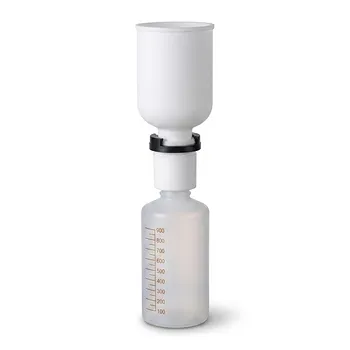
- PTFE PFA Vacuum Filtration System Corrosion Resistant Customizable Shatterproof Laboratory Device
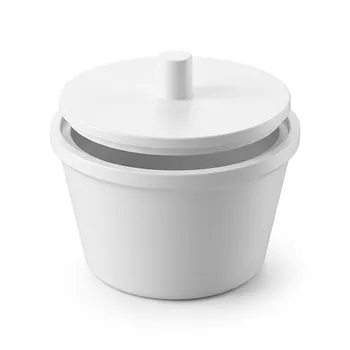
- High Purity PTFE PFA Plastic Crucible for Corrosion Resistant Acid Digestion and Trace Analysis
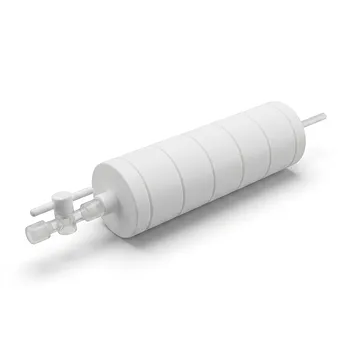
- PTFE Corrosion Resistant Filter with PFA Valve Connections and Integrated Sieve Plate
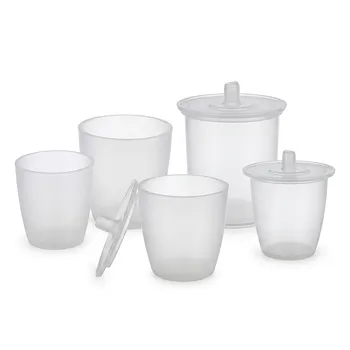
- High Purity PFA Crucible and Corrosion Resistant PTFE Beaker for Trace Analysis and Custom Laboratory Applications
- Customizable PTFE Heat Insulation Plate High Temperature Corrosion Resistant Laboratory Support Layered Multi Tier Stand
People Also Ask
- What makes PTFE filtration systems advantageous for industrial and scientific use? Unmatched Chemical & Thermal Stability
- What temperature resistance do PTFE filters offer? Unmatched Thermal Stability from -200°C to +260°C
- How does the hydrophobicity of PTFE filters benefit their use? Ensure Uninterrupted Gas Flow and Solvent Filtration
- Which chemicals are fully compatible with PTFE filters? Discover Unmatched Chemical Resistance
- What steps are involved in selecting the proper PTFE filter? A 4-Step Guide to Optimal Filtration