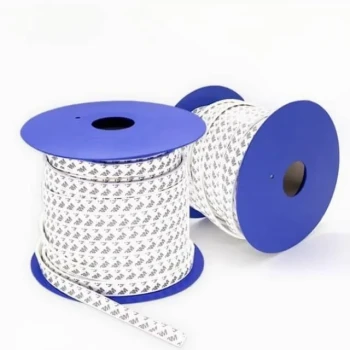
PTFE thread sealant tape is usually the cleaner, more maintenance-friendly choice for threaded laboratory and fluid-handling connections. It creates a reliable seal across many compatible pipe materials, including steel, brass, aluminum, plastics, and specialty metals, without introducing liquid chemicals into the piping system. Compared with traditional chemical pipe dopes, it also supports faster disassembly, easier inspection, and immediate resealing with minimal cleanup.
The primary operational advantage is control: PTFE tape seals threaded joints without leachable compounds, while making maintenance simpler and reducing the risk of contamination, residue, and prolonged downtime.
Why PTFE Tape Fits Laboratory and Fluid Handling Systems
It reduces contamination risk
Traditional pipe dopes and plumbing putties contain liquid or paste-formulated compounds that may contain additives capable of migrating into the fluid stream. This is a significant concern when handling analytical samples, purified fluids, aggressive reagents, or other contamination-sensitive media.
PTFE tape is a solid fluoropolymer sealant. When correctly selected and installed, it does not introduce the same type of liquid carrier or leachable chemical residue into the system.
It works across diverse pipe materials
Laboratory and process piping often combines stainless steel, brass, plastics, aluminum, and specialized metals. PTFE tape can provide sealing across many of these threaded interfaces without requiring a different sealing compound for every material combination.
The tape also conforms to thread irregularities, helping fill small clearance paths that could otherwise allow leakage.
It provides strong chemical resistance
PTFE is highly resistant to many aggressive chemical environments, including combinations that can attack conventional sealants. This makes it useful in systems exposed to corrosive reagents, solvents, moisture, and other demanding media.
Material compatibility still must be verified for the specific chemical, concentration, temperature, pressure, and tape formulation. PTFE resistance does not eliminate the need for application-specific engineering review.
How PTFE Tape Improves Operations
It simplifies disassembly
Chemical pipe dopes can harden, smear, or bond to threaded surfaces. Removing them may require scraping, solvent cleaning, or repeated wiping before the connection can be inspected or reused.
PTFE tape generally leaves substantially less cleanup work. An operator can remove the old tape, inspect the threads, apply new tape, and return the connection to service more efficiently.
It enables immediate resealing
A liquid dope may require curing, drying, or stabilization before the system can be pressurized. PTFE tape does not normally create the same waiting period.
After proper installation and assembly, the connection can typically be tested promptly. This shortens maintenance windows and helps restore laboratory or fluid-handling equipment to operation faster.
It reduces maintenance labor
The combination of clean removal, rapid application, and minimal residue reduces the time required for routine repairs. That matters in systems with frequent configuration changes, instrument replacement, sampling-point maintenance, or periodic cleaning.
Lower handling time can also reduce exposure to solvents and other cleaning agents used to remove residual pipe compounds.
It supports repeatable maintenance practices
Tape application can be standardized by specifying the appropriate tape grade, wrapping direction, number of turns, overlap, and installation procedure. This provides a more consistent maintenance method than relying on variable amounts of liquid compound applied by different technicians.
Consistency is especially important where many threaded connections are serviced across a laboratory or process area.
Performance Benefits in Demanding Environments
It maintains sealing performance over time
PTFE does not readily degrade from ordinary exposure to heat, friction, contamination, or many corrosive fluids. This supports long-term sealing reliability when the tape is properly selected and the joint is correctly designed and assembled.
However, the seal depends on thread condition, installation quality, mechanical loading, and operating conditions. PTFE tape cannot compensate for damaged threads, excessive vibration, or an unsuitable connection design.
It limits friction during assembly
PTFE has naturally low friction and can make threaded assembly smoother. This helps technicians achieve proper engagement without applying unnecessary torque, provided the tape is compatible with the joint and the equipment manufacturer’s torque requirements.
Reduced friction does not mean that connections should be overtightened. Excessive tightening can damage plastic fittings, distort components, or create stress concentrations.
It tolerates broad temperature and chemical conditions
PTFE-based sealing materials are used across high- and low-temperature applications and with a wide range of chemical media. Modified PTFE formulations can further improve resistance to creep, porosity, and chemical permeation.
These enhancements are particularly relevant in specialized laboratory seals, fluoropolymer components, gaskets, and chemical-processing equipment, although they should not be assumed for every general-purpose tape.
It can support high-integrity fluid handling
In systems where micro-leakage, permeation, or chemical attack is unacceptable, the selected PTFE product may offer a more stable sealing material than a conventional organic pipe compound. Modified PTFE can provide improved dimensional stability and lower deformation under sustained mechanical stress.
The highest-integrity applications still require appropriate joint design, material verification, pressure testing, and documented installation controls.
Understanding the Trade-offs
Installation technique remains critical
PTFE tape must be wrapped in the direction of thread engagement so it does not unwind during assembly. It must also be kept away from the pipe opening, because loose fragments can enter valves, regulators, instruments, filters, or other sensitive components.
A standardized installation procedure is essential for reliable results.
It is not suitable for every connection
PTFE tape is intended for compatible threaded joints and should not be used as a substitute for a gasket, O-ring, ferrule, or purpose-designed seal where those components are required. Some fittings depend on face seals or controlled metal-to-metal contact rather than thread sealing.
The connection manufacturer’s instructions take priority.
Tape fragments can create system problems
Although PTFE tape avoids the liquid residue associated with pipe dopes, poorly applied tape can shed particles. This is a particular risk in analytical, high-purity, instrumentation, and small-orifice systems.
Correct wrapping, trimming, and inspection are necessary to prevent loose material from entering the fluid path.
Chemical compatibility is not universal
PTFE is broadly chemically resistant, but application conditions matter. High temperatures, unusual chemical combinations, permeation requirements, oxidizing service, and pressure cycling can change the suitability of a specific tape.
The tape’s technical data and the system’s chemical compatibility requirements should be reviewed before use.
Thread sealing does not replace mechanical integrity
A sealant can close leakage paths between threads, but it cannot repair cracked fittings, cross-threading, inadequate engagement, vibration-induced loosening, or excessive mechanical stress. Reliable performance requires sound components and correct assembly.
Making the Right Choice for Your Goal
PTFE tape is most valuable when cleanliness, maintainability, and chemical resistance are central operating requirements.
- If your primary focus is contamination control: Use a suitable, low-contamination PTFE tape and prevent loose material from entering the fluid path.
- If your primary focus is maintenance speed: Choose PTFE tape where the threaded joint design permits it, because removal and resealing generally require less cleanup than chemical pipe dopes.
- If your primary focus is chemical service: Verify the tape formulation against the actual fluid, concentration, temperature, pressure, and permeation requirements.
- If your primary focus is long-term sealing reliability: Standardize installation practices and confirm that the threads, fitting design, and operating loads are appropriate.
- If your primary focus is high-purity or instrumentation service: Use only a product and installation method approved for that service, with particular attention to particle control.
For laboratory and fluid-handling piping, the right PTFE tape system combines material compatibility with disciplined installation, delivering cleaner maintenance and more controllable sealing performance.
Summary Table:
| Advantage | Description |
|---|---|
| Contamination Control | Solid PTFE tape avoids leachable compounds found in liquid dopes, reducing fluid contamination risk. |
| Material Versatility | Works on steel, brass, aluminum, plastics, and specialty metals without different compounds. |
| Chemical Resistance | Highly resistant to aggressive reagents and solvents, ideal for corrosive environments. |
| Easy Disassembly | Leaves minimal residue, allowing quick removal and faster maintenance. |
| Immediate Resealing | No curing time; connections can be tested and returned to service promptly. |
| Labor Savings | Clean application reduces cleanup effort and exposure to solvents. |
| Consistent Practices | Standardizable wrapping and application ensure uniform sealing across systems. |
| Low Friction | Smooth assembly with reduced torque requirements, preventing over-tightening damage. |
| Long-Term Stability | Resists degradation from heat, friction, and chemicals, ensuring reliable seals over time. |
Ready to upgrade your fluid handling systems with PTFE tape? At KINTEK, we exclusively specialize in high-performance fluoropolymers, crafting precision PTFE and PFA lab supplies from beakers and tubing to custom reaction apparatus. Our experts can help you select the right thread sealant tape and provide end-to-end CNC machining for bespoke components. Ensure contamination-free operations and reliable sealing—contact us today to discuss your application!
Related Products
- Custom PTFE Sealing Tapes for Industrial and High Tech Applications
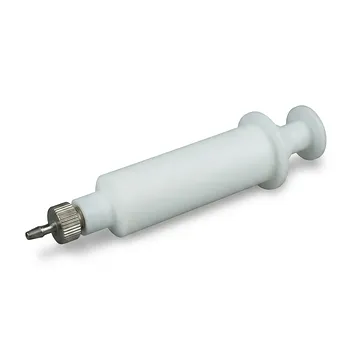
- High Temperature Chemical Resistant 50ml PTFE Syringe Customized Teflon Injector with Threaded Seal for Trace Analysis
- Custom PTFE Corrosion Resistant White Syringe with Threaded Luer Connector Compatibility
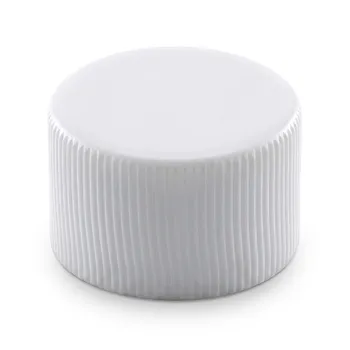
- Custom PTFE Sealing Caps and Corrosion Resistant Low Background Teflon Adapters
- Custom PTFE Insulating Gaskets and Corrosion Resistant Fluoropolymer Seals for Industrial Electrical Applications
People Also Ask
- How are custom PTFE parts used in the automotive sector? Enhance Vehicle Performance & Durability
- Why is PTFE's temperature stability important for sealing applications? Ensure Leak-Proof Performance from -200°C to 260°C
- What makes PTFE reliable for sealing applications? Unmatched Chemical & Thermal Stability
- How does PTFE's chemical resistance benefit seals? Ensure Leak-Free Performance in Harsh Environments
- What chemically aggressive media are encountered in the oil and gas industry, and how do PTFE seals handle them?