Polyimide (PI) is a strong high-temperature material, but it is not chemically equivalent to PTFE or PFA. As a binder or structural substrate beneath a fluoropolymer coating, PI can provide toughness, dimensional support, and strong adhesion to metals. Its main limitations are water absorption, hydrolysis, vulnerability to alkalis and concentrated acids, processing complexity, high cost, and questionable suitability for high-purity applications where any exposed or migrating non-fluoropolymer material could compromise the process.
PI is best treated as a mechanically useful support material that requires reliable fluoropolymer isolation. When the application demands broad chemical inertness, ultra-pure fluid contact, or continuous exposure across the full pH range, a pure fluoropolymer component is generally the more dependable choice.
Why Polyimide Is Considered in These Components
PI contributes mechanical support
Polyimides offer high mechanical toughness, strong adhesion to metal substrates, and exceptional thermal stability. These properties can make them attractive as a binder, backing layer, or structural element in apparatus that would be too mechanically weak if made solely from an unmodified fluoropolymer.
Fluoropolymers solve a different problem
PTFE, PFA, and related fluoropolymers provide the primary advantages required for chemical fluid handling: low surface energy, low friction, non-flammability, and exceptional resistance to many aggressive chemicals. Their weakness is often mechanical rather than chemical, including relatively low tensile strength and creep under sustained loads.
PI may therefore be used to reinforce or support a fluoropolymer-based design. That arrangement is effective only when the PI remains protected from the process fluid and does not introduce unacceptable contamination.
Chemical Limitations of Polyimide
Water absorption can affect performance
Compared with fully fluorinated polymers, PI has moderately high water absorption. Absorbed moisture can alter dimensional stability and material properties, which is important in precision laboratory apparatus, sealed interfaces, and components exposed to repeated wet and dry cycles.
The concern is not simply cosmetic swelling. Moisture uptake can change how the PI layer supports the fluoropolymer coating and may affect the stability of bonded or mechanically constrained assemblies.
Hydrolysis limits long-term exposure
PI can be vulnerable to hydrolysis, particularly when moisture and elevated temperature are combined. This creates a long-term durability concern for fluid transfer components that operate continuously with aqueous media or undergo hot-water, steam, or humid service.
A fluoropolymer coating may reduce this exposure, but the coating must remain continuous and durable. Any defect, damaged edge, permeation path, or poorly protected interface can expose the PI to the surrounding environment.
Strong bases are a significant concern
PI is susceptible to chemical attack by alkalis. This makes it a poor choice for direct contact with strongly basic cleaning solutions, caustic process fluids, or applications requiring broad compatibility throughout the alkaline end of the pH scale.
The limitation is especially important in laboratory systems because cleaning and decontamination fluids can be more aggressive than the normal process stream.
Concentrated acids can attack PI
PI is also vulnerable to concentrated acids. Although it tolerates many demanding thermal environments, thermal stability should not be confused with universal chemical resistance.
A component may remain structurally stable at a high temperature while its PI binder or substrate is degraded by the specific acid chemistry. Material selection must therefore evaluate chemical composition and concentration, not temperature alone.
Chemical resistance is narrower than that of fully fluorinated polymers
PTFE and PFA are generally selected when the design requires the broadest practical resistance to aggressive chemicals and extreme pH conditions. PI does not provide the same level of protection against the combined effects of acids, bases, moisture, and elevated temperature.
This distinction matters when PI is used behind a thin coating. The assembly inherits the durability limits of the least-protected layer, not merely the apparent resistance of the exposed fluoropolymer surface.
Physical and Manufacturing Limitations
PI is difficult and expensive to process
Polyimides are significantly more expensive and more difficult to process than many conventional engineering polymers. Manufacturing may require specialized forming, curing, machining, or bonding methods, depending on the grade and component geometry.
These constraints become more consequential for complex laboratory manifolds, precision transfer components, custom fittings, and small production runs.
Coating integrity becomes a design requirement
When PI supports a fluoropolymer coating, the coating is responsible for chemical isolation. The design must account for edges, holes, joints, fasteners, scratches, abrasion, and any location where the coating may be thin or discontinuous.
A coating that performs well on a flat test coupon may not provide equivalent protection on a complex component. The interface and exposed boundaries require the same attention as the bulk materials.
Thermal capability does not guarantee chemical durability
PI can withstand temperatures above 500°C in suitable forms or conditions, which is a major advantage over many polymers. However, this does not mean that a PI-containing assembly is suitable for every high-temperature chemical service.
Moisture, acids, and alkalis can remain limiting factors even when the temperature is within PI's thermal capability. Thermal rating and chemical compatibility must be treated as separate qualification requirements.
Fluoropolymer processing remains specialized
The fluoropolymer layer introduces its own manufacturing challenges. PTFE and other highly inert fluoropolymers can have difficult melt processability, poor surface adhesion, limited cross-linking capability, and resistance to chemical modification.
Precision, non-standard labware and fluid-control parts may therefore require specialized fabrication, including dedicated precision CNC machining. When PI is added as a binder or support, the manufacturer must solve both the PI-processing problem and the fluoropolymer-attachment problem.
Purity and Application Constraints
PI is not the default choice for high-purity fluid paths
The primary process-contact material in high-purity laboratory equipment is usually a pure fluoropolymer such as PTFE or PFA. PI is less attractive when the application requires ultra-pure fluid handling, minimal extractables, or strict control over contact materials.
Even if PI is nominally isolated from the fluid, the design must consider possible exposure through defects, permeation, wear, interfaces, and manufacturing residues.
Food-contact and laboratory purity requirements are separate issues
PI is generally unsuitable where food-contact qualification or especially stringent laboratory purity requirements are central to the application. A material can have excellent thermal and mechanical properties yet still be inappropriate because its chemical stability, processing residues, or regulatory qualification do not match the intended service.
The correct question is not whether PI is a high-performance polymer. It is whether the complete PI-fluoropolymer assembly meets the required purity and regulatory standard.
Structural placement does not eliminate risk
Placing PI behind a fluoropolymer changes its exposure, but it does not make PI chemically inert. The material remains part of the system and can become relevant if the coating is breached or if the service conditions promote moisture or chemical transport through the fluoropolymer layer.
For this reason, PI is more defensible as an isolated structural element than as an exposed wetted surface or an unprotected binder in a fluid path.
Understanding the Trade-offs
PI improves strength but narrows chemical freedom
PI can compensate for the mechanical limitations of unmodified fluoropolymers, including low tensile strength and creep under sustained loads. The trade-off is that the assembly may lose the broad chemical compatibility and purity margin associated with an all-fluoropolymer design.
This is a classic material-selection compromise: PI improves structural performance, while the fluoropolymer supplies chemical protection.
Pure fluoropolymers are not mechanically perfect
PTFE and PFA are not automatically the best choice for every load-bearing geometry. Their tendency toward creep may require increased wall thickness, appropriate support, or encapsulated metal designs in heavy-duty fluid handling and sample-preparation equipment.
The presence of this limitation does not make PI chemically equivalent to a fluoropolymer. It means the designer must decide whether mechanical reinforcement or chemical universality is the dominant requirement.
Coatings can create hidden failure modes
A fluoropolymer coating can appear chemically resistant while the underlying PI experiences damage at a defect or exposed interface. Failure may develop beneath the visible surface and may be difficult to detect until adhesion, dimensional stability, or structural integrity has already been affected.
Qualification should therefore evaluate the complete construction, including coating adhesion, edge protection, immersion or exposure conditions, thermal cycling, and mechanical loading.
Lower-crystallinity fluoropolymers may be better for fabrication
Pure fluoropolymer homopolymers can be highly crystalline, difficult to dissolve, and demanding to process or crosslink. Fluoropolymer copolymers can reduce crystallinity and improve flexibility, film formation, solubility, or processing behavior while retaining important chemical resistance.
Where the problem is coating formation or component fabrication, selecting a suitable fluoropolymer grade may be preferable to introducing PI into a chemically demanding contact zone.
Making the Right Choice for Your Goal
The correct choice depends on whether the component is optimized primarily for structural performance, chemical purity, or fabrication practicality.
- If your primary focus is maximum chemical inertness: Use a pure fluoropolymer wetted surface and avoid relying on PI in any location that could contact the process fluid.
- If your primary focus is mechanical reinforcement: Consider PI as an isolated support or binder, while designing the fluoropolymer layer and interfaces to prevent chemical exposure.
- If your primary focus is ultra-pure laboratory service: Prefer qualified PTFE or PFA constructions and verify the complete assembly for extractables, exposed interfaces, and manufacturing residues.
- If your primary focus is aggressive alkaline or concentrated-acid service: Treat PI as a compatibility risk and select a fully fluorinated material unless the PI can be demonstrably and permanently isolated.
- If your primary focus is high-temperature structural stability: PI may be useful, but verify chemical exposure, moisture, coating integrity, and thermal cycling rather than relying on its temperature rating alone.
- If your primary focus is complex or custom fabrication: Compare PI-supported constructions with machinable or film-forming fluoropolymer copolymers and account for the specialized processing required by both materials.
A PI-fluoropolymer assembly is suitable only when its structural benefits justify the added chemical, purity, processing, and interface controls.
Summary Table:
| Limitation | Description | Impact on Fluoropolymer-Coated Apparatus |
|---|---|---|
| Water Absorption | PI absorbs moisture, affecting dimensional stability. | Precision and sealing integrity may be compromised in wet environments. |
| Hydrolysis | PI degrades with moisture and heat over time. | Long-term durability in aqueous or steam service is reduced. |
| Alkali Vulnerability | PI is attacked by strong bases. | Contact with alkaline cleaners or process fluids can cause damage. |
| Concentrated Acid Vulnerability | PI is not resistant to concentrated acids. | Exposure to strong acids can degrade the material. |
| Narrower Chemical Resistance | PI lacks the broad chemical resistance of PTFE/PFA. | Overall chemical compatibility is limited. |
| Processing Difficulty | PI is expensive and hard to process. | Manufacturing costs and lead times increase. |
| Coating Integrity Dependency | Protection relies on a flawless fluoropolymer coating. | Defects or edge exposure can lead to PI degradation. |
| High-Temperature vs. Chemical Durability | Thermal stability does not guarantee chemical resistance. | High-temp applications may still fail due to chemical attack. |
| Purity Concerns | PI may introduce contaminants. | For ultra-pure processes, PI is often unsuitable. |
| Structural vs. Chemical Trade-off | PI adds strength but reduces chemical freedom. | Design must balance mechanical support with chemical inertness. |
Need a lab apparatus that balances mechanical strength and chemical purity? Our PTFE and PFA products are engineered for maximum chemical resistance and purity, ensuring reliable performance in your most demanding applications. Trust KINTEK for high-performance fluoropolymer solutions that meet your exact specifications. Contact us today to discuss your requirements and discover how our expertise can benefit your laboratory.
Related Products
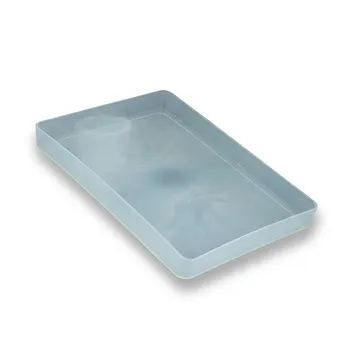
- Customizable PFA Square Tray Corrosion Resistant High Temperature Large Petri Dish Electrolytic Cell
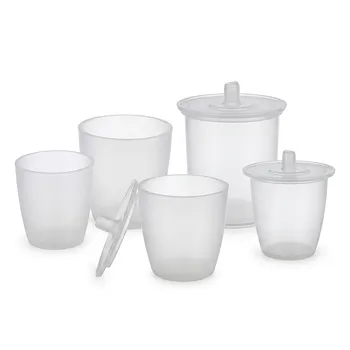
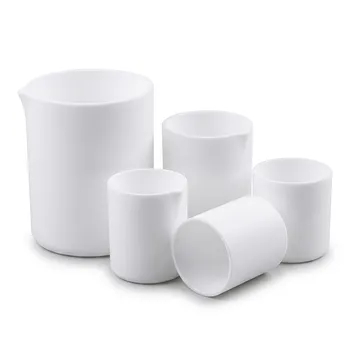
- High Purity PFA Crucible and Corrosion Resistant PTFE Beaker for Trace Analysis and Custom Laboratory Applications
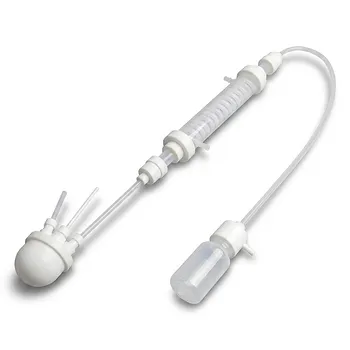
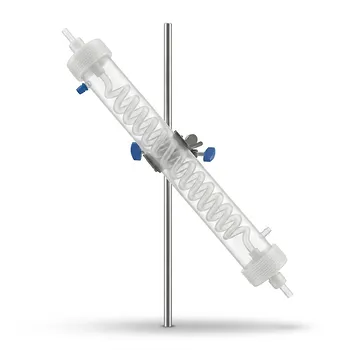
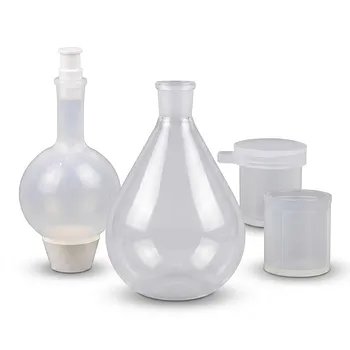
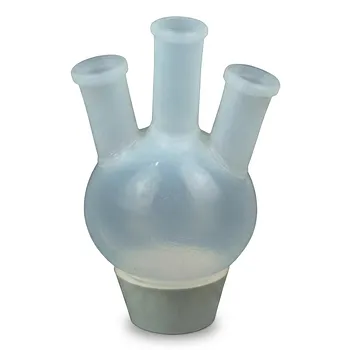
- Corrosion Resistant Hydrogen Fluoride Reflux Apparatus PTFE Flask Condenser Separatory Funnel Collection Bottle High Temperature Laboratory System
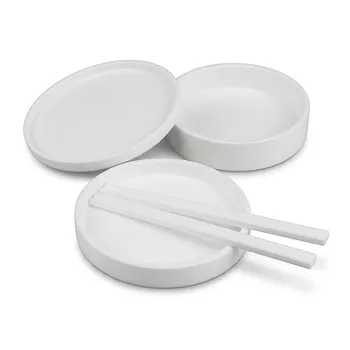
- Custom PTFE Petri Dish 200mm High Purity Corrosion Resistant Low Background Laboratory Ware
- Custom PTFE Petri Dish 90mm Diameter Corrosion Resistant Low Background High Purity Labware
People Also Ask
- How are electrolytic cells utilized in the Hall-Héroult process? Optimizing Purity and Energy Efficiency
- What are the primary components required for the construction of a standard electrolytic cell? Essential Hardware Guide
- How is current efficiency calculated in the context of an electrolytic cell? Formula and Optimization Guide
- How are electrolytic cells applied in wastewater treatment and contaminant removal? Achieve Chemical-Free Purification
- What is the fundamental operating principle of an electrolytic cell? Master Energy-Driven Redox Reactions