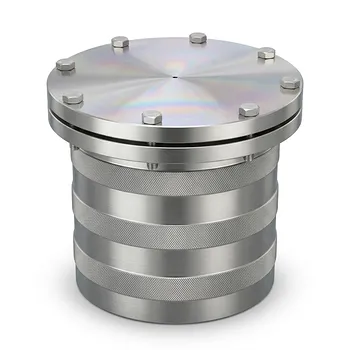
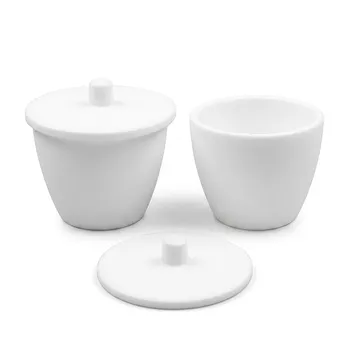
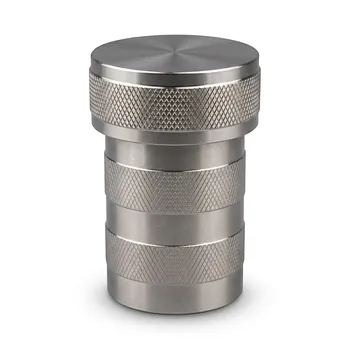
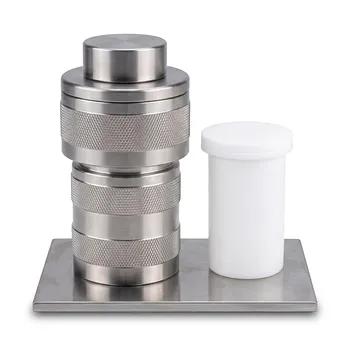
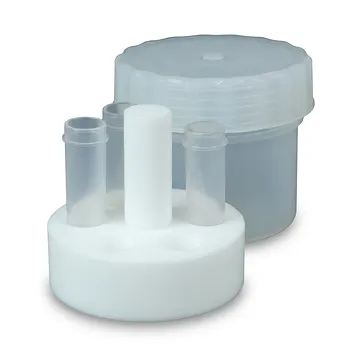
A Teflon-lined stainless steel autoclave serves as a pressurized reaction vessel that enables the hydrothermal synthesis of molybdenum disulfide (MoS2) by creating a controlled, high-temperature, and high-pressure environment. It functions as a dual-layered system where the inner Teflon liner provides absolute chemical inertness to protect the reaction’s purity, while the outer stainless steel shell provides the mechanical strength necessary to contain the intense autogenous pressure generated during the process.
The autoclave is the critical enabler for MoS2 synthesis, providing a sealed environment that allows chemical precursors to react at temperatures and pressures far exceeding their standard boiling points. By isolating corrosive reagents from the structural metal casing, the vessel ensures both the safety of the operator and the structural integrity of the synthesized nanomaterials.
Creating the Hydrothermal Reaction Environment
Maintaining High Autogenous Pressure
The primary role of the autoclave is to provide a sealed environment where the internal pressure rises naturally as the liquid precursors are heated. This high-pressure state is essential for forcing precursors like sodium molybdate and thiourea into a solution-state where they can react more effectively.
Enabling High-Temperature Liquid Phase Reactions
MoS2 synthesis often requires temperatures reaching 180°C to 200°C, which would cause standard aqueous solutions to evaporate in an open system. The autoclave keeps the solvent in a liquid or subcritical state, allowing for the deep reaction and thorough crystallization of molybdenum and sulfur sources.
The Critical Role of the PTFE (Teflon) Liner
Chemical Inertness and Corrosion Resistance
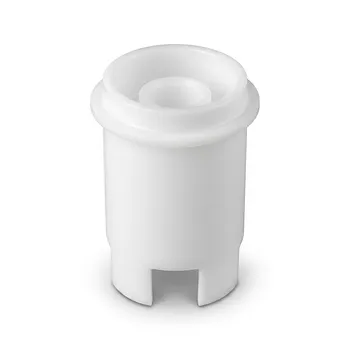
The high-purity polytetrafluoroethylene (PTFE) liner is used because it is almost entirely non-reactive to the strong acids, bases, and polar solvents used in MoS2 growth. It prevents the acidic or corrosive intermediates produced during the 24-hour reaction cycles from attacking the stainless steel body.
Preventing Metal Impurity Contamination
By acting as a physical barrier, the Teflon liner ensures that the reaction precursors never come into direct contact with the metal walls. This isolation is vital for maintaining the high purity and structural stability of the MoS2, especially when synthesizing sensitive variations like doped catalysts or metastable 1T-MoS2.
Facilitating Specific Morphologies
The stable, constant pressure environment within the liner is instrumental in controlling the physical structure of the final product. It facilitates the formation of complex geometries, such as hollow MoS2 microspheres, and supports the in-situ intercalation of ions required for specific phase transitions.
Understanding the Trade-offs and Limitations
Temperature Ceiling of PTFE
While Teflon is highly resistant to chemicals, it has a strict thermal limit, typically around 250°C. Exceeding this temperature can cause the liner to soften or deform, leading to potential seal failure or contamination of the MoS2 sample.
Pressure Sensitivity and Fill Ratios
The internal pressure is highly dependent on the "fill ratio" (the percentage of the liner filled with liquid). If the liner is overfilled, the thermal expansion of the liquid can generate pressures that exceed the safety ratings of the stainless steel shell, posing a significant explosion risk.
Slow Cooling Requirements
Rapidly cooling a hydrothermal autoclave can lead to uneven contraction between the Teflon liner and the steel shell. This can cause the liner to collapse or crack, which compromises the seal and increases the risk of metal contamination in subsequent synthesis runs.
Applying Autoclave Technology to Your Synthesis
When utilizing a Teflon-lined autoclave for MoS2 growth, your operational parameters should be dictated by your specific material requirements.
- If your primary focus is Phase Purity (e.g., 1T-MoS2): Ensure the autoclave is rated for at least 200°C to facilitate the necessary subcritical conditions and ion intercalation.
- If your primary focus is Morphological Control: Maintain a consistent fill ratio (typically 60-80%) to ensure reproducible autogenous pressure, which is key for hollow microsphere formation.
- If your primary focus is Minimizing Contamination: Dedicate specific liners to specific chemistries and utilize the smooth surface of the PTFE for aggressive cleaning between runs.
The precise synergy between the chemical resistance of Teflon and the structural durability of stainless steel is what makes the successful, high-purity growth of molybdenum disulfide possible.
Summary Table:
| Component | Primary Function | Key Benefit |
|---|---|---|
| Stainless Steel Shell | Mechanical pressure containment | Ensures safety & structural integrity under high pressure |
| PTFE (Teflon) Liner | Chemical isolation & inertness | Prevents metal contamination; ensures high-purity MoS2 |
| Sealed Environment | Generates autogenous pressure | Enables liquid-phase reactions far above boiling points |
| Internal Volume | Controlled fill ratio (60-80%) | Facilitates reproducible morphological control (microspheres) |
Elevate Your Materials Synthesis with KINTEK
At KINTEK, we maintain an absolute focus on high-performance fluoropolymer materials to ensure your hydrothermal synthesis achieves unmatched purity and precision. From high-purity hydrothermal synthesis liners and microwave digestion vessels to custom PTFE/PFA reaction apparatus, we provide the essential tools required for advanced nanomaterial growth like MoS2.
Whether you need everyday labware (beakers, tubes, reagent bottles) or complex, custom CNC-machined parts and bespoke laboratory setups, our end-to-end fabrication is equipped to deliver high-volume orders and non-standard components tailored to your research.
Contact us today to discuss how our expertise in fluoropolymer laboratory supplies can enhance your lab's efficiency and experimental outcomes.
References
- Shuai Liu, Guangsuo Yu. Stirring-Assisted In Situ Construction of Highly Dispersed MoS2/g-C3N4 Heterojunctions with Enhanced Edge Exposure for Efficient Photocatalytic Hydrogen Evolution. DOI: 10.3390/catal15090808
This article is also based on technical information from Kintek Knowledge Base .
Related Products
- Custom TFM Reaction Vessel with Stainless Steel Jacket and PTFE Inner Cup for High Corrosion Resistance
- High Purity Corrosion Resistant Teflon Crucible Low Background Laboratory PTFE Vessel for Trace Analysis and Acid Digestion
- High Temperature Corrosion Resistant Hydrothermal Synthesis Reactor with TFM Inner Liner and Straight Cylinder Design
- PTFE Lined High Pressure Digestion Vessel 50ml High Temperature Hydrothermal Synthesis Tank
- High Purity PTFE Microwave Digestion Vessel Replacement Liner for Acid Sample Preparation and Trace Analysis
People Also Ask
- Why are high-performance pressure-resistant reaction vessels required for oxygen-assisted hydrothermal conversion at 150 °C?
- How do magnetic stirring and reaction vessels impact MOF-derived carbon quality? Optimize Your Composite Performance
- Why are high-quality fluoropolymer-lined reaction vessels required for alk-Ti3C2Tx MXene? Ensure Purity & HF Resistance
- Why are PTFE-lined reaction vessels necessary for forced degradation studies? Ensure high-purity results and accuracy.
- Why is a high-purity PTFE lined reaction vessel required for the acidic etching of MXenes? Ensure Material Purity.