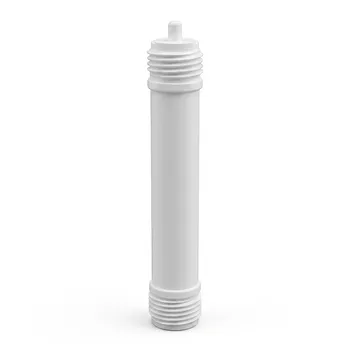
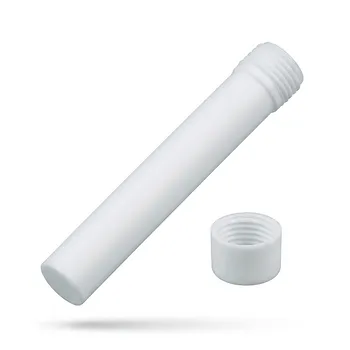
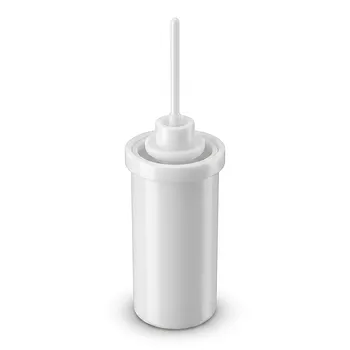
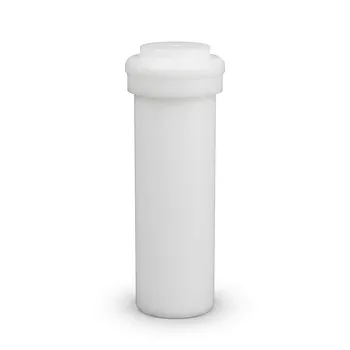
Critical requirements for hydrothermal synthesis liners center on three pillars: chemical inertness, thermal stability, and structural integrity under high pressure. These liners must act as an absolute barrier between the reaction medium and the metal autoclave, preventing corrosion and sample contamination. Their performance directly dictates the purity, morphology, and crystallinity of the resulting micro-nanomaterials.
The success of high-pressure hydrothermal synthesis depends on the liner's ability to maintain a chemically isolated, hermetically sealed environment. This ensures that the high-temperature and high-pressure conditions drive crystal growth rather than equipment degradation.
Essential Material Characteristics
Superior Chemical Inertness
The liner must be completely non-reactive to a wide range of aggressive reagents, including strong acids (like sulfuric acid), bases, and organic solvents (such as GVL or ethylene glycol). This inertness prevents the reaction solution from attacking the metal shell of the autoclave, which would otherwise lead to vessel failure.
High Thermal Stability
Liner materials must maintain their physical properties at elevated temperatures. Standard PTFE (Polytetrafluoroethylene) liners are suitable for environments up to approximately 200–220 °C, while PPL (Polyphenylene) liners extend the safe operating range to 240–280 °C.
Robust Compressive Strength
Under high-pressure conditions, the liner must possess the physical performance to resist deformation. It must withstand the internal solvent-thermal pressure while maintaining a tight seal against the autoclave lid to prevent leakage.
Impact on Synthesis and Quality Control
Ensuring Product Purity
By isolating the reaction from the stainless steel autoclave body, the liner prevents metal ion leaching. This is critical for synthesizing high-purity materials like copper-based chalcogenides or high-entropy metal-organic frameworks (HE-MOFs) where phase integrity is paramount.
Morphological Control and Nucleation
The non-stick properties of fluoropolymers like PTFE and PFA prevent reaction liquids from adhering to or reacting with the vessel walls. This facilitates slow, uniform crystal nucleation and growth, resulting in materials with regular structural morphology and high crystallinity.
Facilitating Product Recovery
The non-stick nature of the liner is not only vital for the reaction itself but also for post-experiment processing. It allows for the easy recovery of synthesized powders and simplifies the cleaning process, ensuring that subsequent experiments are not contaminated by residual materials.
Understanding the Trade-offs
Temperature Limitations
While PTFE is the industry standard for its chemical resistance, it has a distinct thermal ceiling. Exceeding its recommended temperature (typically 220°C) can cause the liner to soften or "creep," leading to seal failure or permanent deformation.
Material Selection vs. Cost
For specialized applications involving extremely aggressive media or temperatures beyond the range of polymers, researchers must turn to quartz glass or noble metals (gold, platinum, or silver). These materials offer superior performance but significantly increase the cost and complexity of the hardware.
Sealing Performance vs. Reusability
While liners are designed for repeated use, the high-pressure environment eventually causes mechanical wear on the sealing surfaces. Over-tightening or thermal cycling can lead to micro-cracks, which compromise the closed-system environment necessary for steady-state reactions.
Selecting the Optimal Liner for Your Application
How to Apply This to Your Project
To ensure safety and scientific accuracy, select your liner material based on the specific thermal and chemical profile of your synthesis.
- If your primary focus is standard acidic/alkaline synthesis below 220°C: High-purity PTFE remains the most cost-effective and reliable choice for general laboratory use.
- If your primary focus is high-temperature solvothermal reactions (up to 280°C): Utilize PPL (Polyphenylene) liners to ensure the vessel maintains its shape and seal at higher thermal loads.
- If your primary focus is extreme chemical purity or organic solvent stability: Consider PFA (Perfluoroalkoxy) liners, which offer enhanced chemical resistance and a slightly higher thermal threshold than standard PTFE.
- If your primary focus is ultra-high temperature or metallic-sensitive research: Explore specialized liners made of quartz glass or noble metals to eliminate polymer degradation and metal contamination entirely.
Selecting the correct liner material is the first and most critical step in ensuring a safe, repeatable, and high-quality hydrothermal synthesis.
Summary Table:
| Requirement | Key Feature | Impact on Synthesis |
|---|---|---|
| Chemical Inertness | Resistance to aggressive reagents | Prevents autoclave corrosion & metal ion leaching |
| Thermal Stability | PTFE (≤220°C) / PPL (≤280°C) | Prevents liner deformation or "creep" during heating |
| Structural Integrity | High compressive strength | Maintains a hermetic seal under high internal pressure |
| Surface Property | Non-stick fluoropolymer | Enables uniform nucleation and easy product recovery |
Precision-Engineered Solutions for Your High-Pressure Synthesis
Maximize the success of your high-pressure experiments with KINTEK’s specialized fluoropolymer expertise. We offer an exhaustive range of laboratory supplies, from everyday basic labware like beakers, crucibles, and reagent bottles to high-purity trace analysis instruments and advanced hydrothermal synthesis liners.
Whether you require standard PTFE or PFA components or complex, non-standard machined parts, our end-to-end custom CNC fabrication ensures every piece meets your exact specifications. Our portfolio extends to comprehensive fluid transfer components, sample prep tools, and advanced reaction apparatus such as microwave digestion vessels and electrochemical cells, all crafted with an absolute focus on high-performance materials.
Ready to elevate your lab's performance? Contact KINTEK today for bespoke laboratory setups and high-volume orders!
References
- Pusit Pookmanee, Thipsuda Pookmanee. Green Hydrothermal Synthesis of Dual‐Phase Submicron Cu <sub>2</sub> O‐CuO Particles Using Corn Husk Extract for Enhanced Antibacterial Applications. DOI: 10.1002/slct.202502184
This article is also based on technical information from Kintek Knowledge Base .
Related Products
- High Temperature Corrosion Resistant Hydrothermal Synthesis Reactor with TFM Inner Liner and Straight Cylinder Design
- PTFE Lined High Pressure Digestion Vessel 50ml High Temperature Hydrothermal Synthesis Tank
- Custom PTFE Sleeves and Hollow Rods for Advanced Applications
- High Pressure Custom TFM Reactor Stainless Steel Outer Vessel PTFE Inner Cup for Corrosive Synthesis
- High Purity PTFE Microwave Digestion Vessel Replacement Liner for Acid Sample Preparation and Trace Analysis
People Also Ask
- What is the role of a corrosion-resistant reactor in the synthesis of lignin-based carbon dots? Ensure Maximum Purity
- What are the technical advantages of using hydrothermal synthesis reactors for advanced electronic & optical nanomaterials?
- How does a hydrothermal synthesis reactor facilitate the production of crystalline materials with tailored morphologies? Precision Crystal Growth
- Why is the sealing reliability of a hydrothermal synthesis reactor critical for 24-hour cycles? Ensure Nano-Precision
- What role do hydrothermal synthesis reactors play in CQD preparation? Achieve High-Purity Nanomaterial Synthesis