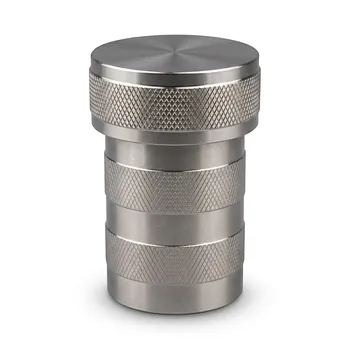
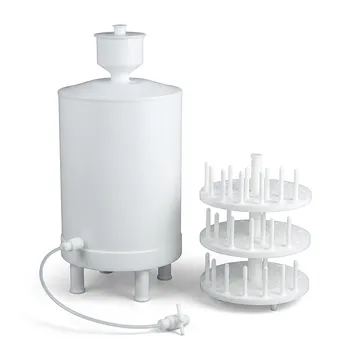
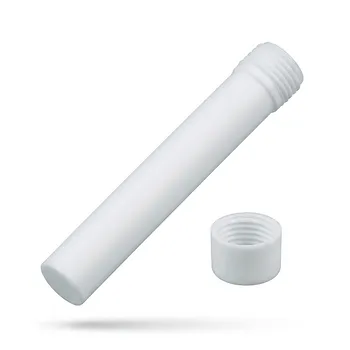
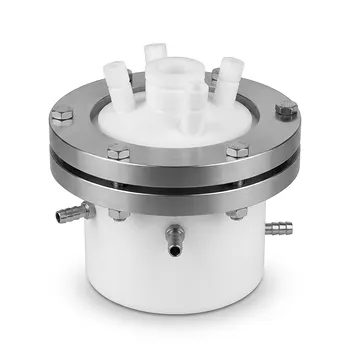
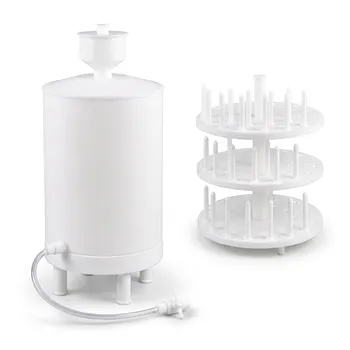
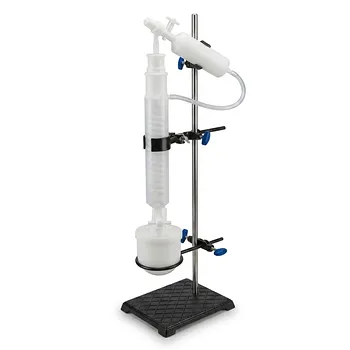
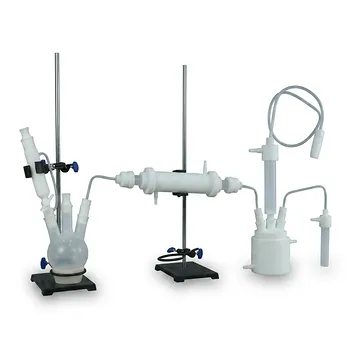
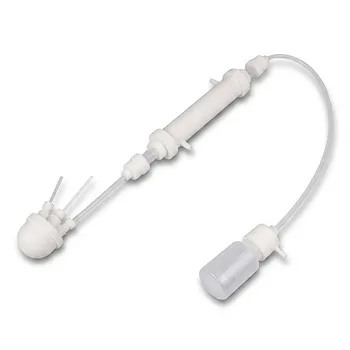
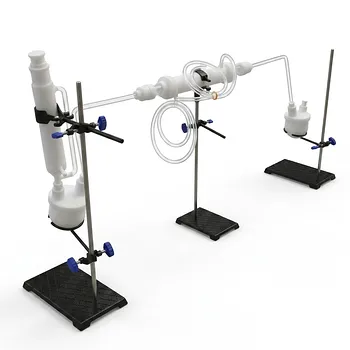
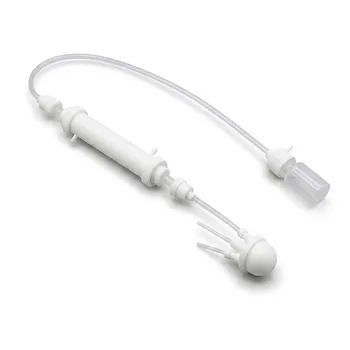
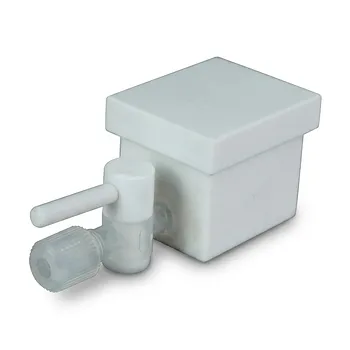
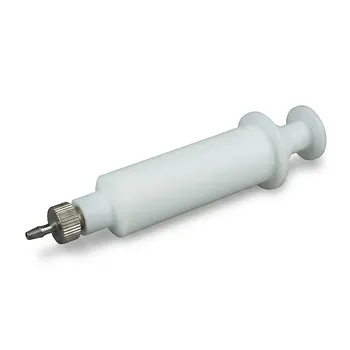
The use of PTFE-lined autoclaves is critical for UiO-66-NH2 synthesis because they provide a chemically inert, non-stick environment that withstands harsh solvothermal conditions. These vessels allow for high-temperature (120°C) and high-pressure reactions where solvents remain liquid, enhancing reactant solubility and facilitating the growth of high-crystallinity frameworks while preventing contamination from the metal reactor body.
The primary advantage of PTFE-lined autoclaves lies in their ability to isolate sensitive MOF precursors from corrosive environments and metal impurities. This ensures the structural integrity and phase purity of zirconium-based frameworks like UiO-66-NH2 under subcritical conditions.
Achieving Structural Integrity through Chemical Inertness
Resisting Acidic and Organic Solvents
The synthesis of UiO-66-NH2 often involves acidic reaction environments and organic solvents like DMF (dimethylformamide). A PTFE (polytetrafluoroethylene) liner is essential because it offers superior corrosion resistance, preventing these chemicals from attacking the autoclave's stainless steel body at 120°C.
Eliminating Metal Ion Contamination
A high-purity PTFE liner creates a chemically inert interface that blocks the leaching of metal ions from the reactor walls into the solution. This is vital for maintaining the optical performance and phase purity of the MOF, as stray metal ions can disrupt the precise zirconium-based coordination chemistry.
Optimizing Reaction Dynamics and Recovery
Facilitating Subcritical Solvothermal Conditions
The sealed autoclave environment allows solvents to reach subcritical states, staying liquid well above their atmospheric boiling points. These conditions significantly enhance the solubility and reactivity of precursors, leading to the supersaturation required for the nucleation and slow growth of high-quality crystals.
Maximizing Yield with Non-Stick Surfaces
PTFE is highly hydrophobic and possesses famous non-stick properties that prevent reaction products from adhering to the vessel walls. This ensures that the synthesized MOF crystals are easily recovered and reduces the risk of cross-contamination between different reaction batches.
Understanding the Trade-offs and Limitations
Temperature and Pressure Constraints
While PTFE is exceptionally inert, it has physical limits, typically providing a safe operating window up to 150°C to 200°C. Exceeding these temperatures can lead to liner deformation or "creep," which may compromise the seal and safety of the high-pressure system.
Mechanical Sensitivity
PTFE is a relatively soft material compared to the metal autoclave body and can be easily scratched by metal spatulas or abrasive cleaning. Damage to the liner surface can create sites for precursor entrapment, undermining the non-stick benefits and making thorough decontamination more difficult.
How to Apply This to Your MOF Synthesis
Selecting the Right Approach
- If your primary focus is high crystallinity: Ensure the autoclave is strictly sealed to maintain subcritical pressure, which promotes the slow, organized growth of the zirconium framework.
- If your primary focus is product purity: Use high-purity PTFE liners and avoid metal tools during recovery to prevent the introduction of foreign ions or liner fragments.
- If your primary focus is reactor longevity: Always stay within the 120°C–150°C range recommended for PTFE to prevent thermal degradation and ensure a repeatable reaction environment.
By leveraging the inertness and subcritical capabilities of PTFE-lined autoclaves, researchers can consistently produce high-performance MOFs with precise heterojunction structures and minimal impurities.
Summary Table:
| Feature | Benefit for UiO-66-NH2 Synthesis | Key Advantage |
|---|---|---|
| Chemical Inertness | Resists corrosive DMF and acidic environments | Prevents liner degradation and reaction interference |
| Metal-Free Interface | Eliminates leaching of ions from steel reactor walls | Ensures high phase purity and optical performance |
| Subcritical Support | Maintains liquid state of solvents at 120°C+ | Enhances reactant solubility and crystal nucleation |
| Non-Stick Surface | Prevents MOF crystals from adhering to vessel walls | Maximizes product recovery and simplifies cleaning |
| Thermal Stability | Provides safe operating window up to 200°C | Ideal for stable, long-duration solvothermal reactions |
Elevate Your MOF Synthesis with KINTEK’s Precision Fluoropolymer Labware
Precision is paramount in advanced material research. KINTEK manufactures virtually all imaginable laboratory supplies crafted from high-performance PTFE and PFA to ensure your synthesis environment remains ultra-pure and chemically inert. From essential hydrothermal synthesis liners, microwave digestion vessels, and high-purity trace analysis instruments to everyday labware like beakers, crucibles, and reagent bottles, we provide the reliability your research demands.
Whether you require standard consumables—such as centrifuge tubes, stirring bars, and filtration tools—or complex, custom CNC-machined parts and bespoke laboratory setups, our end-to-end fabrication capabilities have you covered. We specialize in fluid transfer components (tubing, valves, fittings) and advanced reaction apparatus like electrochemical cells and battery testing fixtures, maintaining an exclusive focus on high-performance fluoropolymers.
Ready to eliminate contamination and optimize your yields? Contact KINTEK today to discover how our expert-crafted solutions can support your next breakthrough!
References
- Taichong Chitboonyakasem, Jian Zhou. Electronic Modulation of Cu Sites via Iron Incorporation in Cu <sub>5</sub> FeS <sub>4</sub> Bimetallic Sulfide for High‐Efficiency Oxygen Reduction Reaction. DOI: 10.1002/rar2.70108
This article is also based on technical information from Kintek Knowledge Base .
Related Products
- PTFE Lined High Pressure Digestion Vessel 50ml High Temperature Hydrothermal Synthesis Tank
- High Temperature Corrosion Resistant Hydrothermal Synthesis Reactor with TFM Inner Liner and Straight Cylinder Design
- Custom TFM Reaction Vessel with Stainless Steel Jacket and PTFE Inner Cup for High Corrosion Resistance
- High Pressure Custom TFM Reactor Stainless Steel Outer Vessel PTFE Inner Cup for Corrosive Synthesis
- PTFE Acid Steam Cleaning System HF Resistant Trace Analysis Beaker Digestion Tank Customizable
People Also Ask
- What are the benefits of using a PTFE-lined vessel for carbon-sulfur cathode treatment? Maximize Purity & Performance
- Why are PTFE-lined pressure digestion vessels required for the preparation of Ag/CeO2 catalysts? Purity & Performance
- What is the function of high-pressure PTFE digestion vessels in mineral analysis? Optimize Sample Mineralization
- What safety features are typically incorporated into high-pressure PTFE digestion vessel designs? Ensure Lab Safety
- What is the function of PTFE lined high-pressure vessels in g-C3N4 synthesis? Achieve High-Purity Material Growth