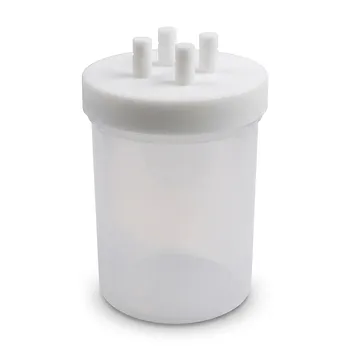
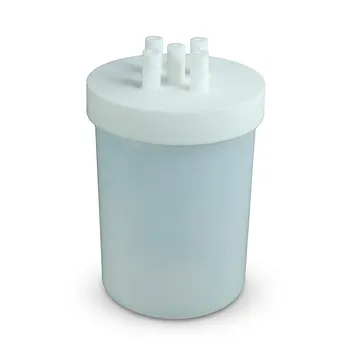
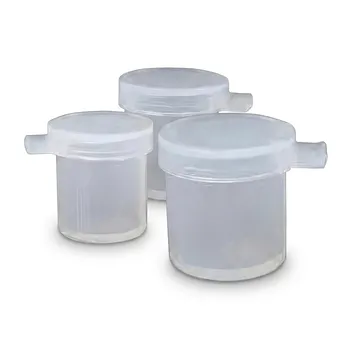
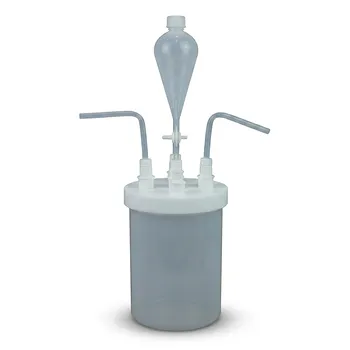
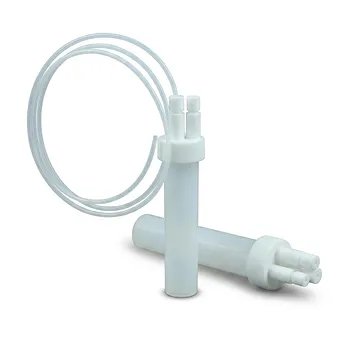
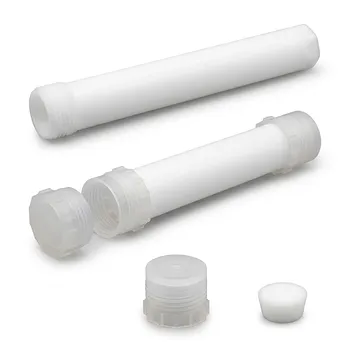
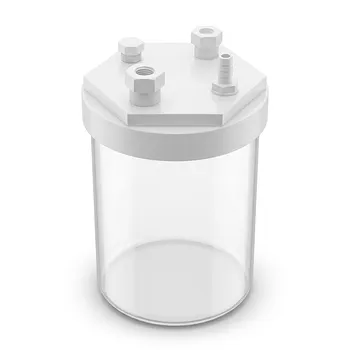
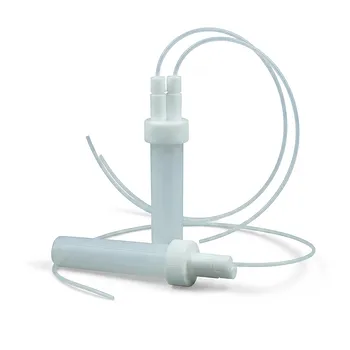
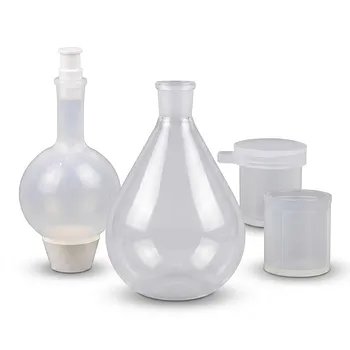
PFA sealed vessels represent a significant shift toward operational efficiency and sample purity in modern analytical chemistry. These vessels provide a streamlined, safer alternative to traditional steel-jacketed bombs by eliminating the risk of metal-based contamination and simplifying the digestion workflow through direct heating compatibility.
PFA sealed vessels prioritize laboratory safety and ultra-trace accuracy by removing corrosive metal components from the digestion process. While they operate at lower pressures than steel-jacketed bombs, their superior chemical inertness and transparency make them the definitive choice for high-sensitivity elemental analysis.
Streamlining the Digestion Workflow
Simplified Operational Handling
Unlike high-pressure steel-jacketed bombs, PFA vessels do not require complex assembly or the tightening of heavy metal bolts. This simpler operation significantly reduces the time spent on sample preparation and minimizes the physical strain on laboratory personnel.
Hotplate Integration for Geological Samples
Due to the specific pressure-bearing characteristics of PFA, many complex matrices, including geological samples, can be fully decomposed using a standard hotplate. By utilizing ultrasonic pretreatment followed by hotplate heating, researchers can achieve complete dissolution without the need for cumbersome high-pressure hardware.
Increased Throughput
The lightweight nature of PFA vessels allows for the simultaneous processing of a larger number of samples on a single heating surface. This time-efficient operation is critical for high-volume laboratories that require consistent results without the bottleneck of limited high-pressure bomb availability.
Superior Contamination and Background Control
Elimination of External Metal Interference
Steel-jacketed bombs are prone to corrosion from acid mists, which can lead to external cross-contamination of the sample during handling. PFA vessels are entirely metal-free, ensuring that the laboratory environment and the samples remain protected from iron, chromium, or nickel interference.
Ultra-Low Trace Element Background
PFA is recognized for its exceptional chemical inertness and extremely low levels of leachable impurities. This is vital for high-sensitivity trace analysis of elements such as mercury (Hg), lead (Pb), and zinc (Zn), where even minute background noise can invalidate results.
Reduced Ion Adsorption
The internal walls of PFA vessels are extremely smooth and possess low surface energy, which prevents the adsorption of metal ions. This ensures that analytes like silver (Ag) do not stick to the container walls, leading to higher recovery rates and more accurate final concentrations.
Enhanced Safety and Material Advantages
Mitigating Physical Safety Risks
High-pressure steel bombs carry inherent risks of mechanical failure or explosive decompression if not maintained perfectly. PFA vessels reduce safety risks because they are designed to handle moderate pressures and are used in open or semi-closed heating environments where pressure management is more predictable.
Transparency and Visual Monitoring
One of the most significant advantages of PFA over PTFE-lined steel bombs is its transparency and clarity. This allows analysts to observe the digestion progress in real-time, facilitating the identification of minute precipitates or incomplete reactions that would otherwise remain hidden inside a steel jacket.
Resistance to Volatile Element Loss
High-performance PFA seals are designed to prevent the escape of volatile elements during the heating process. This ensures that the chemical integrity of the sample is maintained, providing a pure and complete digest for subsequent instrumental detection.
Understanding the Trade-offs
Pressure and Temperature Limitations
While PFA vessels are highly versatile, they cannot match the extreme pressure ratings of steel-jacketed PTFE bombs, which are designed for the most recalcitrant organic matrices. PFA is generally limited to temperatures around 200°C; exceeding these limits can lead to material deformation or seal failure.
Matrix-Specific Requirements
Certain refractory minerals or highly stable organic compounds may still require the intense pressure provided by a steel-jacketed system to achieve total dissolution. In these niche cases, the mechanical strength of the steel jacket is a necessary trade-off for the increased risk of contamination and operational complexity.
Applying This to Your Laboratory Goals
Choosing the Right Tool for the Task
Selecting between PFA vessels and steel-jacketed bombs depends on your specific analytical requirements and safety protocols.
- If your primary focus is ultra-trace analysis (ppt levels): PFA vessels are the superior choice due to their metal-free construction and minimal leaching.
- If your primary focus is high-throughput geological testing: Utilize PFA vessels with ultrasonic pretreatment to bypass the slow assembly times of traditional bombs.
- If your primary focus is the digestion of highly recalcitrant organic materials: High-pressure steel-jacketed PTFE bombs remain necessary to reach the pressures required for total decomposition.
- If your primary focus is visual process control: PFA is the only viable option that allows you to monitor for precipitates or color changes during the reaction.
The transition to PFA sealed vessels offers a cleaner, safer, and more efficient path for the majority of modern trace element digestion needs.
Summary Table:
| Feature | PFA Sealed Vessels | Steel-Jacketed PTFE Bombs |
|---|---|---|
| Contamination | Metal-free (Ultra-pure) | Risk of Metal Interference |
| Throughput | High (Easy Handling) | Low (Complex Assembly) |
| Monitoring | Transparent (Visual) | Opaque |
| Pressure | Low to Moderate | High to Extreme |
| Ideal Use | Trace Elemental Analysis | Recalcitrant Organics |
Elevate Your Analytical Precision with KINTEK
Maximize your laboratory's efficiency and accuracy with KINTEK, the experts in high-performance fluoropolymer solutions. We manufacture virtually all imaginable laboratory supplies crafted from PTFE and PFA—from everyday basic labware like beakers, digestion tubes, and reagent bottles to advanced reaction apparatus such as microwave digestion vessels, hydrothermal synthesis liners, and custom electrochemical cells.
Whether you need comprehensive fluid transfer components, filtration tools, or bespoke CNC-machined parts, our end-to-end fabrication capabilities ensure you receive high-purity, non-standard setups tailored to your exact research needs. Backed by an absolute focus on material performance, we help you eliminate contamination and streamline your most complex workflows.
Ready to upgrade your laboratory setup? Contact us today to explore our full range of standard and custom fluoropolymer solutions.
References
- Xijuan Tan, Denghong Wang. Study of Ultrasound-Assisted Low-Pressure Closed Acid Digestion Method for Trace Element Determination in Rock Samples by Inductively Coupled Plasma Mass Spectrometry. DOI: 10.3390/molecules30020342
This article is also based on technical information from Kintek Knowledge Base .
Related Products
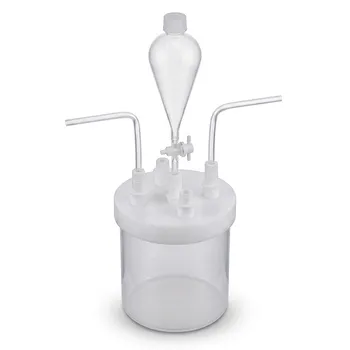
- High Purity PFA Reaction Vessel for Biopharmaceutical Synthesis and Corrosive Chemical Fluid Handling with Customizable Tube Fittings
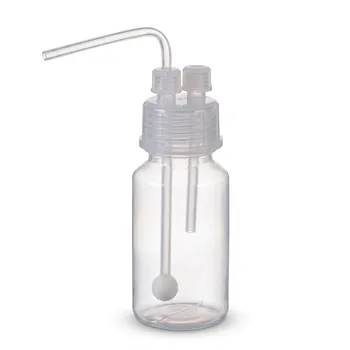
- High Purity PFA Gas Washing Bottle Corrosion Resistant Tail Gas Absorption and Buffer Vessel
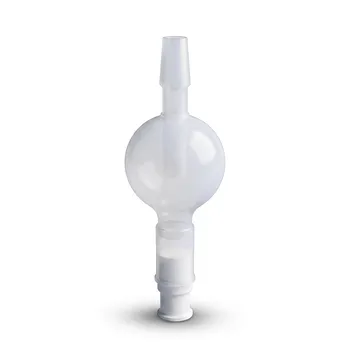
- PFA Anti Splash Ball High Temperature HF Resistant Laboratory Buffer Vessel for Distillation and Trace Analysis
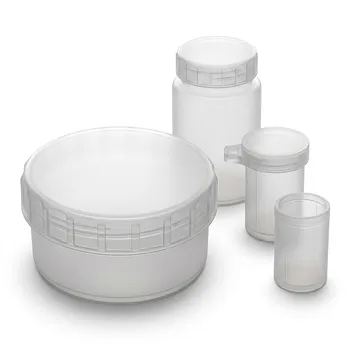
- PFA Reaction Jar Corrosion Resistant Wide Mouth PTFE Lab Bottle High Purity Chemical Vessel
- Laboratory PFA Rectangular Acid Soaking Tank Silicon Wafer Cleaning Bath Corrosion Resistant High Purity Vessel
People Also Ask
- Why is a stable reaction vessel essential for CuO nanoflower growth? Ensure Purity and Structural Integrity.
- Why are the reaction vessel and steam environment critical for alpha-FeOOH conversion? Achieve Superior Phase Purity.
- How does hardware selection optimize research? Enhance Workflows with Custom Reaction Vessels
- Why are high-purity PFA reaction bottles superior to glass for boride synthesis? Ensure Ultra-Pure Yield & No Leaching
- How does monomer purity during polymerization of fluoropolymers affect high-purity lab vessels? Key factors explained