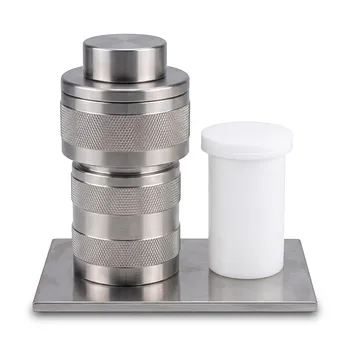
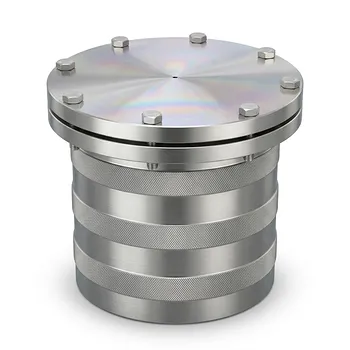
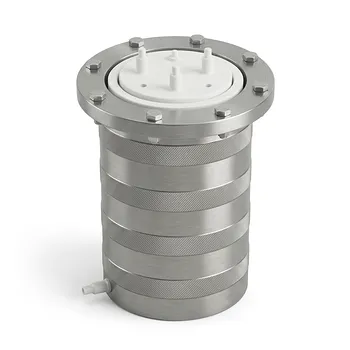
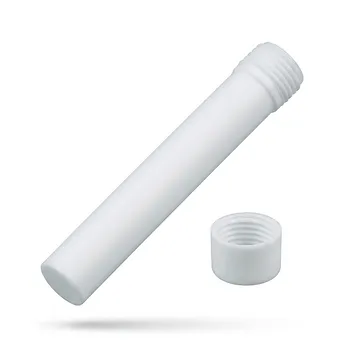
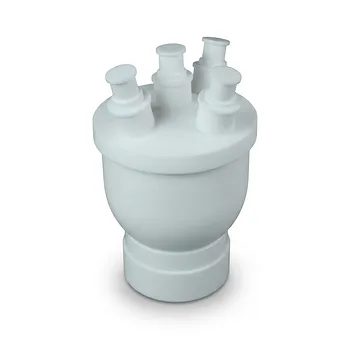
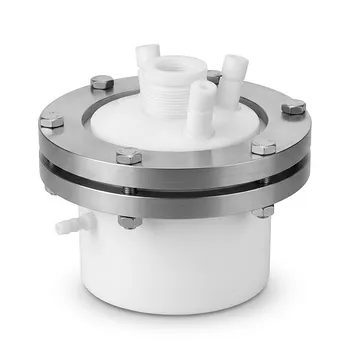
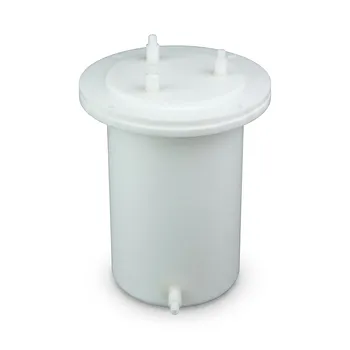
High-purity PTFE liners are the critical component for ensuring the chemical integrity and precise doping of copper-doped carbon quantum dots (Cu-CDs) during hydrothermal synthesis. These liners provide an exceptionally inert barrier that prevents acidic or basic reaction mixtures from interacting with the stainless steel reactor walls. By isolating the precursors, the liner ensures that the synthesis environment remains free from exogenous metal impurities, allowing for the controlled incorporation of copper ions into the carbon lattice.
Core Takeaway: High-purity PTFE liners serve as a chemically "silent" container that protects both the purity of the nanomaterials and the structural integrity of the autoclave. They are indispensable for achieving the high-purity, uniform morphology, and specific electronic properties required for advanced Cu-CD applications.
Maintaining Chemical Integrity and Purity
Prevention of Exogenous Metal Contamination
Hydrothermal synthesis of carbon quantum dots often involves aggressive precursors, such as strong acids or bases, which can easily corrode stainless steel. High-purity PTFE liners act as a chemical protection barrier, preventing the leaching of iron, nickel, or chromium from the reactor shell into the solution. This isolation ensures that the resulting Cu-CDs are not contaminated by unintended metal ions that could quench fluorescence or alter electronic properties.
Facilitating Precise Copper Doping
The synthesis of Cu-CDs requires a highly controlled environment to ensure that copper ions are incorporated into the carbon structure at specific concentrations. Because PTFE is completely inert, it does not compete with the reaction or absorb the metal dopants intended for the quantum dots. This predictability allows researchers to achieve high-purity nanomaterials with uniform morphology and reproducible performance.
Low Impurity Leaching Rates
Standard materials may release trace elements when subjected to the extreme heat and pressure of a hydrothermal process. High-purity PTFE is specifically engineered to have extremely low leaching rates, maintaining a pristine crystal growth system. This is essential for the oxidative cleavage of carbon sources, where the purity of the environment directly dictates the quality of the final quantum dots.
Structural and Operational Advantages
Resistance to Extreme Chemical Environments
PTFE liners can withstand a wide array of corrosive media, including sulfuric acid, nitric acid, and strong alkalis like sodium hydroxide. This universal corrosion resistance makes them the core container for diverse synthesis routes, from coal-based quantum dots to organic precursor carbonization. By containing these substances, the liner significantly extends the service life of the expensive stainless steel outer pressure vessel.
Enhanced Material Recovery
The "non-stick" nature of PTFE provides excellent mold-release properties, which is vital when collecting synthesized nanopowders. Unlike metal or glass surfaces, PTFE prevents the Cu-CDs from adhering to the container walls, ensuring higher yields and easier cleaning. This characteristic is critical for maintaining the efficiency of the lab workflow and preventing cross-contamination between batches.
Pressure and Thermal Stability
While the steel jacket provides the mechanical strength to withstand high pressures, the PTFE liner ensures the internal seal remains secure. The thermal stability of high-purity PTFE allows it to maintain its shape and integrity throughout the high-temperature synthesis cycle. This synergy between the liner and the shell creates a stable, high-pressure environment necessary for the formation of sophisticated nanostructures.
Understanding the Trade-offs
Temperature Limitations
While PTFE is highly stable, it has a definitive thermal ceiling, typically around 200°C to 250°C. Exceeding these temperatures can lead to mechanical deformation (creeping) or the release of toxic fluorinated vapors. For reactions requiring higher temperatures, alternative materials like PPL (para-polyphenylene) or specialized ceramics may be necessary, though they often sacrifice some of PTFE's chemical inertness.
Thermal Lag and Conductivity
PTFE is an excellent insulator, which means it has low thermal conductivity compared to the metal reactor shell. This creates a "thermal lag," where the internal reaction mixture takes longer to reach the set temperature of the oven or heating mantle. Researchers must account for this delay in their experimental timing to ensure the hydrothermal process is fully completed.
Applying This to Your Synthesis Goals
Recommendations for Effective Implementation
- If your primary focus is maximum optical clarity: Use high-purity PTFE to eliminate trace metal quenching and ensure the copper dopant is the sole electronic modifier.
- If your primary focus is high-yield production: Leverage the non-stick surface of the liner to ensure complete recovery of the Cu-CDs and to simplify the post-synthesis cleaning process.
- If your primary focus is equipment longevity: Inspect liners regularly for signs of deformation or "pitting" to ensure the corrosive precursors never make contact with the stainless steel shell.
Utilizing high-purity PTFE liners is the definitive method for ensuring the reproducibility and chemical precision of copper-doped carbon quantum dot synthesis.
Summary Table:
| Advantage | Impact on Cu-CDs Synthesis | Technical Benefit |
|---|---|---|
| Chemical Inertness | Prevents exogenous metal contamination (Fe, Ni, Cr) | Pure fluorescence & electronic properties |
| Non-stick Surface | Facilitates excellent mold-release & recovery | Higher yields & zero cross-contamination |
| Corrosion Resistance | Withstands aggressive acids/bases (nitric, sulfuric) | Protects stainless steel autoclave shell |
| Low Leaching Rate | Maintains a pristine crystal growth system | Uniform morphology & reproducibility |
| Thermal Stability | Maintains internal seal under pressure | Stable environment for nanostructure formation |
Elevate Your Nanomaterial Synthesis with KINTEK Precision
Ensure the absolute purity of your copper-doped carbon quantum dots with KINTEK’s high-performance fluoropolymer solutions. Whether you require standard hydrothermal synthesis liners, microwave digestion vessels, or high-purity trace analysis instruments, our products are engineered to eliminate contamination and withstand the most aggressive chemical environments.
Our value to your laboratory:
- Comprehensive Range: From basic labware (beakers, crucibles, reagent bottles) and sample prep tools (filters, pipettes, tweezers) to fluid transfer components (tubing, valves).
- Advanced Apparatus: Specialized electrochemical cells, battery testing fixtures, and custom reaction vessels.
- Custom Engineering: Backed by end-to-end custom CNC fabrication, we deliver everything from complex non-standard machined parts to high-volume orders with an exclusive focus on PTFE and PFA.
Ready to optimize your lab's efficiency and material recovery? Contact us today to discuss your bespoke laboratory setup!
References
- Shubam Sudan, Gaber El-Saber Batiha. Eco-friendly sensing of hexavalent chromium ions via copper-doped carbon quantum dots: a fluorescent probe for water safety. DOI: 10.1007/s00604-024-06939-4
This article is also based on technical information from Kintek Knowledge Base .
Related Products
- PTFE Lined High Pressure Digestion Vessel 50ml High Temperature Hydrothermal Synthesis Tank
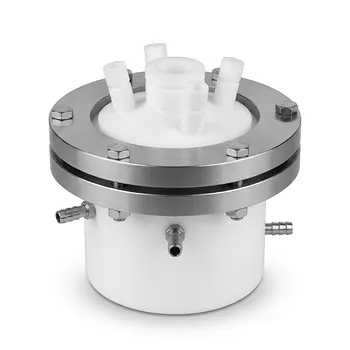
- Custom TFM Reaction Vessel with Stainless Steel Jacket and PTFE Inner Cup for High Corrosion Resistance
- High Pressure Custom TFM Reactor Stainless Steel Outer Vessel PTFE Inner Cup for Corrosive Synthesis
- High Purity TFM Microwave Digestion Vessels PTFE Acid Evaporation Liners Domestic GT-400 Equivalent Laboratory Reaction Containers
- High Temperature Corrosion Resistant Hydrothermal Synthesis Reactor with TFM Inner Liner and Straight Cylinder Design
People Also Ask
- What are the benefits of using a PTFE-lined vessel for carbon-sulfur cathode treatment? Maximize Purity & Performance
- Why are PTFE-lined pressure digestion vessels required for the preparation of Ag/CeO2 catalysts? Purity & Performance
- What safety features are typically incorporated into high-pressure PTFE digestion vessel designs? Ensure Lab Safety
- What is the function of high-pressure PTFE digestion vessels in mineral analysis? Optimize Sample Mineralization
- What is the function of PTFE lined high-pressure vessels in g-C3N4 synthesis? Achieve High-Purity Material Growth